Welcome to The Past in Review, a website devoted to book reviews in history, biography and sports. Your comments are welcome. David Lee Poremba
|
"History is who we are and why we are the way we are." David McCullough |
"Books are the carriers of civilization. Without books, history is silent, literature dumb, science crippled, thought and speculation at a standstill." Barbara Tuchman
|
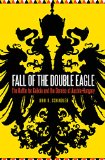
Schindler, John R. Fall of the Double Eagle: The Battle for Galicia and the Demise of Austria-Hungary Potomac Books. Notes; bib.; index 360p. ISBN: 978-1-6123-4765-3. Dec. 2015. $34.95
Studying the First World War on the Eastern Front as a reader interested in military history is somewhat difficult if one doesn’t have some background knowledge of the subject. Other than the fact that Austria-Hungary was Germany’s partner in the war and a battle was fought at Tannenberg, a German victory that led to the fall of Imperial Russia, not much else is known to the average reader about events in Easter Europe during this conflict.
Such is the case here. Fall of the Double Eagle is a detailed discussion of Austria-Hungary’s strategic and tactical theory and practice versus the reality of the situation. The author explains hos Austria-Hungary chose war over the “foul peace” and the deluded thinking of the General Staff officers planning an attack on Serbia and Russia at the same time led to humiliating defeat and the massacre of almost 500,000 troops in just three weeks, an event from which the Empire never recovered.
The campaign in the Balkans and Galicia suffered from poor planning and difficult maneuvers over very unfriendly terrain, even though Austro-Hungarian intelligence estimates were right on the money about the tactical environment and the all-inclusive Serbian reaction. Even though Austria-Hungary’s eventual defeat did not occur until the fall of 1918, the campaigns of 1914 initiated the final result.
This book is well researched and quite readable for the informed reader, even with a glaringly obvious lack of maps.
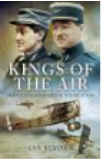
Sumner, Ian. Knights of the Air: French Aces and Airmen of the Great War. Pen and Sword Books. Maps; ill.; appendices; bib.; index. 248p. ISBN: 978-1-7834-6338-1. $49.95. July, 2105.
The wonderful dust jacket art featuring two of France’s leading World War I aces, George Guynemer and Rene Fonck above a French Spad would definitely entice any reader to pick up Kings of the Air. Those who then own the book are in for a real treat.
At first glance this looks to be the story of the French airmen that everyone has heard of – not so. This is an informative, entertaining history of the French Air Service during World War I, encompassing fighter, observation, cooperation and bombardment squadrons and balloon units; the development of the service itself, including tactics, strategy, aircraft and equipment.
The work is arranged chronologically, with each chapter’s theme describing the evolution of the aeroplane from the last decade of the nineteenth century to the close of the war in 1918. There is a lot of information here in just over two hundred pages but the pace is at just the right speed for the reader to keep up. The author relates the story using the words of the participants themselves through their letters, diaries, memoirs, official documents, contemporary newspapers and magazines.
No stone unturned, well researched and well written, Kings of the Air should become the “go to” title for information about the French contribution to the air war of the Great War.
The wonderful dust jacket art featuring two of France’s leading World War I aces, George Guynemer and Rene Fonck above a French Spad would definitely entice any reader to pick up Kings of the Air. Those who then own the book are in for a real treat.
At first glance this looks to be the story of the French airmen that everyone has heard of – not so. This is an informative, entertaining history of the French Air Service during World War I, encompassing fighter, observation, cooperation and bombardment squadrons and balloon units; the development of the service itself, including tactics, strategy, aircraft and equipment.
The work is arranged chronologically, with each chapter’s theme describing the evolution of the aeroplane from the last decade of the nineteenth century to the close of the war in 1918. There is a lot of information here in just over two hundred pages but the pace is at just the right speed for the reader to keep up. The author relates the story using the words of the participants themselves through their letters, diaries, memoirs, official documents, contemporary newspapers and magazines.
No stone unturned, well researched and well written, Kings of the Air should become the “go to” title for information about the French contribution to the air war of the Great War.
Crow, Tracy. On Point: A Guide to Writing the Military Story. Potomac Books. 159p. ISBN: 978-1-6123-4709-6. $19.95. September, 2015.
This book is part memoir and part writing guide for veterans and their families. I include families
because they are an integral part of the veteran’s life and play an important role in the aftermath of active service, no matter where or when that service occurred.
Tracy Crow is no rookie when it comes to writing memoir and has won awards for her work, so her guide is quite relevant and spot on, full of useful tips in organizing and structuring the military story. She challenges each of us to ask the really hard questions and helps us to form the answers in order to get them down on paper.
On Point is an extremely useful tool for understanding the writing craft in reference top military service.
This book is part memoir and part writing guide for veterans and their families. I include families
because they are an integral part of the veteran’s life and play an important role in the aftermath of active service, no matter where or when that service occurred.
Tracy Crow is no rookie when it comes to writing memoir and has won awards for her work, so her guide is quite relevant and spot on, full of useful tips in organizing and structuring the military story. She challenges each of us to ask the really hard questions and helps us to form the answers in order to get them down on paper.
On Point is an extremely useful tool for understanding the writing craft in reference top military service.
Mastriano,
Douglas V. Alvin York: A New Biography
of the Hero of the Meuse Argonne.
University of Kentucky Press. Ill.;
maps; notes; bib.; index. 336p. ISBN:
978-0-8131-4519-8. $34.95. March, 2014.
As stated in the subtitle, this is “A New Biography…” One would think that, by this time, the York story had been covered; evidently that is not the case. Since that day in the Argonne Forest, York has had his disbelievers, detractors, and myth makers, as well as his supporters. Colonel Mastriano, while on active duty with the United States Army, has spent that last seven or eight years gathering information on the man and his “crowded hour”, to set the record straight.
Mastriano has done a masterful job in getting materials together on York’s life before and after his army service, his time in the army and evidence of his Medal of Honor actions from both the American and German perspective. He weaves together York’s own words (complete with patois), with the observations of other participants in the story and his own contributions to create an extremely readable story.
The reader comes face to face with York in his battle to reconcile his pacifist beliefs with combat in the Argonne; the sights, sounds, and smells of the battlefront; and, finally, the proof of York’s actions, using, for the very first time, information in German archives, to actually walk the battlefield and locate the site of the action on October 8, 1918. Through the use of German sources, one finds the fact that the Prussians and Wurtenbergers that York faced were not second rate soldiers but first class, experienced combat troops.
This book sets the standards in archival research, battlefield archaeology and forensics. It should have a place on every bookshelf.
As stated in the subtitle, this is “A New Biography…” One would think that, by this time, the York story had been covered; evidently that is not the case. Since that day in the Argonne Forest, York has had his disbelievers, detractors, and myth makers, as well as his supporters. Colonel Mastriano, while on active duty with the United States Army, has spent that last seven or eight years gathering information on the man and his “crowded hour”, to set the record straight.
Mastriano has done a masterful job in getting materials together on York’s life before and after his army service, his time in the army and evidence of his Medal of Honor actions from both the American and German perspective. He weaves together York’s own words (complete with patois), with the observations of other participants in the story and his own contributions to create an extremely readable story.
The reader comes face to face with York in his battle to reconcile his pacifist beliefs with combat in the Argonne; the sights, sounds, and smells of the battlefront; and, finally, the proof of York’s actions, using, for the very first time, information in German archives, to actually walk the battlefield and locate the site of the action on October 8, 1918. Through the use of German sources, one finds the fact that the Prussians and Wurtenbergers that York faced were not second rate soldiers but first class, experienced combat troops.
This book sets the standards in archival research, battlefield archaeology and forensics. It should have a place on every bookshelf.
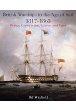
Winfield, Rif. British Warships in the Age of Sail, 1817-1863: Design, Construction, Careers and Fates. Seaforth Publishing. Ill.; bib.; chronology, appendices, index.
415p. ISBN: 978-1-8483-2169-4. $100.00. July, 2014
This is the fourth volume of a quartet which began its coverage of the Royal Navy in 1603
and ends with the advent of steam powered vessels exclusively. It covers all
ratings of ships from first rates through sixth rates, sloops and smaller, both
sailing and steam.
The Book Begins with its preface and bibliography, which contains an explanation of the rating
system; this is followed by a chronology of naval events for the years covered
in the title; then, the listing of vessels by rate; there are four informative
appendices, including one that discusses the principle officers of the Navy;
and, finally, there is an index of named vessels.
This is an excellent reference book for those whose passion is Royal Naval history, in this
case broken down by ship. There is more to it than just a roster of ships,
however. Included here one can find information on ship builders, their captains
and the costs that go along with maintaining a sailing navy.
This is a go–to source for answers to questions about the subject.
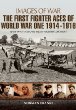
Franks,
Norman. Images of War: Great War Fighter Aces, 1914-1916. Pen & Sword Books. Rare Photographs from
Wartime Archives. Ill. 168p. ISBN: 978-1-7838-3182-1. $24.95
November, 2014.
Norman Franks, a noted World War I aviation historian has put together an amazing group of photographs illustrating the men and machines that fought the air war from 1914 to 1916.
Franks covers the first half of the Great War in eight chapters following in chronological order. Each chapter has a narrative setting up the images with their captions; as an example, chapter one discusses the origins of the war and the development of aerial warfare, followed by photos of the early Bleriots, Moranes, Albatros, and so forth. As the book progresses, the photographs grow in number to coincide with the development of the aircraft and the men from practically all of the participating nations, who flew them. The book ends in late 1916, with the development of the Jasta system by the Germans, led by Oswald Boelcke.
This is a book that can be enjoyed by a straightforward read or from any point the reader chooses. The pictures tell as good a story as the narrative and each complements the other. This is a welcome addition to the literature, hopefully to be followed by a second volume covering the remainder of the conflict.
Norman Franks, a noted World War I aviation historian has put together an amazing group of photographs illustrating the men and machines that fought the air war from 1914 to 1916.
Franks covers the first half of the Great War in eight chapters following in chronological order. Each chapter has a narrative setting up the images with their captions; as an example, chapter one discusses the origins of the war and the development of aerial warfare, followed by photos of the early Bleriots, Moranes, Albatros, and so forth. As the book progresses, the photographs grow in number to coincide with the development of the aircraft and the men from practically all of the participating nations, who flew them. The book ends in late 1916, with the development of the Jasta system by the Germans, led by Oswald Boelcke.
This is a book that can be enjoyed by a straightforward read or from any point the reader chooses. The pictures tell as good a story as the narrative and each complements the other. This is a welcome addition to the literature, hopefully to be followed by a second volume covering the remainder of the conflict.
Adams, Michael C.C. Living Hell: The Dark Side of the Civil War.
Johns Hopkins University Press. Notes; bib.; index. 305p. ISBN:
978-1-4214-1221-4. $29.95. March, 2014.
This book should come with a warning label stating that the contents is
not suitable for those in ignorance of the realities of war. Professor Adams
presents an informed look into the vortex of hell – the unvarnished truth of the
effects of war on both soldiers and civilians. Using contemporary sources, he
illustrates the contrast between the new recruit and the combat veteran and
their perspective on duty before and after “seeing the elephant”. He discusses
the realities of camp life, the problems with cleanliness, poor diet, sickness
and disease. We all see the numbers in the casualty column and how the deaths
from disease outweighs by as much as two to one the combat deaths; in this book
we begin to see why these statistics are so skewed. Adams also discusses the
combat numbers, but in terms of the slaughter produced by the tactics of the
day; followed by the impossibility of cleaning up the battlefields where
thousands lay bloating in the sun; the stench being too terrible to imagine;
finally, there is discussion of the psychological effects of all this on, not
only the men in uniform, but civilians as well – women and children who find
themselves in the direct path of the storm, as well as those who chose to nurse
the sick and wounded.
This book is a well researched, well written look down the rabbit hole
of the Civil War as it was, not how we have come to imagine and glorify it. It
should be required reading at the academies, staff colleges and on the
Hill.
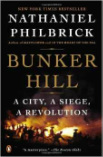
Philbrick, Nathaniel. Bunker Hill: A City, a Siege, a Revolution. Viking. Notes; ill.; bib.; index. 416p. $32.95. April, 2013.
The vast majority of Americans can tick off on their fingers some “highlights” of the American Revolution – the Boston Tea Party, the Declaration of Independence and Paul Revere, among others, most of which are iconic and only a smaller group of Americans know more than that about the conflict. This is mostly the result of being force fed dry, lifeless history.
All of history is rife with stories that are so much more than iconic and have been lost “in the shuffle” and are waiting for the right writer to tease them back out into the open. Bunker Hill is one of those history books that are almost impossible to put down. It is more than just a recitation of one of the first clashes between British and American forces; it is the story of the people of the city of Boston, 15.000 of them living in an area of land just 1.2 miles square.
The book is divided into three sections: Liberty, which deals with the events leading up to 1774, providing the political background; Rebellion, the second section, recounts the military campaigns beginning at Lexington and Concord and ending at Bunker Hill in mid-June, 1775; finally, Siege, the last section, begins with George Washington’s assumption of command and ends with the British evacuation of Boston and the first American victory of the war.
Author Philbrick’s talents lie in his ability to use primary documents successfully and his “eye” for storytelling and characterization. This brings the story to life, giving it meaning, relevance and making it inspirational to today’s readers.
The vast majority of Americans can tick off on their fingers some “highlights” of the American Revolution – the Boston Tea Party, the Declaration of Independence and Paul Revere, among others, most of which are iconic and only a smaller group of Americans know more than that about the conflict. This is mostly the result of being force fed dry, lifeless history.
All of history is rife with stories that are so much more than iconic and have been lost “in the shuffle” and are waiting for the right writer to tease them back out into the open. Bunker Hill is one of those history books that are almost impossible to put down. It is more than just a recitation of one of the first clashes between British and American forces; it is the story of the people of the city of Boston, 15.000 of them living in an area of land just 1.2 miles square.
The book is divided into three sections: Liberty, which deals with the events leading up to 1774, providing the political background; Rebellion, the second section, recounts the military campaigns beginning at Lexington and Concord and ending at Bunker Hill in mid-June, 1775; finally, Siege, the last section, begins with George Washington’s assumption of command and ends with the British evacuation of Boston and the first American victory of the war.
Author Philbrick’s talents lie in his ability to use primary documents successfully and his “eye” for storytelling and characterization. This brings the story to life, giving it meaning, relevance and making it inspirational to today’s readers.
Coffman, Edward M. The Embattled Past: Reflections on Military History. University of Kentucky Press. ill.; index. 216p. ISBN: 978-0-8131-4266-1. $40.00 January, 2014.
Very few people in any given field of endeavor can be said to have had an impact on their particular profession. One of these select few is Edward Coffman, a professor of military history and the author of this informative collection of essays. A U.S. Army veteran himself, (of the 7th Cavalry Regiment no less), he has played a seminal role in the development of the study of the field of military history over the last fifty years.
These essays reflect that career and serve as a sort of road map for those who choose to study the field. Beginning with an essay describing his own entry into the profession, Coffman continues with thoughts on Americans’ attitudes toward their armed forces, both outside and inside of academia. Following two enlightening essays on World War I, the book concludes with a previously unpublished piece on his experience in interviewing General of the Army Douglas MacArthur, which took place in 1960.
The Embattled Past is an essential work for anyone in the field professionally and anyone interested in military history.
Very few people in any given field of endeavor can be said to have had an impact on their particular profession. One of these select few is Edward Coffman, a professor of military history and the author of this informative collection of essays. A U.S. Army veteran himself, (of the 7th Cavalry Regiment no less), he has played a seminal role in the development of the study of the field of military history over the last fifty years.
These essays reflect that career and serve as a sort of road map for those who choose to study the field. Beginning with an essay describing his own entry into the profession, Coffman continues with thoughts on Americans’ attitudes toward their armed forces, both outside and inside of academia. Following two enlightening essays on World War I, the book concludes with a previously unpublished piece on his experience in interviewing General of the Army Douglas MacArthur, which took place in 1960.
The Embattled Past is an essential work for anyone in the field professionally and anyone interested in military history.
Caddick-Adams, Peter. Monte Cassino: Ten Armies in Hell. Oxford University Press. Maps; ill.; notes; bib.; index. 400p. ISBN: 978-0-1999-7464-1. $32.95. April,2013.
Students and general readers of the history of the Second World War are familiar with its iconic battles, such as Normandy, Iwo Jima, the Battle of the Bulge and Stalingrad, to name a few. Not so well known but certainly on par, as far as ferocity and cost is concerned, is the Battle of Monte Cassino, which took place deep in the Italian mountains, in conditions as bad as any of those on the Eastern Front. For four months, Allied armies containing soldiers from at least twelve different countries attempted to dislodge entrenched German forces around this medieval monastery. Two hundred thousand casualties later, Allied air forces leveled the monastery and the town.
Caddick-Adams gives us a panoramic view of this monumental battle and manages to objectively describe the strengths and weaknesses of all the combatants. Several chapters focus on a specific national contingent and more than adequate footnotes back up the narrative.
This is an excellent addition to the literature of the Italian campaign.
Students and general readers of the history of the Second World War are familiar with its iconic battles, such as Normandy, Iwo Jima, the Battle of the Bulge and Stalingrad, to name a few. Not so well known but certainly on par, as far as ferocity and cost is concerned, is the Battle of Monte Cassino, which took place deep in the Italian mountains, in conditions as bad as any of those on the Eastern Front. For four months, Allied armies containing soldiers from at least twelve different countries attempted to dislodge entrenched German forces around this medieval monastery. Two hundred thousand casualties later, Allied air forces leveled the monastery and the town.
Caddick-Adams gives us a panoramic view of this monumental battle and manages to objectively describe the strengths and weaknesses of all the combatants. Several chapters focus on a specific national contingent and more than adequate footnotes back up the narrative.
This is an excellent addition to the literature of the Italian campaign.
Emmerson, Charles. 1913: In Search of the World Before the Great War. Public Affairs. Ill.; notes; bib.; index. 546p. ISBN: 978-1-6103-9256-3. $30.00 May, 2013.
As the bicentennial of the First World War rapidly approaches, we are beginning to see an increasing number of books dealing with the time period. Most of them use the preceding time before August, 1914, as a spring board into the war itself. 1913 starts out pretty much the same – the world’s fair at Ghent, Belgium, attended by practically every nation on the planet. It is an enhanced version of a summer garden party, with talk of the latest news and fashion, with a bit of gossip tossed here and there amongst the tulips. Then, instead of plunging into the war, the author takes us on a world tour of major cities, first in Europe with London, Paris, Berlin, Rome, Vienna and St. Petersburg; then the new world, with Washington, DC, New York, Detroit, Los Angeles and Mexico City on the itinerary.
The tour continues from Winnipeg to Melbourne, then Buenos Aires, Bombay, Tehran and Jerusalem, before heading to Constantinople, Peking and Tokyo, before returning to London.
In these places, we learn what life was like before the drastic changes wrought by the Great War. We see the evolution of the planet from individual regions/countries into interconnected nations through globalization with more efficient technology, immigration and, most importantly, trade. This is also an anecdotal history of the urbanization of countries around the world and the beginning of the end of nation empires.
To know what life was like in the twentieth century prior to the wars, this book is a must read.
As the bicentennial of the First World War rapidly approaches, we are beginning to see an increasing number of books dealing with the time period. Most of them use the preceding time before August, 1914, as a spring board into the war itself. 1913 starts out pretty much the same – the world’s fair at Ghent, Belgium, attended by practically every nation on the planet. It is an enhanced version of a summer garden party, with talk of the latest news and fashion, with a bit of gossip tossed here and there amongst the tulips. Then, instead of plunging into the war, the author takes us on a world tour of major cities, first in Europe with London, Paris, Berlin, Rome, Vienna and St. Petersburg; then the new world, with Washington, DC, New York, Detroit, Los Angeles and Mexico City on the itinerary.
The tour continues from Winnipeg to Melbourne, then Buenos Aires, Bombay, Tehran and Jerusalem, before heading to Constantinople, Peking and Tokyo, before returning to London.
In these places, we learn what life was like before the drastic changes wrought by the Great War. We see the evolution of the planet from individual regions/countries into interconnected nations through globalization with more efficient technology, immigration and, most importantly, trade. This is also an anecdotal history of the urbanization of countries around the world and the beginning of the end of nation empires.
To know what life was like in the twentieth century prior to the wars, this book is a must read.
Bernstein, Arnie. Swastika Nation: Fritz Kuhn and the Rise and Fall of the German-American Bund. St. Martin’s Press. notes; bib.; index; 367p. ISBN: 978-1-2580-0671-4. $27.99. September, 2013.
There are a lot of forgotten, untold stories in history and not all of them are from the very distant past. This book relates events that occurred in the United States during the 1930’s. It is the story of the German-American Bund and the pro-Nazi sentiments present in this country prior to 1939. Led by a German Nazi that Adolf Hitler himself refused to endorse, Fritz Kuhn, the party never really attracted the numbers it would have need to make a significant difference on the political stage. Still, it is a fascinating story well told.
There are a lot of forgotten, untold stories in history and not all of them are from the very distant past. This book relates events that occurred in the United States during the 1930’s. It is the story of the German-American Bund and the pro-Nazi sentiments present in this country prior to 1939. Led by a German Nazi that Adolf Hitler himself refused to endorse, Fritz Kuhn, the party never really attracted the numbers it would have need to make a significant difference on the political stage. Still, it is a fascinating story well told.
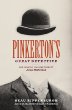
Riffenburgh, Beau. Pinkerton’s Great Detective: The Amazing Life and Times of James McParland. Viking Adult. Ill.; notes; bib.; index. 400p. ISBN: 978-0-6700-2546-6. $32.95. November, 2013.
This book is a curious mix of history and biography; a history of the Pinkerton Detective Agency, labor unrest in the Pennsylvania coal fields and, James McParland, allegedly Pinkerton’s greatest detective. The Pinkerton Detective Agency has a checkered past, stemming mostly from their less than sterling intelligence reports concerning Confederate personnel figures during the American Civil War. Contemporarily, they were known to get their man, and in October of 1873, Allan Pinkerton hired an unknown Irish man, James McParland, as the operative to infiltrate the Molly McGuires, an Irish radical group bent on destroying the coal industry in the United States, with a focus on Pennsylvania. McParland was successfully undercover for two years and brought the organization down, making his name and reputation in the process.
McParland’s career remained colorful and controversial and he chased Butch Cassidy and the Sundance Kid through the Americas; investigated the Western Federation of Miners and an Idaho gubernatorial assassination, which pitted him against the great trial lawyer Clarence Darrow and was referred to as “The Great Detective” by friend and foe alike. He even consulted with the incomparable Sherlock Holmes - in a fictional setting, of course.
Mr. Riffenburgh does an admiral job presenting McParland’s story considering the paucity of original sources and the difficulty of separating fact from fiction before the celebrity era. This is still an informative book on nineteenth century detective work.
This book is a curious mix of history and biography; a history of the Pinkerton Detective Agency, labor unrest in the Pennsylvania coal fields and, James McParland, allegedly Pinkerton’s greatest detective. The Pinkerton Detective Agency has a checkered past, stemming mostly from their less than sterling intelligence reports concerning Confederate personnel figures during the American Civil War. Contemporarily, they were known to get their man, and in October of 1873, Allan Pinkerton hired an unknown Irish man, James McParland, as the operative to infiltrate the Molly McGuires, an Irish radical group bent on destroying the coal industry in the United States, with a focus on Pennsylvania. McParland was successfully undercover for two years and brought the organization down, making his name and reputation in the process.
McParland’s career remained colorful and controversial and he chased Butch Cassidy and the Sundance Kid through the Americas; investigated the Western Federation of Miners and an Idaho gubernatorial assassination, which pitted him against the great trial lawyer Clarence Darrow and was referred to as “The Great Detective” by friend and foe alike. He even consulted with the incomparable Sherlock Holmes - in a fictional setting, of course.
Mr. Riffenburgh does an admiral job presenting McParland’s story considering the paucity of original sources and the difficulty of separating fact from fiction before the celebrity era. This is still an informative book on nineteenth century detective work.
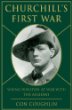
Coughlin, Con. Churchill’s First War: Young Winston at War with the Afghans. Thomas Dunne Books. Ill.; notes; bib.; index. 320p. ISBN:978-1-2500-4304-7. $26.99. February, 2014.
In the case of world - renowned leaders, it is remarkable how the general reader, or anyone for that matter, doesn’t realize that each individual had a beginning to his/her career. In the case of Winston Churchill, it was a brief but greatly impacting tour of duty in Afghanistan during the late 1890’s. His service resulted in his first book, The Story of the Malakand Field Force, which is still required reading for Allied ground commanders.
Con Coughlin does a remarkable job placing young Churchill in the late Victorian era, describing his rather odd upbringing, his efforts to achieve social status and financial security and the world background in which Churchill was to see his first combat action. It was not to be his only active service prior to the Second World War. Coughlin also gives an informative, concise description of the Afghan situation as it was back then as well as its relevance today.
This book is an excellent addition to Churchillian biography, the colonial wars and today’s current events.
In the case of world - renowned leaders, it is remarkable how the general reader, or anyone for that matter, doesn’t realize that each individual had a beginning to his/her career. In the case of Winston Churchill, it was a brief but greatly impacting tour of duty in Afghanistan during the late 1890’s. His service resulted in his first book, The Story of the Malakand Field Force, which is still required reading for Allied ground commanders.
Con Coughlin does a remarkable job placing young Churchill in the late Victorian era, describing his rather odd upbringing, his efforts to achieve social status and financial security and the world background in which Churchill was to see his first combat action. It was not to be his only active service prior to the Second World War. Coughlin also gives an informative, concise description of the Afghan situation as it was back then as well as its relevance today.
This book is an excellent addition to Churchillian biography, the colonial wars and today’s current events.
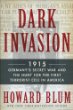
Blum, Howard. Dark Invasion: 1915: Germany’s Secret War Against America. Harper. Ill.; notes; bib.; index. ISBN: 978-0-0623-0755-2. 512p. $27.99 February, 2014.
Having read quite a few books on World War I, almost all of which focused on Europe, I was intrigued by the subtitle of this book, which was to relate the story of Germany’s clandestine operations against the United States. Outside of the Zimmerman Telegram, I had never heard of this “secret war”.
Howard Blum narrates history through his characters, making his story come to life; he moves back and forth between American and German sides of the tale and we are introduced to various “players”, such as Captain Thomas J. Tunney, NYPD, head of the Bomb and Neutrality Squad; Franz von Rintelen, head operative of the German spy network and a whole nest of anarchists, terrorists, saboteurs, germ warfare experts and assassins.
This is the untold part of the World War I story, brought vividly to life by an over-the top expert in historical narrative. Its relevance to the present since 9/11 should be obvious to everyone; don’t miss this one.
Having read quite a few books on World War I, almost all of which focused on Europe, I was intrigued by the subtitle of this book, which was to relate the story of Germany’s clandestine operations against the United States. Outside of the Zimmerman Telegram, I had never heard of this “secret war”.
Howard Blum narrates history through his characters, making his story come to life; he moves back and forth between American and German sides of the tale and we are introduced to various “players”, such as Captain Thomas J. Tunney, NYPD, head of the Bomb and Neutrality Squad; Franz von Rintelen, head operative of the German spy network and a whole nest of anarchists, terrorists, saboteurs, germ warfare experts and assassins.
This is the untold part of the World War I story, brought vividly to life by an over-the top expert in historical narrative. Its relevance to the present since 9/11 should be obvious to everyone; don’t miss this one.
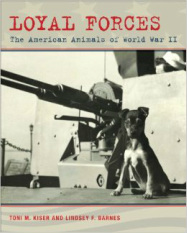
Kiser, Thomas M. and Lindsey F. Barnes. Loyal Forces: The American Animals of World War II. LSU Press. Ill.; bib. 192p. ISBN:978-0-8071-4996-6. $35.00 March, 2013.
Of the many sacrifices that the United States civilian population had to make during World War II, one of the least known is that of the donation of animals, mainly dogs, to the war effort. Many of these animals saw active service in the war zones; some were even decorated, many lost their lives and the survivors were honorably discharged. There were over 11,000 dogs in uniform.
Other animals, such as horses, mules, carrier pigeons and the various mascots throughout the armed services are also depicted here in this fascinating pictorial history of this unknown aspect of the Second World War.
Of the many sacrifices that the United States civilian population had to make during World War II, one of the least known is that of the donation of animals, mainly dogs, to the war effort. Many of these animals saw active service in the war zones; some were even decorated, many lost their lives and the survivors were honorably discharged. There were over 11,000 dogs in uniform.
Other animals, such as horses, mules, carrier pigeons and the various mascots throughout the armed services are also depicted here in this fascinating pictorial history of this unknown aspect of the Second World War.
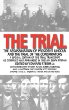
Steers, Edward, Jr. Editor. The Trial: The assassination of President Lincoln and the Trial of the Conspirators. University Press of Kentucky. Ill.; notes. ISBN 978-0-8131-4111-4. $29.95tp. January, 2013.
The trial, referenced in the title above, lasted more than fifty days, involved over three hundred and sixty witnesses and produced 4,300 pages of trial transcription. Benn Pitman, awarded the government contract to produce a transcription of each days’ events, was an expert in an early version of shorthand called phonography and made these pages available to both the prosecution and the defense, as well as select members of the press. By the end of 1865, three versions of the trial testimony were published, Pitman’s being the most useful in one volume, with collation of testimony by defendant, testimony summaries and an index by name and date.
That book, published in facsimile, is what makes up this book, which is preceded by chapters written by an all-star line-up of assassination experts on the trial, the conspiracy and the defendants. For those who never read the testimony, this book is informative; for those in the know, there is quite a bit of new, insightful information here.
The trial, referenced in the title above, lasted more than fifty days, involved over three hundred and sixty witnesses and produced 4,300 pages of trial transcription. Benn Pitman, awarded the government contract to produce a transcription of each days’ events, was an expert in an early version of shorthand called phonography and made these pages available to both the prosecution and the defense, as well as select members of the press. By the end of 1865, three versions of the trial testimony were published, Pitman’s being the most useful in one volume, with collation of testimony by defendant, testimony summaries and an index by name and date.
That book, published in facsimile, is what makes up this book, which is preceded by chapters written by an all-star line-up of assassination experts on the trial, the conspiracy and the defendants. For those who never read the testimony, this book is informative; for those in the know, there is quite a bit of new, insightful information here.

Ridley, Jane. The Heir Apparent: A Life of Edward VII, The Playboy Prince. Random House. Ill.; notes; bib.; index. 752p. ISBN: 9789-1-400-6255. $35. December, 2013.
Any story in the hands of a master storyteller is a delightful read, no matter the length. Ridley, a teacher of biography (no such courses in the U.S., unfortunately), at Buckingham University in London, was surprisingly granted full access to the Royal Archives and has produced a masterpiece. It is engagingly written, with a cast of characters led by an heir apparent apparently so un-liked by his mother, Queen Victoria, he turned, when an adult, to a life of debauchery until finally ascending to the throne. Surprising everyone, Edward reigned quite competently for nine years until his death in 1910. Related to nearly everyone sitting on a throne in Europe, he was able to keep the peace in very unstable times just before the First World War began in 1914.
Revisionist history, well told.
Any story in the hands of a master storyteller is a delightful read, no matter the length. Ridley, a teacher of biography (no such courses in the U.S., unfortunately), at Buckingham University in London, was surprisingly granted full access to the Royal Archives and has produced a masterpiece. It is engagingly written, with a cast of characters led by an heir apparent apparently so un-liked by his mother, Queen Victoria, he turned, when an adult, to a life of debauchery until finally ascending to the throne. Surprising everyone, Edward reigned quite competently for nine years until his death in 1910. Related to nearly everyone sitting on a throne in Europe, he was able to keep the peace in very unstable times just before the First World War began in 1914.
Revisionist history, well told.
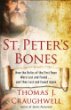
Craughwell, Thomas J. St. Peter’s Bones: How the Relics of the First Pope Were Lost and Found….and Then Lost and Found Again. Image. 256p. ISBN: 978-0-3079-8509-5. January, 2014.
Part historical adventure, a la Indiana Jones and part Roman Catholic Church history, St. Peter’s Bones is the story in detail of the discovery of the saint’s remains under the high altar in St. Peter’s basilica, his speculative burial site since the year A.D. 68, when he was put to death by the Romans. For centuries, that was the tradition and, in honor of the saint, St. Peter’s was built over the grave. Or was it?
It wasn’t until 1939 that a systematic effort to uncover the truth was begun with the Vatican’s approval and, as it turned out, not without its manipulation. Church leaders did not make any announcement of the search or any discoveries until 1952, and nothing definite until the mid 1960’s.
Author Craughwell’s lively narrative moves smoothly back and forth in time from the present to the time of Jesus Christ and his disciple Peter and back again. This is arranged chapter by chapter and is done in such a way that the reader does not get lost. The bones, however, are another question.
This is a well-written, informative and entertaining book worthy of any book shelf.
Part historical adventure, a la Indiana Jones and part Roman Catholic Church history, St. Peter’s Bones is the story in detail of the discovery of the saint’s remains under the high altar in St. Peter’s basilica, his speculative burial site since the year A.D. 68, when he was put to death by the Romans. For centuries, that was the tradition and, in honor of the saint, St. Peter’s was built over the grave. Or was it?
It wasn’t until 1939 that a systematic effort to uncover the truth was begun with the Vatican’s approval and, as it turned out, not without its manipulation. Church leaders did not make any announcement of the search or any discoveries until 1952, and nothing definite until the mid 1960’s.
Author Craughwell’s lively narrative moves smoothly back and forth in time from the present to the time of Jesus Christ and his disciple Peter and back again. This is arranged chapter by chapter and is done in such a way that the reader does not get lost. The bones, however, are another question.
This is a well-written, informative and entertaining book worthy of any book shelf.
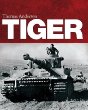
Anderson, Thomas. Tiger. Osprey Publishing. Ill. 256p. ISBN: 978-1-7809-6201-6. $29.95. July, 2013.
One of the most feared battle weapons on the planet today is the armored fighting vehicle, particularly, the tank, which made its debut during World War I. the following conflict saw the Germans make the most efficient use of the technology with their series of “Tiger” tanks. Since then there has been a lot of ink spilled over the design, development and use of these monster vehicles.
In Tiger, we get a tremendous amount of information presented in clearly defined chapters, such as “Development”, Mobility”, etc. a bit technical in spots, this book uses charts, diagrams and illustrations, most of which are published here for the first time. Anderson’s narrative is drawn largely from contemporary sources, such as after action reports, manuals, crew diaries and memoirs and does not fail to include some Russian materials as well.
For those who study the modern history of armored warfare, this is a must have book.
One of the most feared battle weapons on the planet today is the armored fighting vehicle, particularly, the tank, which made its debut during World War I. the following conflict saw the Germans make the most efficient use of the technology with their series of “Tiger” tanks. Since then there has been a lot of ink spilled over the design, development and use of these monster vehicles.
In Tiger, we get a tremendous amount of information presented in clearly defined chapters, such as “Development”, Mobility”, etc. a bit technical in spots, this book uses charts, diagrams and illustrations, most of which are published here for the first time. Anderson’s narrative is drawn largely from contemporary sources, such as after action reports, manuals, crew diaries and memoirs and does not fail to include some Russian materials as well.
For those who study the modern history of armored warfare, this is a must have book.
Vietnam
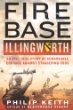
Keith, Philip. Firebase Illingworth: An Epic True Story of Remarkable Courage Against Staggering Odds. St. Martin’s Press. Ill.; map; appendices; glossary; bib.; index.
320p. ISBN: 978-1-2500-2495-4. $25.99. October, 2013.
There appears to be a gap in the reading publics’ awareness of the Vietnam War; the years between the TET offensive in 1968 and the fall of Saigon in 1975. And much of
what the reading public is aware of is either biased, politically motivated or completely incorrect. A lot of things happened in Vietnam between 1968 and 1975.Good things and bad things and things that went, for the most part, totally unreported. Here is a book that more than adequately fills a portion of the aforementioned “gap”.
It describes the action occurring at Firebase Illingworth, on the night of March 31 – April 1, 1970; an action
that pitted an outnumbered U.S. force deliberately stationed astride a North Vietnamese Army infiltration route from Cambodia into South Vietnam, and a regiment of NVA combat veterans determined to exterminate them. It would become a night from hell for all those involved.
Author Keith brings the tale to life through deep research and first person accounts from the soldiers who were present at the battle. Defeating odds against of two to one, illustrates the type of soldier who fought in Vietnam: well-trained, well supported, very determined and quite capable of turning their fear into courage
in a fight for survival.
A must have book for every military history bookshelf.
320p. ISBN: 978-1-2500-2495-4. $25.99. October, 2013.
There appears to be a gap in the reading publics’ awareness of the Vietnam War; the years between the TET offensive in 1968 and the fall of Saigon in 1975. And much of
what the reading public is aware of is either biased, politically motivated or completely incorrect. A lot of things happened in Vietnam between 1968 and 1975.Good things and bad things and things that went, for the most part, totally unreported. Here is a book that more than adequately fills a portion of the aforementioned “gap”.
It describes the action occurring at Firebase Illingworth, on the night of March 31 – April 1, 1970; an action
that pitted an outnumbered U.S. force deliberately stationed astride a North Vietnamese Army infiltration route from Cambodia into South Vietnam, and a regiment of NVA combat veterans determined to exterminate them. It would become a night from hell for all those involved.
Author Keith brings the tale to life through deep research and first person accounts from the soldiers who were present at the battle. Defeating odds against of two to one, illustrates the type of soldier who fought in Vietnam: well-trained, well supported, very determined and quite capable of turning their fear into courage
in a fight for survival.
A must have book for every military history bookshelf.
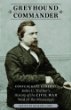
Lowe, Richard (Editor). Greyhound Commander: Confederate General John G. Walker’s History of the Civil War West of the Mississippi. LSU Press. Maps; bib.; index. 135p. ISBN: 978-0-8071-5250-8. $36.00 September, 2013.
The War Between the States has always been divided into Eastern and Western theaters and the Eastern part has always been the “favored” theater among scholars and general readers alike. Every now and then something comes to publication that shines a light into one of the dark corners of the history of the war and we all learn something new.
So it is with Greyhound Commander, a memoir/operations history of the Trans-Mississippi West written by a competent “Eastern Theater” commander, who was regrettably transferred by General Robert E. Lee to the west shortly after the Battle of Antietam. John G. Walker took command of the Texas Division, which, as a result of his training and leadership, became known as the “Greyhounds” for their long and rapid marches across Louisiana and Arkansas.
Walker wrote his account just after the war, while he and his family were political refugees living in London, England. His account is published here for the first time, ably edited and annotated by Richard Lowe, who authored a competent history of Walker’s Texas Division. Walker fought extremely well at Milliken’s Bend and the Red River Campaign, to mention just two operations.
This is a primary source document that adds tremendously to our knowledge of Western Theater activities.
The War Between the States has always been divided into Eastern and Western theaters and the Eastern part has always been the “favored” theater among scholars and general readers alike. Every now and then something comes to publication that shines a light into one of the dark corners of the history of the war and we all learn something new.
So it is with Greyhound Commander, a memoir/operations history of the Trans-Mississippi West written by a competent “Eastern Theater” commander, who was regrettably transferred by General Robert E. Lee to the west shortly after the Battle of Antietam. John G. Walker took command of the Texas Division, which, as a result of his training and leadership, became known as the “Greyhounds” for their long and rapid marches across Louisiana and Arkansas.
Walker wrote his account just after the war, while he and his family were political refugees living in London, England. His account is published here for the first time, ably edited and annotated by Richard Lowe, who authored a competent history of Walker’s Texas Division. Walker fought extremely well at Milliken’s Bend and the Red River Campaign, to mention just two operations.
This is a primary source document that adds tremendously to our knowledge of Western Theater activities.
Current History

Shambaugh, David. China Goes Global: The Partial Power. Oxford University Press. 432p. $29.95. January, 2013.
Is China becoming a global power or isn’t it? In size and population, it certainly looks like one; nearly everything (it seems), that we purchase is made in China – still a signal that the product is cheap and ineffective. We hear quite often of products from China being tainted in one way or another; China is the largest foreign holder of U.S. debt - $1.6 trillion – what does this mean for our future? It appears that one sees a lot more of “China” in the global picture than we used to; should we be better prepared/informed as to the future with China a large part of it or not?
It appears that Professor Shambaugh has attempted to address these (and other) questions concerning this giant conglomerate country. Spending time living in China every year since 1979 gives Shambaugh the opportunity of an insiders’ look at the development of China since the Cultural Revolution. He concludes that China is just out to make a buck; her global presence is wide but has no depth, or staying power. This is similar to the “made in China” tag – or is it?
Is China becoming a global power or isn’t it? In size and population, it certainly looks like one; nearly everything (it seems), that we purchase is made in China – still a signal that the product is cheap and ineffective. We hear quite often of products from China being tainted in one way or another; China is the largest foreign holder of U.S. debt - $1.6 trillion – what does this mean for our future? It appears that one sees a lot more of “China” in the global picture than we used to; should we be better prepared/informed as to the future with China a large part of it or not?
It appears that Professor Shambaugh has attempted to address these (and other) questions concerning this giant conglomerate country. Spending time living in China every year since 1979 gives Shambaugh the opportunity of an insiders’ look at the development of China since the Cultural Revolution. He concludes that China is just out to make a buck; her global presence is wide but has no depth, or staying power. This is similar to the “made in China” tag – or is it?
Biography
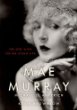
Ankerich, Michael G. Mae Murray: The Girl With the Bee Stung Lips. University of Kentucky Press. Ill.; filmography; notes; bib.; index. 392p. ISBN: 978-0-8131-3691-2. $40.00 November, 2012.
For those of us who grew up with the movies, (in my case talkies), it is a reading pleasure to find an unknown story, in this instance one dealing with a silent screen star, Mae Murray, whose story goes from rags to riches to rags, in a classic American Hollywood scenario, complete with eccentricities, bad marriages and odd behavior. Author Ankerich does his research and brings to life not only a forgotten big screen star but also the time in which she lived.
From a modest beginning on the Broadway stage in 1904, the former Anna Marie Koenig danced her way into the spotlight and the Ziegfeld Follies before departing for Hollywood and even greater stardom. Marriage to a fake prince turned abusive husband, coupled with Mae’s disappearance into her own publicity, turned a glittering career into a life sleeping on park benches and going without food. Toward the end of her life, former friends and colleagues saved her from the streets but she died broke in her sleep in 1965.
This is a well written, sad and still relevant biography and is a must for every movie buff.
For those of us who grew up with the movies, (in my case talkies), it is a reading pleasure to find an unknown story, in this instance one dealing with a silent screen star, Mae Murray, whose story goes from rags to riches to rags, in a classic American Hollywood scenario, complete with eccentricities, bad marriages and odd behavior. Author Ankerich does his research and brings to life not only a forgotten big screen star but also the time in which she lived.
From a modest beginning on the Broadway stage in 1904, the former Anna Marie Koenig danced her way into the spotlight and the Ziegfeld Follies before departing for Hollywood and even greater stardom. Marriage to a fake prince turned abusive husband, coupled with Mae’s disappearance into her own publicity, turned a glittering career into a life sleeping on park benches and going without food. Toward the end of her life, former friends and colleagues saved her from the streets but she died broke in her sleep in 1965.
This is a well written, sad and still relevant biography and is a must for every movie buff.
World War I
Murland, Jerry. Battle on the Aisne, 1914: The BEF and the Birth of the Western Front. Pen & Sword Books. Ill.; maps; notes; appendices; bib.; index. 248p. ISBN: 978-1-8488-4769-9. $39.95. November, 2012.
It is difficult to imagine the First World War in the West being fought without miles and miles of trenches with very little movement and tremendous casualties. Jerry Murland’s book very vividly reminds us of the beginning of the conflict, when it was a war of maneuver and focuses on the September, 1914 battles on the River Aisne. Using a plethora of primary sources from both sides, Murland brings this story to life. It is primarily a story of the British efforts to capture the Chemin des Dames ridge, which are the heights on the north bank of the Aisne, and held by the well dug-in Germans. The BEF (British Expeditionary Force), had difficulty sighting in their artillery; a lengthening and weakening logistics chain; and were not at all prepared for battle. The three British Corps lost over seven hundred officers and fifteen thousand men in the three major engagements covered in this book.
These figures shocked the English nation; never before had anyone suffered such losses in such a short period of time, and it was just the beginning.
It is difficult to imagine the First World War in the West being fought without miles and miles of trenches with very little movement and tremendous casualties. Jerry Murland’s book very vividly reminds us of the beginning of the conflict, when it was a war of maneuver and focuses on the September, 1914 battles on the River Aisne. Using a plethora of primary sources from both sides, Murland brings this story to life. It is primarily a story of the British efforts to capture the Chemin des Dames ridge, which are the heights on the north bank of the Aisne, and held by the well dug-in Germans. The BEF (British Expeditionary Force), had difficulty sighting in their artillery; a lengthening and weakening logistics chain; and were not at all prepared for battle. The three British Corps lost over seven hundred officers and fifteen thousand men in the three major engagements covered in this book.
These figures shocked the English nation; never before had anyone suffered such losses in such a short period of time, and it was just the beginning.
Biography

Rollyson, Carl. Hollywood Enigma: Dana Andrews. University Press of Mississippi. 352p. ISBN: 978-1-6047-3567-3. $35.00. July, 2012.
Here is a book that will do much to revive interest in one of Hollywood’s more competent actors, Dana Andrews. Growing up with family who loved to watch the movies, I did see some of his better known films, such as Laura The Oxbow Incident and The Best Years of Our Lives as an adolescent.
Rollyson makes excellent use of contemporary materials, including family interviews and home movies to present a balanced portrait of the man and actor; the man whose alcoholism prevented him from being a major star and the man who was devoted to family and a master of his craft, no matter what the critics had to say.
Here is a book that will do much to revive interest in one of Hollywood’s more competent actors, Dana Andrews. Growing up with family who loved to watch the movies, I did see some of his better known films, such as Laura The Oxbow Incident and The Best Years of Our Lives as an adolescent.
Rollyson makes excellent use of contemporary materials, including family interviews and home movies to present a balanced portrait of the man and actor; the man whose alcoholism prevented him from being a major star and the man who was devoted to family and a master of his craft, no matter what the critics had to say.
Food History

Krampner, Jon. Creamy and Crunchy: An Informal History of Peanut Butter, the All-American Food. Columbia University Press. 320p. ISBN: 978-0-2311-6232-6. $27.95. November, 2012.
Who doesn’t like peanut butter? Even if you were raised on it and profess to hate it, you still eat it in some form or other (most likely wrapped in chocolate). Creamy or crunchy, organic, generic or name brand, it is probably still a part of your pantry. It is definitely in mine and I cannot make a sandwich without the dogs hovering nearby to lick the spoon clean (when I’m done with it, that is).
Creamy and Crunchy is the definitive history of this scrumptious staple, an entertaining and informative read. It is a story that dates back a couple of millennia, when the peanut was first domesticated in South America, moves forward to the 1890’s and the first documented reports of use as peanut butter, right up to the present day. It encompasses the hardship of the black peanut farmer, marketing and clever advertising campaigns and the stories of the Jif, Skippy and Peter Pan brands.
This is an academic history and an avalanche of information but it is served up in digestible portions, at times witty and definitely subtle. So go and make yourself a sandwich or grab the jar and some crackers and enjoy.
Who doesn’t like peanut butter? Even if you were raised on it and profess to hate it, you still eat it in some form or other (most likely wrapped in chocolate). Creamy or crunchy, organic, generic or name brand, it is probably still a part of your pantry. It is definitely in mine and I cannot make a sandwich without the dogs hovering nearby to lick the spoon clean (when I’m done with it, that is).
Creamy and Crunchy is the definitive history of this scrumptious staple, an entertaining and informative read. It is a story that dates back a couple of millennia, when the peanut was first domesticated in South America, moves forward to the 1890’s and the first documented reports of use as peanut butter, right up to the present day. It encompasses the hardship of the black peanut farmer, marketing and clever advertising campaigns and the stories of the Jif, Skippy and Peter Pan brands.
This is an academic history and an avalanche of information but it is served up in digestible portions, at times witty and definitely subtle. So go and make yourself a sandwich or grab the jar and some crackers and enjoy.
Baseball History
Appel, Marty. Pinstripe Empire: The New York Yankees from Before the Babe to After the Boss. Bloomsbury USA. Ill.; appendix; bib.; index. 640p. ISBN: 978-1-6081-9492-6. $28.00 May, 2012.
I am not, nor have I ever been, a fan of the New York Yankees – since 1959. I do, however, have an avid interest in baseball history and Pinstripe Empire certainly fills the bill in that respect. Beginning in 1902, when Ban Johnson contrived to move the Baltimore franchise to New York in order to compete with the New York Giants in a big market and ending with the 2011 season, Appel has created the ultimate Yankee history. He takes an objective approach to his subject and tells a story full of anecdotes about players, managers and owners through the seasons when they couldn’t win and the seasons when they couldn’t be beaten. There are no play-by-plays and no box scores, just a hundred-plus years of the history of the National Game and its most storied, successful franchise.
Love them or hate them, this book should be on every baseball history shelf.
I am not, nor have I ever been, a fan of the New York Yankees – since 1959. I do, however, have an avid interest in baseball history and Pinstripe Empire certainly fills the bill in that respect. Beginning in 1902, when Ban Johnson contrived to move the Baltimore franchise to New York in order to compete with the New York Giants in a big market and ending with the 2011 season, Appel has created the ultimate Yankee history. He takes an objective approach to his subject and tells a story full of anecdotes about players, managers and owners through the seasons when they couldn’t win and the seasons when they couldn’t be beaten. There are no play-by-plays and no box scores, just a hundred-plus years of the history of the National Game and its most storied, successful franchise.
Love them or hate them, this book should be on every baseball history shelf.
Biography
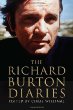
Burton, Richard. The Richard Burton Diaries. Yale University Press. Ill.; notes; bib.; index. 704p. ISBN: 978-0-3001-8010-1. $35.00 October, 2012.
Richard Burton was truly one of the mega stars of the twentieth century, both on the big screen and the stage. He also had a personal lifestyle to match. An opportunity to get to know the man through his own relatively unexpurgated words is a rare one and this book is not to be passed up.
Presented in chronological order, beginning in 1939 and ending in 1983, one year before his untimely death in 1984 at age 58, it has large gaps which should not be unexpected as Burton was not a diarist on the order of, say, Samuel Pepys of the seventeenth century. Nonetheless, what is presented here is revealing, passionate and erudite. Burton was extremely well read and wrote well enough to have been successful at that profession alone. He was at his most passionate when speaking of the love of his life, Elizabeth Taylor, albeit without the sex (which is the gentlemanly thing to do).
There is also gossip about various celebrities of the day, which makes for entertaining reading. Readers should not shy away from the size of this book, as it can be read in parts and is rather excessively footnoted. There is also an extensive bibliography.
The book is one not to be missed by lovers of those who were seen on the silver screen and at exclusive locales around the globe.
Richard Burton was truly one of the mega stars of the twentieth century, both on the big screen and the stage. He also had a personal lifestyle to match. An opportunity to get to know the man through his own relatively unexpurgated words is a rare one and this book is not to be passed up.
Presented in chronological order, beginning in 1939 and ending in 1983, one year before his untimely death in 1984 at age 58, it has large gaps which should not be unexpected as Burton was not a diarist on the order of, say, Samuel Pepys of the seventeenth century. Nonetheless, what is presented here is revealing, passionate and erudite. Burton was extremely well read and wrote well enough to have been successful at that profession alone. He was at his most passionate when speaking of the love of his life, Elizabeth Taylor, albeit without the sex (which is the gentlemanly thing to do).
There is also gossip about various celebrities of the day, which makes for entertaining reading. Readers should not shy away from the size of this book, as it can be read in parts and is rather excessively footnoted. There is also an extensive bibliography.
The book is one not to be missed by lovers of those who were seen on the silver screen and at exclusive locales around the globe.
World War II
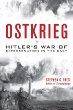
Fritz, Stephen G. Ostkrieg: Hitler’s War of Extermination in the East. University of Kentucky Press. Ill.; notes; bib.; index. 638p. ISBN: 978-0-8131-3416-1. $39.95. September, 2011.
Nowhere in the history of the Second World War has more attention been paid than the Eastern Front; the Russo-German war of 1941-1945 consumed more blood and treasure than anywhere else on the globe during the conflict (nearly fifteen million military dead alone). The gamut of published literature runs from memoir and biography to single and multi-volume campaign histories. Most, if not all, serve their purpose admirably.
In Ostkrieg, we get a rather large but well-written account of Adolf Hitler’s war against the Russians that adds new knowledge to the literature. Using both primary and secondary sources, Fritz deals with military operations in a clear, readable narrative and integrates other dimensions, such as economic, political and ideological aspects into the discussion. He states that this was Hitler’s war, an inevitable (in his mind), battle ending only with the total extermination of the Russians and the Jews, leaving the land open for the Germans. He also correctly indicts the German military for complicity (at the least), in carrying out these policies, a road rarely taken by scholars working in this area.
This book, at five hundred pages of text plus another hundred or so for sources, is not for the faint of heart. Those readers who approach it as “in for the duration”, will be rewarded for their time and effort.
Nowhere in the history of the Second World War has more attention been paid than the Eastern Front; the Russo-German war of 1941-1945 consumed more blood and treasure than anywhere else on the globe during the conflict (nearly fifteen million military dead alone). The gamut of published literature runs from memoir and biography to single and multi-volume campaign histories. Most, if not all, serve their purpose admirably.
In Ostkrieg, we get a rather large but well-written account of Adolf Hitler’s war against the Russians that adds new knowledge to the literature. Using both primary and secondary sources, Fritz deals with military operations in a clear, readable narrative and integrates other dimensions, such as economic, political and ideological aspects into the discussion. He states that this was Hitler’s war, an inevitable (in his mind), battle ending only with the total extermination of the Russians and the Jews, leaving the land open for the Germans. He also correctly indicts the German military for complicity (at the least), in carrying out these policies, a road rarely taken by scholars working in this area.
This book, at five hundred pages of text plus another hundred or so for sources, is not for the faint of heart. Those readers who approach it as “in for the duration”, will be rewarded for their time and effort.
American Civil War
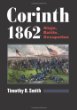
Smith, Timothy. Corinth, 1862: Siege, Battle, Occupation. University of Kansas Press. Ill.; maps; notes; bib.; index. 472p. ISBN: 978-0-7006-1852-1. $39.95. May, 2012.
There is so much yet to be discovered about the American Civil War; most Americans can answer to knowing something about the conflict. It seems that the concentration of printed materials focus on the Eastern Theater of Operations, i.e. Virginia and vastly less on the Western, with the possible exception of Vicksburg. Yet there were many decisive battles and campaigns fought throughout the “west”, from southern Ohio straight through to the Gulf of Mexico. One of these took place in the spring of 1862, at a small town in northeastern Mississippi, Corinth, a rail hub not far away from both Tennessee and Alabama and the key to the possession of the Mississippi River Valley. Whoever occupied Corinth controlled rail transportation in the area as well as the means to cut the Confederacy in half.
The Battle of Corinth took place in the spring with a siege that continued until October, when the battle actually commenced and ended with a Union victory. The occupation lasted until the end of the war; Corinth became a staging area for northern operations and the training of troops, especially the USCT.
Corinth, 1862 is the well-researched story of the town throughout the war and into Reconstruction. It is told largely through the participants’ voices and has an excellent flow throughout. The maps and illustrations add to the information and, in all, this book ably fills the gap of literature between the Battles of Shiloh and Vicksburg in the nation’s civil war chronology.
There is so much yet to be discovered about the American Civil War; most Americans can answer to knowing something about the conflict. It seems that the concentration of printed materials focus on the Eastern Theater of Operations, i.e. Virginia and vastly less on the Western, with the possible exception of Vicksburg. Yet there were many decisive battles and campaigns fought throughout the “west”, from southern Ohio straight through to the Gulf of Mexico. One of these took place in the spring of 1862, at a small town in northeastern Mississippi, Corinth, a rail hub not far away from both Tennessee and Alabama and the key to the possession of the Mississippi River Valley. Whoever occupied Corinth controlled rail transportation in the area as well as the means to cut the Confederacy in half.
The Battle of Corinth took place in the spring with a siege that continued until October, when the battle actually commenced and ended with a Union victory. The occupation lasted until the end of the war; Corinth became a staging area for northern operations and the training of troops, especially the USCT.
Corinth, 1862 is the well-researched story of the town throughout the war and into Reconstruction. It is told largely through the participants’ voices and has an excellent flow throughout. The maps and illustrations add to the information and, in all, this book ably fills the gap of literature between the Battles of Shiloh and Vicksburg in the nation’s civil war chronology.
Napoleonic Wars
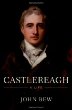
Bew, John. Castlereagh: A Life. Oxford University Press. 752p. ISBN: 978-0-1999-3159-0. $39.95. September, 2012.
Those students of the Napoleonic Era will surely recognize the name, Castlereagh, as he was perhaps the greatest British Foreign Secretary to hold the post, beginning in 1812 and continuing for the next ten years until his death by suicide in 1822. As the principle diplomat at the Congress of Vienna in 1814, he was the first to approach peace building with a cold and calculating perception of the relations between countries and the power behind the redrawn map of Europe.
Author Bew has produced a doorstop of a book full of well researched facts concerning Castlereagh’s early career as Chief Secretary of Ireland, his repression of the Irish Rebellion of 1798 (for which he is still hated there) and his instrumental role in the successful and controversial passage of the Irish Act of Union of 1800. After the passage of the Union Act, Robert Stewart, Lord Castlereagh, became Minister of War and Foreign Minister during the most active years of the Napoleonic Wars and his total support for Lord Wellington and the growth of the British Army proved the keys to victory. After the aforementioned Congress of Vienna in 1814, Castlereagh had the extremely difficult task of maintaining the peace and balance of power in Europe, no mean feat at practically any period of history. The book ends with the much maligned statesman’s suicide in 1822, the result of a nervous breakdown.
If the reader has the resolve to stay with this book, John Bew’s writing style will inform and enlighten from first page to last. A rewarding journey.
Those students of the Napoleonic Era will surely recognize the name, Castlereagh, as he was perhaps the greatest British Foreign Secretary to hold the post, beginning in 1812 and continuing for the next ten years until his death by suicide in 1822. As the principle diplomat at the Congress of Vienna in 1814, he was the first to approach peace building with a cold and calculating perception of the relations between countries and the power behind the redrawn map of Europe.
Author Bew has produced a doorstop of a book full of well researched facts concerning Castlereagh’s early career as Chief Secretary of Ireland, his repression of the Irish Rebellion of 1798 (for which he is still hated there) and his instrumental role in the successful and controversial passage of the Irish Act of Union of 1800. After the passage of the Union Act, Robert Stewart, Lord Castlereagh, became Minister of War and Foreign Minister during the most active years of the Napoleonic Wars and his total support for Lord Wellington and the growth of the British Army proved the keys to victory. After the aforementioned Congress of Vienna in 1814, Castlereagh had the extremely difficult task of maintaining the peace and balance of power in Europe, no mean feat at practically any period of history. The book ends with the much maligned statesman’s suicide in 1822, the result of a nervous breakdown.
If the reader has the resolve to stay with this book, John Bew’s writing style will inform and enlighten from first page to last. A rewarding journey.
American History
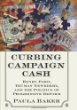
Baker, Paula. Curbing Campaign Cash: Henry Ford, Truman Newberry and the Politics of Progressive Reform. University of Kansas Press. Ill.; notes; bib.; index. 208p. ISBN: 978-0-7006-1863-7. $29.95. October, 2012.
Imagine for a moment that you are at your kitchen table in Detroit, Michigan. It is late in the year 1918 and you are about to write a letter of complaint to your United States Senator about unsafe working conditions at your job making Ford cars. Putting pencil to paper, you realize that your senator is Henry Ford and it hits you that writing is hopeless. Sound crazy? President Woodrow Wilson urged Ford to run for the seat and, making no public speeches or appearances, he very nearly won, the margin less than 9,000 votes. What kind of politician a man used to total obedience in his everyday business dealings, coupled with his specific mindset, would make, would be anybody’s guess.
Curbing Campaign Cash describes the 1918 Michigan U.S. Senate race between the esteemed Mr. Ford and one Truman Handy Newberry, Navy veteran of the Spanish-American War, former Assistant Secretary and Secretary of the Navy under President Theodore Roosevelt, Republican Congressman and one of the Detroit elites, albeit one who the ordinary voter knew very little of. Newberry’s campaign team was prepared to spend as much cash as needed to overcome Ford’s fame and presidential endorsement. And they did.
Newberry’s campaign committee spent nearly $200,000 in 1918 dollars, when the cap, by law, was $10,000, according to the 1912 Federal Corrupt Practices Act. The senator-elect was tried and convicted by Congress under this act but was eventually exonerated by the Supreme Court, which ruled (on appeal), that Congress had no right to regulate primary elections. This decision had its ripple effects, allowing southern states to hold whites-only primaries and set back campaign finance reformers decades.
This book provides an excellent peek under the bushel basket at the contradictions of the Progressive Era which created divisions between reformers. It is interesting to note that there is still no legislation curbing campaign spending.
Imagine for a moment that you are at your kitchen table in Detroit, Michigan. It is late in the year 1918 and you are about to write a letter of complaint to your United States Senator about unsafe working conditions at your job making Ford cars. Putting pencil to paper, you realize that your senator is Henry Ford and it hits you that writing is hopeless. Sound crazy? President Woodrow Wilson urged Ford to run for the seat and, making no public speeches or appearances, he very nearly won, the margin less than 9,000 votes. What kind of politician a man used to total obedience in his everyday business dealings, coupled with his specific mindset, would make, would be anybody’s guess.
Curbing Campaign Cash describes the 1918 Michigan U.S. Senate race between the esteemed Mr. Ford and one Truman Handy Newberry, Navy veteran of the Spanish-American War, former Assistant Secretary and Secretary of the Navy under President Theodore Roosevelt, Republican Congressman and one of the Detroit elites, albeit one who the ordinary voter knew very little of. Newberry’s campaign team was prepared to spend as much cash as needed to overcome Ford’s fame and presidential endorsement. And they did.
Newberry’s campaign committee spent nearly $200,000 in 1918 dollars, when the cap, by law, was $10,000, according to the 1912 Federal Corrupt Practices Act. The senator-elect was tried and convicted by Congress under this act but was eventually exonerated by the Supreme Court, which ruled (on appeal), that Congress had no right to regulate primary elections. This decision had its ripple effects, allowing southern states to hold whites-only primaries and set back campaign finance reformers decades.
This book provides an excellent peek under the bushel basket at the contradictions of the Progressive Era which created divisions between reformers. It is interesting to note that there is still no legislation curbing campaign spending.
Folklore
Pullman, Philip. Fairy Tales from the Brothers Grimm: A New English Version. Viking. 400p. ISBN: 978-0-6700-2497-1. $27.95. November, 2012.
Timed to celebrate the bicentennial of the Grimm Brothers fairy tales publication, this collection draws together fifty out of the two hundred and ten tales that the brothers collected so long ago. Author Pullman has made his selection from the “cream” of the collection and has included both familiar tales, such as Cinderella, and Snow White, along with others not so well known, i.e. Lady Heinz, The Stolen Pennies and the Three Snake-Leaves.
What makes this collection unique is the fact that Pullman reworked the stories for the newer generations, updating the text, yet keeping the atmosphere of the originals. Although some of the stories can be gritty and have their (supposed) allusions, there is nothing here that would offend anyone. The inclusion of endnotes after each story provides background to the story, attributions of each and why he chose them.
This may not appeal to Grimm purists but it earns its place on the shelf.
Timed to celebrate the bicentennial of the Grimm Brothers fairy tales publication, this collection draws together fifty out of the two hundred and ten tales that the brothers collected so long ago. Author Pullman has made his selection from the “cream” of the collection and has included both familiar tales, such as Cinderella, and Snow White, along with others not so well known, i.e. Lady Heinz, The Stolen Pennies and the Three Snake-Leaves.
What makes this collection unique is the fact that Pullman reworked the stories for the newer generations, updating the text, yet keeping the atmosphere of the originals. Although some of the stories can be gritty and have their (supposed) allusions, there is nothing here that would offend anyone. The inclusion of endnotes after each story provides background to the story, attributions of each and why he chose them.
This may not appeal to Grimm purists but it earns its place on the shelf.
World War II
Prados, John. Islands of Destiny: The Solomons Campaign and the Eclipse of the Rising Sun. New American Library. Maps; ill.; notes; bib.; appendix; index. 416p. ISBN: 978-0-4512-3804-7. $26.95. October, 2012.
As more and more World War II Japanese sources become available to scholars and historians and, thence to the readers, whose knowledge of the time period and relevant is subsequently fuller and more rounded. This is the case with Islands of Destiny, where John Prados utilizes the archives of both sides, especially the intelligence reports to challenge the current wisdom on what exactly was the turning point of World War II in the Pacific.
Although soundly thrashed at the Battle of Midway in June, 1942, losing four aircraft carriers in the process, Prados illustrates how the Imperial Navy bounced right back to continue offensive operations, having more warships than the United States to start with and more carriers in the supply pipeline. The Americans’ next set their sights on the Solomons, particularly Guadalcanal, which they invaded in August, 1942, beginning an operation that would last over a year, consuming precious blood and treasure until the campaign became the decisive operation of the Pacific war.
This is an intense history of the war from the invasion of Guadalcanal to the fight over Rabaul. I say intense as the narrative is loaded down with detail and is difficult to read; those who stick with it will gain new knowledge and a new perspective on the war in the Pacific.
As more and more World War II Japanese sources become available to scholars and historians and, thence to the readers, whose knowledge of the time period and relevant is subsequently fuller and more rounded. This is the case with Islands of Destiny, where John Prados utilizes the archives of both sides, especially the intelligence reports to challenge the current wisdom on what exactly was the turning point of World War II in the Pacific.
Although soundly thrashed at the Battle of Midway in June, 1942, losing four aircraft carriers in the process, Prados illustrates how the Imperial Navy bounced right back to continue offensive operations, having more warships than the United States to start with and more carriers in the supply pipeline. The Americans’ next set their sights on the Solomons, particularly Guadalcanal, which they invaded in August, 1942, beginning an operation that would last over a year, consuming precious blood and treasure until the campaign became the decisive operation of the Pacific war.
This is an intense history of the war from the invasion of Guadalcanal to the fight over Rabaul. I say intense as the narrative is loaded down with detail and is difficult to read; those who stick with it will gain new knowledge and a new perspective on the war in the Pacific.
The Dark Ages
Brown, Nancy Marie. The Abacus and the Cross: The Story of the Pope Who Brought the Light of Science to the Dark Ages. Basic Books. Ill.; notes; bib.; index. 328p. TP ISBN: 978-0-4650-3144-3. $16.99. October, 2012.
Forget what you know or have read about the Dark Ages because that knowledge is not quite correct. The Dark Ages were not as dark as previously reported. The years leading up to the millennium, 1000AD, were full of scientific experimentation and inquiry and an exchange of information between scholars in an array of different countries at a volume that astounds readers today. People knew more than what scholars have given them credit for. They knew that the world wasn’t going to end anytime soon and they also knew that terra firma was round, not flat. Granted, the lower classes most likely held onto their superstitions but those from all levels of society who could read and write were aware of these things and were learning more and more as time went on; and this knowledge was coming from the Middle Eastern, Arabic world.
Nancy Marie Brown, a science writer, has written an informative, entertaining biography of Gerbert of Aurillac, a scholarly monk who rose to become Pope Sylvester II. A leading astronomer and mathematician, he was known as “the Scientist Pope” who not only tolerated but encouraged scientific inquiry. This policy would make the Roman Catholic Church not only a clearing house for new knowledge but a bastion of acceptance of other races and creeds, notably Muslims and Jews.
Brown brings to life the time period and one of its luminaries in a way that makes the non-specialist that much more informed. This is not a sleeper but an engaging read.
Forget what you know or have read about the Dark Ages because that knowledge is not quite correct. The Dark Ages were not as dark as previously reported. The years leading up to the millennium, 1000AD, were full of scientific experimentation and inquiry and an exchange of information between scholars in an array of different countries at a volume that astounds readers today. People knew more than what scholars have given them credit for. They knew that the world wasn’t going to end anytime soon and they also knew that terra firma was round, not flat. Granted, the lower classes most likely held onto their superstitions but those from all levels of society who could read and write were aware of these things and were learning more and more as time went on; and this knowledge was coming from the Middle Eastern, Arabic world.
Nancy Marie Brown, a science writer, has written an informative, entertaining biography of Gerbert of Aurillac, a scholarly monk who rose to become Pope Sylvester II. A leading astronomer and mathematician, he was known as “the Scientist Pope” who not only tolerated but encouraged scientific inquiry. This policy would make the Roman Catholic Church not only a clearing house for new knowledge but a bastion of acceptance of other races and creeds, notably Muslims and Jews.
Brown brings to life the time period and one of its luminaries in a way that makes the non-specialist that much more informed. This is not a sleeper but an engaging read.
American History
Roberts, Alasdair. America’s First Great Depression: Economic Crisis and Political Disorder after the Panic of 1837. Cornell University Press. 264p. ISBN: 978-0-8014-5033-4. $26.00. April, 2012
“Those who don’t know history are doomed to repeat it” is no truer spoken than in this case – a booming real estate market; easy credit; excessive and increasing debt incurred on internal state improvements – then the bubble burst, banks literally disappear; states repudiate and/or cannot pay their debt; the federal government is incapable of taking effective or decisive action.
Sound familiar?
Occurring in 1837, the aftermath of this panic was traumatic, not only for Americans but also for Europeans, who, as investors, took years to get over their uneasiness about buying American bonds. There was severe social unrest in the United States then and the government’s capacity to manage these conflicts was severely tested. This depression affected everything, including the country’s ability to defend itself both at home and abroad. Until the beginnings of economic recovery in the early to mid-1840’s, there was much uncertainty and the U.S. economy did not recover until after the Mexican War in 1848.
This is a relevant book that should serve as a warning to what happens when; a well-written story not just of economic depression but how these policies rebounded around the globe.
“Those who don’t know history are doomed to repeat it” is no truer spoken than in this case – a booming real estate market; easy credit; excessive and increasing debt incurred on internal state improvements – then the bubble burst, banks literally disappear; states repudiate and/or cannot pay their debt; the federal government is incapable of taking effective or decisive action.
Sound familiar?
Occurring in 1837, the aftermath of this panic was traumatic, not only for Americans but also for Europeans, who, as investors, took years to get over their uneasiness about buying American bonds. There was severe social unrest in the United States then and the government’s capacity to manage these conflicts was severely tested. This depression affected everything, including the country’s ability to defend itself both at home and abroad. Until the beginnings of economic recovery in the early to mid-1840’s, there was much uncertainty and the U.S. economy did not recover until after the Mexican War in 1848.
This is a relevant book that should serve as a warning to what happens when; a well-written story not just of economic depression but how these policies rebounded around the globe.
Winston Churchill
Clarke, Peter. Mr. Churchill’s Profession: The Statesman as Author and the Book That Defined the “Special Relationship”. Bloomsbury Press. 368p. ISBN: 978-1-6081-9372-1. $30.00 May, 2012.
Presented here is a side of Winston Churchill that not many readers are aware of – that of a politician and member of a certain strata of English society supporting himself as an author.
The story begins with a fair summation of Churchill’s childhood, which was not all that rosy. His father, Lord Randolph Churchill, was a politician who married a New York heiress, Jennie Jerome, both of whom promptly neglected their son, who in turn idolized them both. His father died young and his mother, never good with money, continuously went through anything that remained. She did, however, have many contacts in society (as any beautiful widow would), and she provided her son with introductions and acted as his literary agent many times in getting his was dispatches published in the newspapers. These dispatches were written out into books, very popular ones at that, and by 1900, Churchill had practically written himself into elected office. With a royalty income of over $500,000 in today’s money, he could afford to stay in office but went through money pretty much as quickly as his mother did. He continued to write, albeit now with a staff to research and dictate to, ultimately winning the Nobel Prize in 1953 for his four-volume History of the English-Speaking Peoples.
This is an entertaining and informative “take” on one of the twentieth century’s foremost citizens.
Presented here is a side of Winston Churchill that not many readers are aware of – that of a politician and member of a certain strata of English society supporting himself as an author.
The story begins with a fair summation of Churchill’s childhood, which was not all that rosy. His father, Lord Randolph Churchill, was a politician who married a New York heiress, Jennie Jerome, both of whom promptly neglected their son, who in turn idolized them both. His father died young and his mother, never good with money, continuously went through anything that remained. She did, however, have many contacts in society (as any beautiful widow would), and she provided her son with introductions and acted as his literary agent many times in getting his was dispatches published in the newspapers. These dispatches were written out into books, very popular ones at that, and by 1900, Churchill had practically written himself into elected office. With a royalty income of over $500,000 in today’s money, he could afford to stay in office but went through money pretty much as quickly as his mother did. He continued to write, albeit now with a staff to research and dictate to, ultimately winning the Nobel Prize in 1953 for his four-volume History of the English-Speaking Peoples.
This is an entertaining and informative “take” on one of the twentieth century’s foremost citizens.
French History
Goldsmith, Elizabeth C. The King’s Mistresses: The Liberated Lives of Marie Mancini, Princess Colonna and Her Sister Hortense, Duchess Mazarin. Public Affairs Books. 288p. ISBN: 978-1-5864-8889-5. $26.99. April, 2012.
This is the dual biography of the Mancini sisters, Marie and Hortense, who were the nieces of Cardinal Mazarin, one of King Louis XIV of France’s advisors, who was in the process of becoming a political power in France. The girls were marriage fodder, pawns in the chess game of French politics with no legal rights under the law. Once married, these two were miserable and went on the lam together, in defiance of their husbands and French society in general.
What happened next would make the paparazzi salivate and, in fact, became tabloid headlines of the time period. Their behavior was scandalous and the discussions their actions sparked leaned toward the hypocritical; (not in my house); and the steps taken to stop them were quite shocking.
These two are 17th century media darlings and while we enjoy their romp through the salons of Paris, we learn about the Sun King’s country, French society and customs.
This is the dual biography of the Mancini sisters, Marie and Hortense, who were the nieces of Cardinal Mazarin, one of King Louis XIV of France’s advisors, who was in the process of becoming a political power in France. The girls were marriage fodder, pawns in the chess game of French politics with no legal rights under the law. Once married, these two were miserable and went on the lam together, in defiance of their husbands and French society in general.
What happened next would make the paparazzi salivate and, in fact, became tabloid headlines of the time period. Their behavior was scandalous and the discussions their actions sparked leaned toward the hypocritical; (not in my house); and the steps taken to stop them were quite shocking.
These two are 17th century media darlings and while we enjoy their romp through the salons of Paris, we learn about the Sun King’s country, French society and customs.
American Civil War
Magid, Paul. George Crook: From the Redwoods to Appomattox. University of Oklahoma Press. Ill.; maps; notes; bib.; index. 408p. ISBN: 978-0-8061-4207-4. $39.95. September, 2011.
To those students of the Indian fighting army, the name of George Crook is certainly no stranger; the General’s career fighting the Western tribes during the 1870’s and 1880’s being very well documented. What is not so well known is his earlier career, which began after graduation from West Point near the bottom of his class in 1852 and service on the West Coast as a brevet second lieutenant in the 4th U.S. Infantry. Active service in northern California, Oregon and Washington State honed his command skills, especially during the Rogue River War in Oregon and the Pitt River Expedition of 1857, where he was severely wounded, facing various Indian tribes.
In 1861, George Crook was ordered east and he accepted an appointment as colonel of the 36th Ohio Infantry, a unit assigned to Western Virginia. As a brigade commander, he performed well at Antietam. Following this, his division was detached for duty at Chickamauga and Chattanooga. In 1864, he returned to Western Virginia and the Shenandoah Valley campaigns. Marked by a tendency to ignore good intelligence delivered by a personally unliked source and a habit of blaming other generals for his own mistakes, Crook continued to turn in a mixed record though he tended to perform better under General Philip Sheridan, who was a friend.
All in all, Paul Magid does an excellent job portraying the practical education of the future Indian fighter who led both infantry and cavalry in conducting raids into enemy held territory and pioneered new tactics in guerilla warfare operations. All of these efforts, good and bad, would later make Crook one fine field commander.
To those students of the Indian fighting army, the name of George Crook is certainly no stranger; the General’s career fighting the Western tribes during the 1870’s and 1880’s being very well documented. What is not so well known is his earlier career, which began after graduation from West Point near the bottom of his class in 1852 and service on the West Coast as a brevet second lieutenant in the 4th U.S. Infantry. Active service in northern California, Oregon and Washington State honed his command skills, especially during the Rogue River War in Oregon and the Pitt River Expedition of 1857, where he was severely wounded, facing various Indian tribes.
In 1861, George Crook was ordered east and he accepted an appointment as colonel of the 36th Ohio Infantry, a unit assigned to Western Virginia. As a brigade commander, he performed well at Antietam. Following this, his division was detached for duty at Chickamauga and Chattanooga. In 1864, he returned to Western Virginia and the Shenandoah Valley campaigns. Marked by a tendency to ignore good intelligence delivered by a personally unliked source and a habit of blaming other generals for his own mistakes, Crook continued to turn in a mixed record though he tended to perform better under General Philip Sheridan, who was a friend.
All in all, Paul Magid does an excellent job portraying the practical education of the future Indian fighter who led both infantry and cavalry in conducting raids into enemy held territory and pioneered new tactics in guerilla warfare operations. All of these efforts, good and bad, would later make Crook one fine field commander.
American Civil War
Wills, Brian Steel. George Henry Thomas: As True as Steel. University of Kansas Press. Ill.; maps; notes; bib.; index. 600p. ISBN: 978-0-7006-1841-5. $39.95. April, 2012.
If you compiled a list, or at least looked at others’ lists, of the top Union generals of the Civil War, George Henry Thomas would be among the top five contenders based on his war record alone and ignoring for the moment all post war opinions of him. Out of the top five (or more, if you will), Thomas is perhaps the least known, recognized mostly by his sobriquet, “The Rock of Chickamauga”, to readers of the conflict. Thomas, who died in 1870 at the age of 53, did not pen his memoirs and his wife and sisters destroyed his personal papers, thereby making it quite difficult for biographers to work. But for the skilled and thoughtful researcher, there are ways around these obstacles.
George Henry Thomas captures the complicated man he was through his contemporaries’ correspondence, which gives us a fresh look into this extraordinary general who was fastidious in his preparations for combat and compassionate for those who were his subordinates. Thomas was quite short tempered, suffered fools not at all and refused to play the political game, which constantly threatened his advancement in rank and his career in general. The fact that he was born in Virginia and remained in the Union Army also made him and his motives suspect.
Thomas’ Civil War record speaks for itself; he won an early important victory at Mill Springs, performed well at Corinth, Stones River and gained immortality at Chickamauga. In command of the Army of the Cumberland with great success at Chattanooga and Atlanta, at Nashville in 1864, he completely destroyed the Confederate Army of General John B. Hood. After the war, Thomas made significant contributions to Reconstruction and died in his office at the Presidio in California.
Definitely well researched, this book adds significantly to the growing literature on General Thomas and just might end up being the definitive biography.
If you compiled a list, or at least looked at others’ lists, of the top Union generals of the Civil War, George Henry Thomas would be among the top five contenders based on his war record alone and ignoring for the moment all post war opinions of him. Out of the top five (or more, if you will), Thomas is perhaps the least known, recognized mostly by his sobriquet, “The Rock of Chickamauga”, to readers of the conflict. Thomas, who died in 1870 at the age of 53, did not pen his memoirs and his wife and sisters destroyed his personal papers, thereby making it quite difficult for biographers to work. But for the skilled and thoughtful researcher, there are ways around these obstacles.
George Henry Thomas captures the complicated man he was through his contemporaries’ correspondence, which gives us a fresh look into this extraordinary general who was fastidious in his preparations for combat and compassionate for those who were his subordinates. Thomas was quite short tempered, suffered fools not at all and refused to play the political game, which constantly threatened his advancement in rank and his career in general. The fact that he was born in Virginia and remained in the Union Army also made him and his motives suspect.
Thomas’ Civil War record speaks for itself; he won an early important victory at Mill Springs, performed well at Corinth, Stones River and gained immortality at Chickamauga. In command of the Army of the Cumberland with great success at Chattanooga and Atlanta, at Nashville in 1864, he completely destroyed the Confederate Army of General John B. Hood. After the war, Thomas made significant contributions to Reconstruction and died in his office at the Presidio in California.
Definitely well researched, this book adds significantly to the growing literature on General Thomas and just might end up being the definitive biography.
World War II
Roll, David R. The Hopkins Touch: Harry Hopkins and the Forging of the Alliance to Defeat Hitler. Oxford University Press. Notes; bib.; index. 520p. ISBN: 978-0-1998-9195-5. $34.95. January, 2013.
Behind every successful leader, in this specific case the President of the United States, stands at least one person of whom it can be said is the “power behind the throne.” In Franklin Delano Roosevelt’s case, that man was Harry Hopkins, an Iowa-born social worker who had been an integral part of the success of the New Deal at its beginning and by the time of the invasion of France by the Germans in 1940, had become Roosevelt’s most trusted advisor. As the war continued, he would become a trusted confidante of not only Winston Churchill but Josef Stalin as well (in the case of the latter, for a fellow human being, politics and ethnicity aside, no mean feat). Being trusted by the Big Three would be a tremendous burden for any number of people and Hopkins did it while being consistently ill with some malady or other, many of them life threatening. The fact that he performed as well as he did speaks volumes for the man’s spirit and sense of dedication. His association with Stalin has led more than one person to think Hopkins the head Communist in Roosevelt’s administration.
This is an excellent biography of one of the most influential men of the twentieth century, until now, almost forgotten.
Behind every successful leader, in this specific case the President of the United States, stands at least one person of whom it can be said is the “power behind the throne.” In Franklin Delano Roosevelt’s case, that man was Harry Hopkins, an Iowa-born social worker who had been an integral part of the success of the New Deal at its beginning and by the time of the invasion of France by the Germans in 1940, had become Roosevelt’s most trusted advisor. As the war continued, he would become a trusted confidante of not only Winston Churchill but Josef Stalin as well (in the case of the latter, for a fellow human being, politics and ethnicity aside, no mean feat). Being trusted by the Big Three would be a tremendous burden for any number of people and Hopkins did it while being consistently ill with some malady or other, many of them life threatening. The fact that he performed as well as he did speaks volumes for the man’s spirit and sense of dedication. His association with Stalin has led more than one person to think Hopkins the head Communist in Roosevelt’s administration.
This is an excellent biography of one of the most influential men of the twentieth century, until now, almost forgotten.
Early American History
Weidensaul, Scott. The First Frontier: The Forgotten History of Struggle, Savagery and Endurance in Early America. Houghton Mifflin Harcourt. 496p. ISBN: 978-0-1510-1515-5. $30.00. February, 2012.
American history generally runs from the landing of the Pilgrims, a mention of the French and Indian War, then right into the “troubles” leading up to the American Revolution. Then we are off and running from there. But there is a growing number of books that detail pre-revolution America and The First Frontier is one of the better ones.
The book covers two and a half centuries of the conflict occurring between the Native Americans and English, French, Spanish and American colonists up and down the Eastern seaboard and Weidensaul spare no details concerning the atrocities committed on both sides. The first part of the book describes the history of the habitation of the continent, offering the authors’ theories of how mankind arrived in North America and alludes to the presence of Vikings and Basque fishermen, going quite beyond the story of Columbus that we all have heard. The other parts of the book describe the effects of disease, armed conflict and trade had on both groups, with the indigenous population usually coming off at the short end of the proverbial stick. But there are heroes and villains on both sides of this story and Weidensaul presents both viewpoints effectively.
Although at times the narrative gets bogged down in the details, The First Frontier is an informative, understandable history of America up to about 1767 and pre-revolutionary America. Reader persistence will be rewarded.
American history generally runs from the landing of the Pilgrims, a mention of the French and Indian War, then right into the “troubles” leading up to the American Revolution. Then we are off and running from there. But there is a growing number of books that detail pre-revolution America and The First Frontier is one of the better ones.
The book covers two and a half centuries of the conflict occurring between the Native Americans and English, French, Spanish and American colonists up and down the Eastern seaboard and Weidensaul spare no details concerning the atrocities committed on both sides. The first part of the book describes the history of the habitation of the continent, offering the authors’ theories of how mankind arrived in North America and alludes to the presence of Vikings and Basque fishermen, going quite beyond the story of Columbus that we all have heard. The other parts of the book describe the effects of disease, armed conflict and trade had on both groups, with the indigenous population usually coming off at the short end of the proverbial stick. But there are heroes and villains on both sides of this story and Weidensaul presents both viewpoints effectively.
Although at times the narrative gets bogged down in the details, The First Frontier is an informative, understandable history of America up to about 1767 and pre-revolutionary America. Reader persistence will be rewarded.
The Middle East
Barr, James. A Line in the Sand: The Anglo-French Struggle for the Middle East, 1914-1948. W.W. Norton & Co. 464p. ISBN: 978-0-3930-7065-1. $29.95. January, 2012.
Tension in the Middle East is certainly no new story. The English and French fought each other there during the Napoleonic Wars and conflict in the region dates back even further to ancient times. In 1916, two men, one British and the other French, secretly decided to divide the Middle East between them in order to relieve tensions that threatened to destroy the Entente Cordiale. A line was literally drawn from the Mediterranean to the Persian frontier; north of the line France would control and south of the line would be under England’s; what would later become Palestine, Transjordan and Iraq for the latter and Lebanon and Syria for the former. The two powers would never become comfortable neighbors, playing tit-for-tat in an attempt to gain the upper hand. The ones to really suffer the most were the Arabs, whose land the region really was, after all.
A Line in the Sand describes these imperial machinations beginning with the Sykes-Picot agreement of 1916 to the end of World War II and the establishment of the separate countries of the area. It was the ultimate game of imperialism and colonization; a game ruled by deceit and atrocity, played by two countries that refused to recognize that the nineteenth century was over and with it their colonial empires. With all of the notable personalities involved here, their shortsightedness is quite remarkable and borders on the criminal.
For anyone interested in trying to understand the present Middle East, this book is definitely a must; well written and researched, it provides a good background to understanding the attitudes of the Jews and Arabs toward the West.
Tension in the Middle East is certainly no new story. The English and French fought each other there during the Napoleonic Wars and conflict in the region dates back even further to ancient times. In 1916, two men, one British and the other French, secretly decided to divide the Middle East between them in order to relieve tensions that threatened to destroy the Entente Cordiale. A line was literally drawn from the Mediterranean to the Persian frontier; north of the line France would control and south of the line would be under England’s; what would later become Palestine, Transjordan and Iraq for the latter and Lebanon and Syria for the former. The two powers would never become comfortable neighbors, playing tit-for-tat in an attempt to gain the upper hand. The ones to really suffer the most were the Arabs, whose land the region really was, after all.
A Line in the Sand describes these imperial machinations beginning with the Sykes-Picot agreement of 1916 to the end of World War II and the establishment of the separate countries of the area. It was the ultimate game of imperialism and colonization; a game ruled by deceit and atrocity, played by two countries that refused to recognize that the nineteenth century was over and with it their colonial empires. With all of the notable personalities involved here, their shortsightedness is quite remarkable and borders on the criminal.
For anyone interested in trying to understand the present Middle East, this book is definitely a must; well written and researched, it provides a good background to understanding the attitudes of the Jews and Arabs toward the West.
World War II
Herman, Arthur. Freedom’s Forge: How American Business Produced Victory in World War II. Random House. 432p. ISBN: 978-1-4000-6964-4. $28.00. May, 2012.
One of the monikers attached to the United States is “The Arsenal of Democracy”. Granted, this nickname dates back to the Second World War and has been used in countless books and the same number of documentaries but what does it mean and why did it get attached to this country?
The answers lie in this book, Freedom’s Forge, a lively and informative story of the transformation of America into an industrial powerhouse that guaranteed victory in World War II and the country’s place as the leader in the postwar world.
The story centers on two of the country’s leading industrialists, Henry J. Kaiser and William Knudsen, the former a shipbuilder and the latter a car maker. At the behest of President Franklin D. Roosevelt, both left their respective positions and went to Washington, D.C. to take charge of the country’s flagging war production effort. Convincing other magnates to work as “dollar-a-year-men” took some effort but quite quickly the production of war materials was in full gear, the U.S. eventually producing two-thirds of all materials used by the Allies.
This story is a supreme example of free enterprise working at its highest level with government support and very little meddling; perhaps an example as relevant then as it should be today. Well researched and well-told, Freedom’s Forge should be on every bookshelf.
One of the monikers attached to the United States is “The Arsenal of Democracy”. Granted, this nickname dates back to the Second World War and has been used in countless books and the same number of documentaries but what does it mean and why did it get attached to this country?
The answers lie in this book, Freedom’s Forge, a lively and informative story of the transformation of America into an industrial powerhouse that guaranteed victory in World War II and the country’s place as the leader in the postwar world.
The story centers on two of the country’s leading industrialists, Henry J. Kaiser and William Knudsen, the former a shipbuilder and the latter a car maker. At the behest of President Franklin D. Roosevelt, both left their respective positions and went to Washington, D.C. to take charge of the country’s flagging war production effort. Convincing other magnates to work as “dollar-a-year-men” took some effort but quite quickly the production of war materials was in full gear, the U.S. eventually producing two-thirds of all materials used by the Allies.
This story is a supreme example of free enterprise working at its highest level with government support and very little meddling; perhaps an example as relevant then as it should be today. Well researched and well-told, Freedom’s Forge should be on every bookshelf.
Popular Culture
Ashby, LeRoy. With Amusement for All: A History of American Popular Culture Since 1830. University of Kentucky Press. Ill.; notes; bib.; index. 712p. TP ISBN: 978-0-8131-4107-7. $24.95 September, 2012.
Americans pride themselves on having time off from their daily routine of work and can be quite adamant about how that leisure time is spent. And since the time when the “day” followed the sun, that leisure time has grown from evening hours to weekends and vacation time off.
This book covers the evolution of popular culture from the 1830’s to the twenty-first century; from the simple penny presses of the mid-nineteenth century to today’s Super Bowl extravaganzas (including wardrobe failures). This is not just a comprehensive history of entertainment; it is also an insightful exploration of entertainments’ effects on society and vice versa, because one does reflect and affect the other. (if you would pull your nose away from the internet, you would know this).
In With Amusement for All , one will find a wide variety of entertainment venues – radio, television, music, sports, movies and the internet; from P.T. Barnum’s “bunkum” to Sheldon Cooper’s “hokum”, it is all here, presented in an informative, entertaining narrative.
Americans pride themselves on having time off from their daily routine of work and can be quite adamant about how that leisure time is spent. And since the time when the “day” followed the sun, that leisure time has grown from evening hours to weekends and vacation time off.
This book covers the evolution of popular culture from the 1830’s to the twenty-first century; from the simple penny presses of the mid-nineteenth century to today’s Super Bowl extravaganzas (including wardrobe failures). This is not just a comprehensive history of entertainment; it is also an insightful exploration of entertainments’ effects on society and vice versa, because one does reflect and affect the other. (if you would pull your nose away from the internet, you would know this).
In With Amusement for All , one will find a wide variety of entertainment venues – radio, television, music, sports, movies and the internet; from P.T. Barnum’s “bunkum” to Sheldon Cooper’s “hokum”, it is all here, presented in an informative, entertaining narrative.
Olympic Games
Davis, David. Showdown at Shepherd’s Bush: The 1908 Olympic Marathon and the Three Runners Who Launched a Sporting Craze. Thomas Dunne Books. 320p. ISBN: 978-0-3126-4100-9. $25.99. June, 2012.
For those of us who are sick to death of the commercialism of the Olympics, the politics surrounding the International Olympic Committee, (the IOC), and the proliferation of different sporting events claiming to be of Olympic stature but not of the basic sports themselves, then here is the story surrounding the 1908 Olympic games (also held in London) and the first marathon that should not be missed. And for those of us who thrive on controversy, especially the sports kind, then this book is definitely for you.
Showdown at Shepherd’s Bush is centered on the lives of three long distance runners: an Irish-American, an Italian and an Onondaga-Canadian who face off against each other in the run from Windsor Castle to the stadium at Shepherd’s Bush, some 26 miles, 385 yards apart. Only two runners would enter Shepherd’s Bush stadium, and one of those would collapse just before the finish line and be helped by race officials, thereby disqualifying him and allowing the runner up to claim the gold medal.
This is a classic story and Davis enriches it with period detail; placing the games in context, he tells the greater story of the rise of the Olympic movement and sports in general during the late 1800’s – early 1900’s. Sports enthusiasts and lovers of history will enjoy this.
For those of us who are sick to death of the commercialism of the Olympics, the politics surrounding the International Olympic Committee, (the IOC), and the proliferation of different sporting events claiming to be of Olympic stature but not of the basic sports themselves, then here is the story surrounding the 1908 Olympic games (also held in London) and the first marathon that should not be missed. And for those of us who thrive on controversy, especially the sports kind, then this book is definitely for you.
Showdown at Shepherd’s Bush is centered on the lives of three long distance runners: an Irish-American, an Italian and an Onondaga-Canadian who face off against each other in the run from Windsor Castle to the stadium at Shepherd’s Bush, some 26 miles, 385 yards apart. Only two runners would enter Shepherd’s Bush stadium, and one of those would collapse just before the finish line and be helped by race officials, thereby disqualifying him and allowing the runner up to claim the gold medal.
This is a classic story and Davis enriches it with period detail; placing the games in context, he tells the greater story of the rise of the Olympic movement and sports in general during the late 1800’s – early 1900’s. Sports enthusiasts and lovers of history will enjoy this.
Indian Wars
Kraft, Louis. Ned Wynkoop and the Lonely Road from Sand Creek. University Press of Oklahoma. Ill.; notes; bib.; index. 336p. ISBN: 978-0-8061-4226-5. $34.95. October, 2011.
Who ever heard of an army officer on active duty on the western frontier during the Indian wars that was truly aware of and sympathetic to the American Plains Indians? There are probably some who thought that way and actually spoke out a time or two but not loud or long enough to damage their reputation. But there is one who risked everything in exchange for a heart and soul felt humanitarian stance towards Indians, especially the Cheyenne and Arapahoe – Edward W. “Ned” Wynkoop.
Wynkoop, born in Pennsylvania in 1836, went to Kansas Territory in 1856 to work as a clerk with the legislature. In Lecompton, the territorial capitol, he learned to clerk as well as to defend himself with Bowie knife and firearms. Not long after, he moved to Colorado, drawn by the gold rush in 1859. There he worked as a miner, bar tender, land speculator, sheriff and even an actor. The outbreak of the Civil War in 1861 changed his life forever. Enlisting in the 1st Colorado Volunteer Cavalry Regiment, Wynkoop ably served in the New Mexico campaign and rose to the rank of captain. Appointed to command at Camp Weld, near Denver with the rank of major, he convinced Black Kettle and other chiefs to come to Denver to talk peace. This was without orders in September, 1864, and totally disagreeable to his military superiors and the citizens of the Territory.
On November 29, 1864, the Colorado Volunteers attacked Black Kettle’s village along Sand Creek, killing over one hundred members of the tribe. When Wynkoop found out about it, he was livid; he felt betrayed by his government and the betrayer of Black Kettle. Not afraid to criticize the government’s treatment of the Indians, he became an outcast; leaving the army in 1866, he became an Indian agent and soon spoke out against Lieutenant Colonel George Custer’s actions at the Washita, another attack on a sleeping Indian camp. Wynkoop resigned from the Indian Bureau in 1868.
Louis Kraft has resurrected Ned Wynkoop from history’s obscurity with a balanced, well researched biography covering the early and immediate post-Civil War years of the West. This is a welcome addition to the literature.
Who ever heard of an army officer on active duty on the western frontier during the Indian wars that was truly aware of and sympathetic to the American Plains Indians? There are probably some who thought that way and actually spoke out a time or two but not loud or long enough to damage their reputation. But there is one who risked everything in exchange for a heart and soul felt humanitarian stance towards Indians, especially the Cheyenne and Arapahoe – Edward W. “Ned” Wynkoop.
Wynkoop, born in Pennsylvania in 1836, went to Kansas Territory in 1856 to work as a clerk with the legislature. In Lecompton, the territorial capitol, he learned to clerk as well as to defend himself with Bowie knife and firearms. Not long after, he moved to Colorado, drawn by the gold rush in 1859. There he worked as a miner, bar tender, land speculator, sheriff and even an actor. The outbreak of the Civil War in 1861 changed his life forever. Enlisting in the 1st Colorado Volunteer Cavalry Regiment, Wynkoop ably served in the New Mexico campaign and rose to the rank of captain. Appointed to command at Camp Weld, near Denver with the rank of major, he convinced Black Kettle and other chiefs to come to Denver to talk peace. This was without orders in September, 1864, and totally disagreeable to his military superiors and the citizens of the Territory.
On November 29, 1864, the Colorado Volunteers attacked Black Kettle’s village along Sand Creek, killing over one hundred members of the tribe. When Wynkoop found out about it, he was livid; he felt betrayed by his government and the betrayer of Black Kettle. Not afraid to criticize the government’s treatment of the Indians, he became an outcast; leaving the army in 1866, he became an Indian agent and soon spoke out against Lieutenant Colonel George Custer’s actions at the Washita, another attack on a sleeping Indian camp. Wynkoop resigned from the Indian Bureau in 1868.
Louis Kraft has resurrected Ned Wynkoop from history’s obscurity with a balanced, well researched biography covering the early and immediate post-Civil War years of the West. This is a welcome addition to the literature.
Indian Wars
Stevenson, Joan Nabseth. Deliverance From the Little Big Horn: Doctor Henry Proctor and Custer’s Seventh Cavalry. University of Oklahoma Press. Ill.; notes; bib.; index. 232p. ISBN: 978-0-8061-4266-1. $24.95. October, 2012.
There has been a recent spate of new books on the Battle of the Little Big Horn and the man whose plan went terribly wrong that day in late June, Brevet Major General George Armstrong Custer. As useful additions to the literature, they are of various values, from don’t bother reading to must-have-on-the-shelf. Deliverance from the Little Big Horn is of the latter variety.
The Seventh U.S. Cavalry was accompanied on campaign by three medical doctors: De Wolf, Lord and the youngest of the three, Porter, who was also the only survivor of the three. He was assigned to Major Marcus Reno’s battalion, which was no guarantee of survival but nevertheless was in this case.
Although this battle is well known, it has never been discussed from the contract surgeon’s point of view. The medical challenges facing the frontier army were many, not the least of which were combat related and there were many with Reno’s command.
Joan Stevenson describes the medical aspects with all the gory details but supported by an intimate knowledge of the procedures and limitations of medical triage in the Indian fighting army. Doctor Proctor performed surgeries on more than sixty soldiers, lost only a few whose cases were beyond hope and remained with them throughout their evacuation to a hospital over 700 miles away over terrible terrain.
This is a must have book for students and others interested in medical history, the Indian Wars and Custer himself.
There has been a recent spate of new books on the Battle of the Little Big Horn and the man whose plan went terribly wrong that day in late June, Brevet Major General George Armstrong Custer. As useful additions to the literature, they are of various values, from don’t bother reading to must-have-on-the-shelf. Deliverance from the Little Big Horn is of the latter variety.
The Seventh U.S. Cavalry was accompanied on campaign by three medical doctors: De Wolf, Lord and the youngest of the three, Porter, who was also the only survivor of the three. He was assigned to Major Marcus Reno’s battalion, which was no guarantee of survival but nevertheless was in this case.
Although this battle is well known, it has never been discussed from the contract surgeon’s point of view. The medical challenges facing the frontier army were many, not the least of which were combat related and there were many with Reno’s command.
Joan Stevenson describes the medical aspects with all the gory details but supported by an intimate knowledge of the procedures and limitations of medical triage in the Indian fighting army. Doctor Proctor performed surgeries on more than sixty soldiers, lost only a few whose cases were beyond hope and remained with them throughout their evacuation to a hospital over 700 miles away over terrible terrain.
This is a must have book for students and others interested in medical history, the Indian Wars and Custer himself.
Gilded Age
Zimmerman, Jean. Love, Fiercely: A Gilded Age Romance. Houghton Mifflin Harcourt. 336p. ISBN: 978-0-1510-1447-7. $26.00 March, 2012.
They call it “The Gilded Age” for a reason – the last four decades of the 1800’s saw the rise of the upper class to even greater heights than before due to an ever expanding country and its corresponding wealth. At the center was New York City, America’s largest city and the country’s financial heart. Old money, new money, the famous “400”, the very top of New York society and, coincidentally, the number of people who would comfortably fit into Mrs. Astor’s ballroom.
Jean Zimmerman brings this time period to decadent life though this dual biography of Edith Minturn and Isaac Newton Phelps-Stokes. Their lives together represented the time period perfectly and poignantly. It was a real love match between them, a rarity at any time for that class, even more so at this point in time, when many more do’s and don’ts were in place and strictly enforced.
Edith had beauty and background; she was intelligent and a progressive. Isaac came from almost uncountable wealth and irreproachable social standing. They would have no children but much influence on their own time and ours.
This is an intriguing and entertaining story well told.
They call it “The Gilded Age” for a reason – the last four decades of the 1800’s saw the rise of the upper class to even greater heights than before due to an ever expanding country and its corresponding wealth. At the center was New York City, America’s largest city and the country’s financial heart. Old money, new money, the famous “400”, the very top of New York society and, coincidentally, the number of people who would comfortably fit into Mrs. Astor’s ballroom.
Jean Zimmerman brings this time period to decadent life though this dual biography of Edith Minturn and Isaac Newton Phelps-Stokes. Their lives together represented the time period perfectly and poignantly. It was a real love match between them, a rarity at any time for that class, even more so at this point in time, when many more do’s and don’ts were in place and strictly enforced.
Edith had beauty and background; she was intelligent and a progressive. Isaac came from almost uncountable wealth and irreproachable social standing. They would have no children but much influence on their own time and ours.
This is an intriguing and entertaining story well told.
World War II
Verria, Lawrence and George Galdorisi. The Kissing Sailor: The Mystery Behind the Photo that Ended World War II. U.S. Naval Institute Press. Ill.; notes; bib.; index. 224p. ISBN: 978-1-6125-1078-1. $23.95. June, 2012.
One of the most iconic photographs ever taken is the subject of this book. It celebrates V-J Day (Victory over Japan), August 14, 1945, with a passionate kiss in Times Square. Anonymous at the time, the two people in the picture have been positively identified (and they are still alive). The Kissing Sailor tells the story behind the photo and, like any good detective story, does not stop until all of the usual suspects have been rounded up.
The authors begin by filling in the background: the irony that all of these participants – the photographer, kisser and kissee – lived through long odds in each of their lives, to show up in Times Square at the same time; Times Square itself as the place to meet; the events leading up to that day in August; and, finally, the photo itself, which wasn’t even a cover photo then.
The authors move to 1980, when Life magazine attempted to identify the sailor and the nurse. Needless to say, there were more than a few volunteers. Then they make the case for George and Greta, successfully, against all claimants and conclude with a section titled What Happened to the Truth?
It is interesting to note that in the melting pot of America, a German-Jewish photojournalist, a Portuguese-American and an Austrian-Jewish dental assistant unwittingly make up an image of America and her triumph. This book is their story.
One of the most iconic photographs ever taken is the subject of this book. It celebrates V-J Day (Victory over Japan), August 14, 1945, with a passionate kiss in Times Square. Anonymous at the time, the two people in the picture have been positively identified (and they are still alive). The Kissing Sailor tells the story behind the photo and, like any good detective story, does not stop until all of the usual suspects have been rounded up.
The authors begin by filling in the background: the irony that all of these participants – the photographer, kisser and kissee – lived through long odds in each of their lives, to show up in Times Square at the same time; Times Square itself as the place to meet; the events leading up to that day in August; and, finally, the photo itself, which wasn’t even a cover photo then.
The authors move to 1980, when Life magazine attempted to identify the sailor and the nurse. Needless to say, there were more than a few volunteers. Then they make the case for George and Greta, successfully, against all claimants and conclude with a section titled What Happened to the Truth?
It is interesting to note that in the melting pot of America, a German-Jewish photojournalist, a Portuguese-American and an Austrian-Jewish dental assistant unwittingly make up an image of America and her triumph. This book is their story.
American Civil War
Bell, Andrew McIwaine. Mosquito Soldiers: Malaria, Yellow Fever and the Course of the American Civil War. Louisiana State University Press. Ill.; maps; appendices; notes; bib.; index. 210p. ISBN: 978-0-8071-3561-7. $29.95. April, 2010.
Pick up any book on history, especially military history and you will find lists of casualties, usually divided into battle and non-battle numbers. One could only wonder why the deaths from sickness were always double the numbers from combat, as not a lot of printed pages were devoted to medicine in military histories.
Mosquito Soldiers adds significantly to the history of the American Civil War by presenting an informative discussion of the role played by malaria and yellow fever during the course of the war. The two diseases rank 1-2 in deaths caused and both were considered quite mysterious at the time, as the cause of each was attributed to just about everything except mosquitoes. Dr. Bell dispels the mystery with lively narrated chapters on the history of the disease; its effect on strategy; the role a misunderstanding of the diseases played in their use as a biological weapon; and, the effects the contagions had on the relevant civilian population, particularly those with direct exposure to the troops of either or both armies.
Ably supported by the maps and appendices, this book is useful and informative to the student of war and the general reader.
Pick up any book on history, especially military history and you will find lists of casualties, usually divided into battle and non-battle numbers. One could only wonder why the deaths from sickness were always double the numbers from combat, as not a lot of printed pages were devoted to medicine in military histories.
Mosquito Soldiers adds significantly to the history of the American Civil War by presenting an informative discussion of the role played by malaria and yellow fever during the course of the war. The two diseases rank 1-2 in deaths caused and both were considered quite mysterious at the time, as the cause of each was attributed to just about everything except mosquitoes. Dr. Bell dispels the mystery with lively narrated chapters on the history of the disease; its effect on strategy; the role a misunderstanding of the diseases played in their use as a biological weapon; and, the effects the contagions had on the relevant civilian population, particularly those with direct exposure to the troops of either or both armies.
Ably supported by the maps and appendices, this book is useful and informative to the student of war and the general reader.
American Revolution
Nester, William. The Revolutionary Years, 1775-1789: The Art of American Power During the Early Republic. Potomac Books. Maps; notes; index. 174p. ISBN: 978-1-5979-7674-9. $29.95. July, 2011.
This brief book covers fourteen crucial years of early American history, from the first shots of the Revolution in April 1775 to the ratification of the Constitution, by the original thirteen colonies, in 1789. It discusses how the founding fathers developed an American political authority and their ability to master and to use this power both at home and abroad.
The book is arranged chronologically beginning with an introductory chapter on the art of power and nation-building, leading up to the events that ignited the Revolutionary War. Nester then divides the war into two parts: winning independence (to 1781) and surviving the peace (to 1789) and the creation and ratification of the Constitution. This latter “half” discusses the new nations’ struggles with just about everybody – former allies France and Spain; Britain; the Indian tribes; and, finally, the Barbary States. The book concludes with an excellent discussion on the consequences of their acquisition and use of power as a burgeoning nation. One of these consequences was the understanding that leadership is an art.
This is an interesting look at a familiar subject that definitely generates food for thought.
This brief book covers fourteen crucial years of early American history, from the first shots of the Revolution in April 1775 to the ratification of the Constitution, by the original thirteen colonies, in 1789. It discusses how the founding fathers developed an American political authority and their ability to master and to use this power both at home and abroad.
The book is arranged chronologically beginning with an introductory chapter on the art of power and nation-building, leading up to the events that ignited the Revolutionary War. Nester then divides the war into two parts: winning independence (to 1781) and surviving the peace (to 1789) and the creation and ratification of the Constitution. This latter “half” discusses the new nations’ struggles with just about everybody – former allies France and Spain; Britain; the Indian tribes; and, finally, the Barbary States. The book concludes with an excellent discussion on the consequences of their acquisition and use of power as a burgeoning nation. One of these consequences was the understanding that leadership is an art.
This is an interesting look at a familiar subject that definitely generates food for thought.
World War II
Gordon, John. Fighting for MacArthur: The Navy and Marine Corps’ Desperate Defense of the Philippines. U.S. Naval Institute Press. Ill.; notes; bib.; index. ISBN: 978-1-6125-1057-6. $32.95. October, 2011.
Almost all of us know what ensued in the attack on Pearl Harbor, December 7, 1941. We also know that the Philippine Islands fell to the Japanese forces shortly thereafter, with General Douglas MacArthur skedaddling to Australia and the remaining survivors forced to endure the Bataan Death March. What most of us are unaware of is the role played by the U.S. Navy and Marine Corps forces in the defense of the Philippines; we are mostly aware that the U.S. Army was the only force involved.
Fighting for MacArthur is the only single volume account of the Navy and Marine Corps participation in the defense of the islands during the early days of the war in the Pacific. The book presents the story in chronological order, beginning with the situation of both of these services prior to the start of the conflict; specifically, the gunboats of the Asiatic Fleet and the China Marines, their evacuation to the Philippines and the fate of the Marines stationed in North China, many of whom were fated to spend the war in prison. Author Gordon offers a very vivid, detailed account describing the Japanese bombing of the Cavite Naval Yard on the third day of the war, the worst drubbing a U.S. Navy installation has ever taken. The book concludes with the final surrender and an enlightening discussion of what might have been done better throughout the entire campaign.
Gordon uses a deep collection of United States source materials: letters, diaries and reports, as well as newly discovered Japanese sources, such as a diary of a Japanese officer in the assault force that landed on southern Bataan. Gordon, a former army officer, also discusses th4e problems that existed between Mac Arthur and the Navy, attitudes that never really changed.
This is an in-depth and informative look at an unknown aspect of World War II in the Pacific and an excellent addition to the literature of the war.
Almost all of us know what ensued in the attack on Pearl Harbor, December 7, 1941. We also know that the Philippine Islands fell to the Japanese forces shortly thereafter, with General Douglas MacArthur skedaddling to Australia and the remaining survivors forced to endure the Bataan Death March. What most of us are unaware of is the role played by the U.S. Navy and Marine Corps forces in the defense of the Philippines; we are mostly aware that the U.S. Army was the only force involved.
Fighting for MacArthur is the only single volume account of the Navy and Marine Corps participation in the defense of the islands during the early days of the war in the Pacific. The book presents the story in chronological order, beginning with the situation of both of these services prior to the start of the conflict; specifically, the gunboats of the Asiatic Fleet and the China Marines, their evacuation to the Philippines and the fate of the Marines stationed in North China, many of whom were fated to spend the war in prison. Author Gordon offers a very vivid, detailed account describing the Japanese bombing of the Cavite Naval Yard on the third day of the war, the worst drubbing a U.S. Navy installation has ever taken. The book concludes with the final surrender and an enlightening discussion of what might have been done better throughout the entire campaign.
Gordon uses a deep collection of United States source materials: letters, diaries and reports, as well as newly discovered Japanese sources, such as a diary of a Japanese officer in the assault force that landed on southern Bataan. Gordon, a former army officer, also discusses th4e problems that existed between Mac Arthur and the Navy, attitudes that never really changed.
This is an in-depth and informative look at an unknown aspect of World War II in the Pacific and an excellent addition to the literature of the war.
World War I
Barkley, John Lewis. Scarlet Fields: The Combat Memoir of a World War I Medal of Honor Hero. Introduction and notes by Steven Trout. University Press of Kansas. Ill.; notes; 276p. ISBN: 978-0-7006-1842-2. $29.95. April, 2012.
This is the gritty, no holds barred memoir of an American doughboy serving in the U.S. Army in Europe during the First World War. John Barkley was a sniper and reconnaissance man assigned to Company K, 4th Infantry Regiment, a unit that was an integral part of the 3rd Infantry Division. This outfit established their reputation for bravery (and nickname “Rock of the Marne”) during the Aisne-Marne Offensive in July, 1918. Barkley was with the regiment for its entire World War I service and the ensuing occupation duty along the Rhine. Amongst a chest full of medals for bravery in combat is the Congressional Medal of Honor, which he won on October 7, 1918, defending his position from an abandoned tank and preventing the Germans from taking his position.
Scarlet Fields was originally published during the 1930’s as No Hard Feelings. Although it is one of the better war memoirs ever published by an enlisted man or officer, it was not a commercial success at the time, perhaps owing to the timing of its publication at a moment in time when everyone wanted to forget the “great war.”
The book’s republication as Scarlet Fields by the University Press of Kansas certainly introduces a previously unknown hero to a new generation of students, scholars and general readers. This book should be considered as the American version of Ernst Junger’s memoir, Storm of Steel in terms of accuracy in description of life and death in Europe during this conflict. Its reissue is definitely timely and of great importance to the literature of the Great War.
This is the gritty, no holds barred memoir of an American doughboy serving in the U.S. Army in Europe during the First World War. John Barkley was a sniper and reconnaissance man assigned to Company K, 4th Infantry Regiment, a unit that was an integral part of the 3rd Infantry Division. This outfit established their reputation for bravery (and nickname “Rock of the Marne”) during the Aisne-Marne Offensive in July, 1918. Barkley was with the regiment for its entire World War I service and the ensuing occupation duty along the Rhine. Amongst a chest full of medals for bravery in combat is the Congressional Medal of Honor, which he won on October 7, 1918, defending his position from an abandoned tank and preventing the Germans from taking his position.
Scarlet Fields was originally published during the 1930’s as No Hard Feelings. Although it is one of the better war memoirs ever published by an enlisted man or officer, it was not a commercial success at the time, perhaps owing to the timing of its publication at a moment in time when everyone wanted to forget the “great war.”
The book’s republication as Scarlet Fields by the University Press of Kansas certainly introduces a previously unknown hero to a new generation of students, scholars and general readers. This book should be considered as the American version of Ernst Junger’s memoir, Storm of Steel in terms of accuracy in description of life and death in Europe during this conflict. Its reissue is definitely timely and of great importance to the literature of the Great War.
Baseball History
Levitt, Daniel R. The Battle That Forged Modern Baseball: The Federal League Challenge and Its Legacy. Ivan R. Dee. Ill.; notes; bib.; index. 336p. ISBN: 978-1-5666-3869-2. $39.95. March, 2012.
Next year will mark the centennial anniversary of the Federal League, an upstart league and the last such to organization seriously challenge Major League Baseball’s grasp on the sport. The League was in existence for a short time, form 1913 to 1915 and consisted of eight teams located in Northeastern and Midwestern cities. They began play in the Midwest as a minor loop, playing local semi-professional teams and battling lower-level minor league teams for players to add to rosters.
But, mid-way through their inaugural season, the owners decided to declare themselves a major league and began to improve both rosters and locations to play in 1914, including cities such as Chicago, Pittsburgh and Baltimore. Their very real problem was signing players of major league caliber, thereby enhancing their product and effectively competing in the market.
Frustrated by baseball’s reserve clause, which bound players to their respective teams for life, the Feds attempted to take legal action to determine the legality of the clause, something Organized Baseball was not willing to contest. Instead they threatened to blacklist players who jumped leagues. Despite this, the Feds were able to land some marquee players, such as Joe Tinker, Eddie Plank and Mordecai “Three-Finger” Brown, but others, such as Ty Cobb, Eddie Collins and Tris Speaker, turned their offers into large pay raises from their old clubs.
Dan Levitt has produced a well-researched, well-written account of the machinations of both the Federal League and Organized Baseball as they challenged each other to compete in the same venue. This is not dry, legal stuff but an entertaining and informative recreation of the rough and tumble times of the American game.
Next year will mark the centennial anniversary of the Federal League, an upstart league and the last such to organization seriously challenge Major League Baseball’s grasp on the sport. The League was in existence for a short time, form 1913 to 1915 and consisted of eight teams located in Northeastern and Midwestern cities. They began play in the Midwest as a minor loop, playing local semi-professional teams and battling lower-level minor league teams for players to add to rosters.
But, mid-way through their inaugural season, the owners decided to declare themselves a major league and began to improve both rosters and locations to play in 1914, including cities such as Chicago, Pittsburgh and Baltimore. Their very real problem was signing players of major league caliber, thereby enhancing their product and effectively competing in the market.
Frustrated by baseball’s reserve clause, which bound players to their respective teams for life, the Feds attempted to take legal action to determine the legality of the clause, something Organized Baseball was not willing to contest. Instead they threatened to blacklist players who jumped leagues. Despite this, the Feds were able to land some marquee players, such as Joe Tinker, Eddie Plank and Mordecai “Three-Finger” Brown, but others, such as Ty Cobb, Eddie Collins and Tris Speaker, turned their offers into large pay raises from their old clubs.
Dan Levitt has produced a well-researched, well-written account of the machinations of both the Federal League and Organized Baseball as they challenged each other to compete in the same venue. This is not dry, legal stuff but an entertaining and informative recreation of the rough and tumble times of the American game.
French Revolution
Reiss, Tom. The Black Count: Glory, Revolution, Betrayal and the Real Count of Monte Cristo. Crown. Maps; notes; bib.; index. 432p. ISBN: 978-0-3073-8246-7. $27.00 September, 2012.
Having a slightly better than average handle on the comings and goings of people through history, I knew that General Alex Dumas was father and grandfather to two published, well-known authors, the son being among the greatest novelists of the nineteenth century. I also know a bit about his career. So when I saw this biography, I jumped at the opportunity to read and review it. I was not disappointed, to say the least.
Alex Dumas was born to a fugitive French nobleman who was white and a black slave woman in Saint-Dominque, which is present-day Haiti, in 1762. Sold by his father into slavery, Dumas managed to get to Paris by 1776, where he lived the life of a marquis’ son. In 1786, he enlisted in the French Army, where his rise in rank was meteoric due to the start of the French Revolution in 1789. An excellent swordsman, equestrian and reputedly the strongest man in the French army, he was, by age 32, given an army of 53,000 troops as a reward for recent triumphs – he then proceeded to lead a raid into the Alps and secured a key position for Napoleon. It was after this accomplishment that he was captured and thrown into a dungeon.
Tom Reiss has done an excellent job in telling the story of this forgotten hero of the French Revolution. He connects the father to the son by relating the real experiences of the former with the plots and characterizations of the latter, making for a compelling story within a story, as the son seeks to recreate the heroic actions of the father.
This is a real-life swashbuckler.
Having a slightly better than average handle on the comings and goings of people through history, I knew that General Alex Dumas was father and grandfather to two published, well-known authors, the son being among the greatest novelists of the nineteenth century. I also know a bit about his career. So when I saw this biography, I jumped at the opportunity to read and review it. I was not disappointed, to say the least.
Alex Dumas was born to a fugitive French nobleman who was white and a black slave woman in Saint-Dominque, which is present-day Haiti, in 1762. Sold by his father into slavery, Dumas managed to get to Paris by 1776, where he lived the life of a marquis’ son. In 1786, he enlisted in the French Army, where his rise in rank was meteoric due to the start of the French Revolution in 1789. An excellent swordsman, equestrian and reputedly the strongest man in the French army, he was, by age 32, given an army of 53,000 troops as a reward for recent triumphs – he then proceeded to lead a raid into the Alps and secured a key position for Napoleon. It was after this accomplishment that he was captured and thrown into a dungeon.
Tom Reiss has done an excellent job in telling the story of this forgotten hero of the French Revolution. He connects the father to the son by relating the real experiences of the former with the plots and characterizations of the latter, making for a compelling story within a story, as the son seeks to recreate the heroic actions of the father.
This is a real-life swashbuckler.
Napoleonic Wars
Haythornthwaite, Philip. Redcoats: The British Soldiers of the Napoleonic Wars. Pen & Sword Books. Ill.; notes; bib.; index. 256p. ISBN: 978-1-8441-5958-2. $39.95. August, 2012.
There are a myriad number of books in English alone on the period 1789-1815, encompassing the French Revolution and the Napoleonic Wars and its major and minor campaigns, alliances, major and minor personalities and strategy and tactics. The number decreases drastically when one would want information on the ordinary soldiers who carried the burden of armed conflict, outside of a regimental or unit history or the occasional memoir.
Philip Haythornthwaite’s new book takes an in-depth look at a British soldier’s life from recruitment to final discharge, the key stages at least, and does so in a brisk narrative that gives the reader a new perspective from which to view the men who “took the King’s shilling.” He begins with a short chapter describing the military establishment and proceeds to the Englishman in that establishment, starting with how he was recruited, equipped (or in some cases not equipped), disciplined, fed and promoted.
He discusses aspects of everyday life, both in garrison and on campaign and includes the women who followed their men overseas; culminating in a chapter on battle and one on ‘homecoming’, the author looks at their social life and how these “lobster backs” interacted with civilians, both at home and abroad. Using contemporary sources throughout, the author fills a very large gap in the literature of the period. Although largely ignored after their service (and that seems to happen throughout history), the British soldier here comes off a damn sight better than the “scum of the earth.”
A book worthy of every Napoleonic library.
There are a myriad number of books in English alone on the period 1789-1815, encompassing the French Revolution and the Napoleonic Wars and its major and minor campaigns, alliances, major and minor personalities and strategy and tactics. The number decreases drastically when one would want information on the ordinary soldiers who carried the burden of armed conflict, outside of a regimental or unit history or the occasional memoir.
Philip Haythornthwaite’s new book takes an in-depth look at a British soldier’s life from recruitment to final discharge, the key stages at least, and does so in a brisk narrative that gives the reader a new perspective from which to view the men who “took the King’s shilling.” He begins with a short chapter describing the military establishment and proceeds to the Englishman in that establishment, starting with how he was recruited, equipped (or in some cases not equipped), disciplined, fed and promoted.
He discusses aspects of everyday life, both in garrison and on campaign and includes the women who followed their men overseas; culminating in a chapter on battle and one on ‘homecoming’, the author looks at their social life and how these “lobster backs” interacted with civilians, both at home and abroad. Using contemporary sources throughout, the author fills a very large gap in the literature of the period. Although largely ignored after their service (and that seems to happen throughout history), the British soldier here comes off a damn sight better than the “scum of the earth.”
A book worthy of every Napoleonic library.
Korean War
Estes, Kenneth W. Into the Breach at Pusan: The 1st Provisional Marine Brigade in the Korean War. University of Oklahoma Press. Ill.; appendices; notes; bib.; index. 216p. ISBN: 978-0-8061-4254-8. $29.95. May, 2012.
Everyone knows (at least those who have been interested in reading about the “police action” in Korea), how the United States Marine Corps saved the day on the peninsula, time after time, saving the United States Army’s bacon from certain destruction. At least that is how it is recorded in the history books and the official histories as well. It is well that the research continues and reveals more and more information to present a clearer, more balanced picture of what actually occurred.
This is the case with Into the Breach at Pusan. The author utilizes contemporary source materials, such as combat records, action reports and oral histories from both the Army and Marine Corps in order to present a more accurate account of the campaign for the Pusan Perimeter. He has corrected discrepancies between accounts of the two armed services and has banked the fires of USMC sentiment seen throughout the literature and gives us an objective account of the accomplishments of the 1st Provisional Marine Brigade during the first three months of the Korean War.
Instead of the inter-service rivalry that is heard quite frequently, the reader instead gets a sense of the cooperation that had to have gone on in order to survive and secure victory. Without the Marines timely, professional performance, the 8th U.S. Army would have saved itself albeit with greater damage to itself.
This book makes an excellent addition to the literature of the “forgotten conflict.”
Everyone knows (at least those who have been interested in reading about the “police action” in Korea), how the United States Marine Corps saved the day on the peninsula, time after time, saving the United States Army’s bacon from certain destruction. At least that is how it is recorded in the history books and the official histories as well. It is well that the research continues and reveals more and more information to present a clearer, more balanced picture of what actually occurred.
This is the case with Into the Breach at Pusan. The author utilizes contemporary source materials, such as combat records, action reports and oral histories from both the Army and Marine Corps in order to present a more accurate account of the campaign for the Pusan Perimeter. He has corrected discrepancies between accounts of the two armed services and has banked the fires of USMC sentiment seen throughout the literature and gives us an objective account of the accomplishments of the 1st Provisional Marine Brigade during the first three months of the Korean War.
Instead of the inter-service rivalry that is heard quite frequently, the reader instead gets a sense of the cooperation that had to have gone on in order to survive and secure victory. Without the Marines timely, professional performance, the 8th U.S. Army would have saved itself albeit with greater damage to itself.
This book makes an excellent addition to the literature of the “forgotten conflict.”
Baseball History
Feldmann, Doug. Gibson’s Last Stand: The Rise, Fall and Near Misses of the St. Louis Cardinals, 1969-1975. University of Missouri Press. Ill.; notes; bib.; appendix; index. 256p. ISBN: 978-0-8262-1950-3. $29.95. September, 2011.
Being allowed to watch the 1968 World Series during study hall in a Catholic High School was, indeed, THE event to occur during those four years. And watching the unknown-till-then St. Louis Cardinals and their great pitching ace Bob Gibson, put our Tigers in a big 3-1 hole was certainly depressing. The come-from-behind win was exhilarating.
That is just the beginning of this book which chronicles the Cardinals subsequent seasons through 1975 and Gibson’s final season. With three World Series appearances between 1964 and 1968, the Cards were a sure bet to repeat as National League champs in 1969. But that was the year of the Miracle Mets and the Cardinal dynasty was in decline.
Doug Feldmann does much more than recount balls and strikes; he presents National League baseball in the context of the history of the time period – a very turbulent and changing one. Protests of the Vietnam War and another sexual revolution were just two of the changing aspects of society. Baseball was changing as well; free agency and the start of runaway salaries would change the game forever and split Major League Baseball into bid and small market areas. Attempting to adapt to these changes, Cardinal management tried to reinvent the team and made some disastrous trades in the early 1970’s.
Even if you are not a St. Louis Cardinals fan, this book should be in your library of solid baseball history.
Being allowed to watch the 1968 World Series during study hall in a Catholic High School was, indeed, THE event to occur during those four years. And watching the unknown-till-then St. Louis Cardinals and their great pitching ace Bob Gibson, put our Tigers in a big 3-1 hole was certainly depressing. The come-from-behind win was exhilarating.
That is just the beginning of this book which chronicles the Cardinals subsequent seasons through 1975 and Gibson’s final season. With three World Series appearances between 1964 and 1968, the Cards were a sure bet to repeat as National League champs in 1969. But that was the year of the Miracle Mets and the Cardinal dynasty was in decline.
Doug Feldmann does much more than recount balls and strikes; he presents National League baseball in the context of the history of the time period – a very turbulent and changing one. Protests of the Vietnam War and another sexual revolution were just two of the changing aspects of society. Baseball was changing as well; free agency and the start of runaway salaries would change the game forever and split Major League Baseball into bid and small market areas. Attempting to adapt to these changes, Cardinal management tried to reinvent the team and made some disastrous trades in the early 1970’s.
Even if you are not a St. Louis Cardinals fan, this book should be in your library of solid baseball history.
Renaissance Italy
Lev, Elizabeth. The Tigress of Forli: Renaissance Italy’s Most Courageous and Notorious Countess, Caterina Riario Sforza. Houghton Mifflin Harcourt. 336p. ISBN: 978-0-1510-1299-2. $27.00 October, 2011.
Renaissance history is replete with its colorful characters: heroes and heroines, villains and villainesses and everyone in between. Readers know of the Medici and Borgia families, at least the male progeny of those families but not too much about the women. The Tigress of Forli fills some of that gap with the fascinating story of an amazing woman forgotten to history.
Art historian Lev depicts Renaissance Italy in all of its aspects; war, politics, the lives of its more powerful families and society in general. She places Caterina Sforza in the middle of all this, and rightly so. An illegitimate child, (which did not hamper her in any way at this time in Europe), she was betrothed at age ten to one of the Pope’s corrupt nephews and actually married four years later. It would be the first of her three marriages.
Caterina managed to successfully play the game of Italian politics and, by and large, win – including making none other than Niccolo Machiavelli look like an incompetent fool. At seven months pregnant, this complex, dynamic woman displayed her military prowess by taking control of a papal fort, smuggled in more soldiers and held it against all comers for eleven days in order to defend her family’s rights and honor.
This is history that reads like fiction; intriguing, fast-paced, with almost too much information given the number of characters involved in Caterina Sforza’s life. Even if you are not interested in Renaissance history, you should read this for the well-written story that it is.
Renaissance history is replete with its colorful characters: heroes and heroines, villains and villainesses and everyone in between. Readers know of the Medici and Borgia families, at least the male progeny of those families but not too much about the women. The Tigress of Forli fills some of that gap with the fascinating story of an amazing woman forgotten to history.
Art historian Lev depicts Renaissance Italy in all of its aspects; war, politics, the lives of its more powerful families and society in general. She places Caterina Sforza in the middle of all this, and rightly so. An illegitimate child, (which did not hamper her in any way at this time in Europe), she was betrothed at age ten to one of the Pope’s corrupt nephews and actually married four years later. It would be the first of her three marriages.
Caterina managed to successfully play the game of Italian politics and, by and large, win – including making none other than Niccolo Machiavelli look like an incompetent fool. At seven months pregnant, this complex, dynamic woman displayed her military prowess by taking control of a papal fort, smuggled in more soldiers and held it against all comers for eleven days in order to defend her family’s rights and honor.
This is history that reads like fiction; intriguing, fast-paced, with almost too much information given the number of characters involved in Caterina Sforza’s life. Even if you are not interested in Renaissance history, you should read this for the well-written story that it is.
Hundred Years War
Barker, Juliet. Conquest: The English Kingdom of France, 1417-1450. Harvard University Press. Maps; notes; bib.; chronology; index. 512p. ISBN: 978-0-6470-4. $29.95. February, 2012.
Studying the history of the Hundred Years War is a daunting task, as French and English history during the fifthteenth century is complicated and confusing, even in the very best of scholars’ hands. Society and politics are complex, the events occurred over a one hundred year period and so long ago, yet they had an immense impact on the “evolution” of Europe.
In Conquest, Juliet Barker brings to life the last forty years of the conflict, beginning two years after the great battle of Agincourt (1415), and ending with the English defeat in 1450. Following Agincourt, England’s King Henry V led a second invasion of France in 1417 that, over the next four years placed almost all of the northern part of the country under English rule. From Flanders to Brittany along the coast; follow the Loire River east to Burgundy; include Gascony and most of France lies at the point of an English sword. Even the heir to the French throne has been disinherited.
It was Henry’s premature death in 1422 that put all of this on the downward slope. His young son was crowned the first – and last English king of France. Mentally disturbed, he would never be the leader his father was. Enter the Maid of Orleans, Joan of Arc, and French resistance to English rule starts to build; she crowned the dauphin Charles VII, who finally drives the English out.
This book is filled with colorful characters, both winners and losers, at a time when chivalry and its ideals were left trampled in the mud and blood of disputed lands. It is highly readable and definitely informative.
Studying the history of the Hundred Years War is a daunting task, as French and English history during the fifthteenth century is complicated and confusing, even in the very best of scholars’ hands. Society and politics are complex, the events occurred over a one hundred year period and so long ago, yet they had an immense impact on the “evolution” of Europe.
In Conquest, Juliet Barker brings to life the last forty years of the conflict, beginning two years after the great battle of Agincourt (1415), and ending with the English defeat in 1450. Following Agincourt, England’s King Henry V led a second invasion of France in 1417 that, over the next four years placed almost all of the northern part of the country under English rule. From Flanders to Brittany along the coast; follow the Loire River east to Burgundy; include Gascony and most of France lies at the point of an English sword. Even the heir to the French throne has been disinherited.
It was Henry’s premature death in 1422 that put all of this on the downward slope. His young son was crowned the first – and last English king of France. Mentally disturbed, he would never be the leader his father was. Enter the Maid of Orleans, Joan of Arc, and French resistance to English rule starts to build; she crowned the dauphin Charles VII, who finally drives the English out.
This book is filled with colorful characters, both winners and losers, at a time when chivalry and its ideals were left trampled in the mud and blood of disputed lands. It is highly readable and definitely informative.
English History
Jenkins, Simon. A Short History of England: The Glorious Story of a Rowdy Nation. Public Affairs. Ill.; index. 384p. ISBN: 978-1-6103-9142-9. $35.00 November, 2011.
To attempt to put 1,600 years of English history into a single volume is a daunting task; with a brisk and moving narrative, accompanied by hundreds of magnificent illustrations, Simon Jenkins has pulled it off. This is English history from the Saxons in 410 to the Cameron government in 2011. Full of anecdotes and all of the usual suspects, this volume will inform the beginner and refresh the expert in English history. A splendid book; the illustrations are alone worth the price of admission.
To attempt to put 1,600 years of English history into a single volume is a daunting task; with a brisk and moving narrative, accompanied by hundreds of magnificent illustrations, Simon Jenkins has pulled it off. This is English history from the Saxons in 410 to the Cameron government in 2011. Full of anecdotes and all of the usual suspects, this volume will inform the beginner and refresh the expert in English history. A splendid book; the illustrations are alone worth the price of admission.
American Civil War
Castel, Albert and Brooks D. Simpson. Victors in Blue: How Union Generals Fought the Confederates, Battled Each Other, and Won the Civil War. University Press of Kansas. Ill.; maps; notes; index. 374p. ISBN: 978-0-7006-1793-7. $34.95. November, 2011.
The question of why the North won the American Civil War has been a matter of discussion ever since Mr. McLean closed his front door in April, 1865. The Union has the money, manpower and material to fight a sustained conflict; it also has the combat leadership – a general officer corps made up mostly of regular officers and graduates of West Point. These officers’ abilities varied. Some had talent, others did not and most thought they were better than they actually were. Competing for a limited number of command slots, these men were rivals with tremendous egos, all of whom had heard of or served with the others at some point in their service careers.
Authors Castel and Simpson offer us a look at the war in terms of its very human characters, acting and reacting to each other as well as to the enemy. The focus is, however, strictly on the West Pointers and not those wearing stars appointed from civilian life. The narrative moves briskly and the writing is clean and, at times, acidly witty. There should be more of the juicy tidbits promised in the title but there is enough to just whet one’s appetite and go looking for more elsewhere.
There are some great new interpretations here that beg for more revisionist history of the American Civil War. This book is still recommended for all Civil War booksh4elves.
The question of why the North won the American Civil War has been a matter of discussion ever since Mr. McLean closed his front door in April, 1865. The Union has the money, manpower and material to fight a sustained conflict; it also has the combat leadership – a general officer corps made up mostly of regular officers and graduates of West Point. These officers’ abilities varied. Some had talent, others did not and most thought they were better than they actually were. Competing for a limited number of command slots, these men were rivals with tremendous egos, all of whom had heard of or served with the others at some point in their service careers.
Authors Castel and Simpson offer us a look at the war in terms of its very human characters, acting and reacting to each other as well as to the enemy. The focus is, however, strictly on the West Pointers and not those wearing stars appointed from civilian life. The narrative moves briskly and the writing is clean and, at times, acidly witty. There should be more of the juicy tidbits promised in the title but there is enough to just whet one’s appetite and go looking for more elsewhere.
There are some great new interpretations here that beg for more revisionist history of the American Civil War. This book is still recommended for all Civil War booksh4elves.
Military History
Price, Judith. Lest We Forget: Masterpieces of Patriotic Jewelry and Military Decorations. Taylor Trade Publications. Ill.; bib.; index. 160p. ISBN: 978-1-5897-9686-7. $24.95. November, 2011.
In this profusely illustrated book (all in color), Judith Price has assembled for exhibit one of the most diverse collections of military medals and decorations and commemorative jewelry ever seen in a book. Beginning with the headdress of Queen Pu-Abi of UR in 2650BCE to a Victory Bell cast from the metallic remains of a German aircraft in World War II, there are hundreds of illustrations of Indian Peace Medals, Field Marshall’s batons, inlaid Napoleonic era snuffboxes and sweetheart jewelry from World War II.
Divided into four chapters entitled: War, Valor, Memories and Peace, one cannot but recall both the sacrifices made by soldier and civilian alike represented and commemorated by these medals and patriotic jewelry. Supplementing the text are interviews with experts from British, French and various American institutions which highlight some specific pieces or collections. Of especial interest are the Corps Badges developed during the American Civil War, with some of them elaborately engraved with the soldier’s names and units and all are from the collections of the American Numismatic Society. Every page here reveals a miniature masterpiece of devotion, service and art. This is an excellent coffee table book on the subject.
In this profusely illustrated book (all in color), Judith Price has assembled for exhibit one of the most diverse collections of military medals and decorations and commemorative jewelry ever seen in a book. Beginning with the headdress of Queen Pu-Abi of UR in 2650BCE to a Victory Bell cast from the metallic remains of a German aircraft in World War II, there are hundreds of illustrations of Indian Peace Medals, Field Marshall’s batons, inlaid Napoleonic era snuffboxes and sweetheart jewelry from World War II.
Divided into four chapters entitled: War, Valor, Memories and Peace, one cannot but recall both the sacrifices made by soldier and civilian alike represented and commemorated by these medals and patriotic jewelry. Supplementing the text are interviews with experts from British, French and various American institutions which highlight some specific pieces or collections. Of especial interest are the Corps Badges developed during the American Civil War, with some of them elaborately engraved with the soldier’s names and units and all are from the collections of the American Numismatic Society. Every page here reveals a miniature masterpiece of devotion, service and art. This is an excellent coffee table book on the subject.
German History
Wilson, James. The Nazi’s Nuremberg Rallies. Pen & Sword Books. Ill.; maps; appendix; bib.; 176p. ISBN: 978-1-8488-4757-2. $39.95. July, 2012.
Nobody but nobody could organize a rally like the NSDAP (Nazis) could. Pomp and circumstance, ritual and ceremony, color, pageantry, precision, flags, banners and tremendous scale could and did subsume the senses and emotions of the participants, no matter their real feelings for Fuhrer and Fatherland.
James Wilson has assembled a tremendous number of illustrations covering these rallies, which took place each September from 1933 to 1938. These were the National Party Days and were vast, precisely managed extravaganzas that would put Hollywood’s best epics to shame. The object here, however, was not entertainment. Their purpose was two-fold: 1) to focus public attention on the strength and power of the Nazi Party, and 2) to present Adolf Hitler as the undisputed leader and savior of the Germans and the German nation.
The book is broken down into chapters detailing each years’ “Reichsparteitag” in Nuremberg from 1933 to 1939; the city was chosen as the permanent site in 1933, the Fifth Nazi Party Rally; the rally in 1939, scheduled to start September 2nd, did not take place due to the outbreak of World War II on September 1st. Following the rally chapters are character studies of the principle leaders of the Nazi Party, including Albert Speer and Julius Streicher; there are five others, all of whom are at the top of the Party hierarchy.
What really makes this book is the author’s remarkable collection of contemporary postcards and other images, which enables the reader to see how massive these rallies actually were. There are more than a few “then and now” match ups included as well. The captions are well written and informative. This is definitely an interesting book belonging in Second World War collections.
Nobody but nobody could organize a rally like the NSDAP (Nazis) could. Pomp and circumstance, ritual and ceremony, color, pageantry, precision, flags, banners and tremendous scale could and did subsume the senses and emotions of the participants, no matter their real feelings for Fuhrer and Fatherland.
James Wilson has assembled a tremendous number of illustrations covering these rallies, which took place each September from 1933 to 1938. These were the National Party Days and were vast, precisely managed extravaganzas that would put Hollywood’s best epics to shame. The object here, however, was not entertainment. Their purpose was two-fold: 1) to focus public attention on the strength and power of the Nazi Party, and 2) to present Adolf Hitler as the undisputed leader and savior of the Germans and the German nation.
The book is broken down into chapters detailing each years’ “Reichsparteitag” in Nuremberg from 1933 to 1939; the city was chosen as the permanent site in 1933, the Fifth Nazi Party Rally; the rally in 1939, scheduled to start September 2nd, did not take place due to the outbreak of World War II on September 1st. Following the rally chapters are character studies of the principle leaders of the Nazi Party, including Albert Speer and Julius Streicher; there are five others, all of whom are at the top of the Party hierarchy.
What really makes this book is the author’s remarkable collection of contemporary postcards and other images, which enables the reader to see how massive these rallies actually were. There are more than a few “then and now” match ups included as well. The captions are well written and informative. This is definitely an interesting book belonging in Second World War collections.
A History of Sex

Dabhoiwala, Faramerz. The Origins of Sex: A History of the First Sexual Revolution. Oxford University Press. 496p. ISBN: 978-0-1998-9241-0. $34.95. May, 2012.
When one thinks or hears about the first sexual revolution, one quickly focuses on the mid-1960’s – 1970’s and all that decade or so entailed. But the first sexual revolution discussed here is the history of changing ideas about sexual freedom from 1600 to 1800; the seventeenth and eighteenth centuries. By 1900, attitudes towards sex had changed drastically from an event punishable by death to a culture of sexual openness that found the doings of noted whores and notorious rakes on the pages of every newspaper. As the libertine ages moved into the early nineteenth century, the Victorians put a stop to such behavior and sexual freedom practically disappeared in an age of put-on, repression and double standards for both men and women.
Oxford historian Dabhoiwala has produced a well-researched, finely written book about sexual behavior and misbehavior, both of which are full of memorable characters and anecdotes. It was a period of time that produced the idea of the distinction between public and private, the lines of which are still hotly contested to this day.
Although The Origins of Sex focuses on the English, there are many parallels that can be seen on the subject on this side of the Atlantic Ocean. For example, it was in Boston, Massachusetts, where a man admitted he tried to have sex with an eighteen year old girl, admittedly while drunk; she was arrested and both were publicly hung – and that was in 1644.
When one thinks or hears about the first sexual revolution, one quickly focuses on the mid-1960’s – 1970’s and all that decade or so entailed. But the first sexual revolution discussed here is the history of changing ideas about sexual freedom from 1600 to 1800; the seventeenth and eighteenth centuries. By 1900, attitudes towards sex had changed drastically from an event punishable by death to a culture of sexual openness that found the doings of noted whores and notorious rakes on the pages of every newspaper. As the libertine ages moved into the early nineteenth century, the Victorians put a stop to such behavior and sexual freedom practically disappeared in an age of put-on, repression and double standards for both men and women.
Oxford historian Dabhoiwala has produced a well-researched, finely written book about sexual behavior and misbehavior, both of which are full of memorable characters and anecdotes. It was a period of time that produced the idea of the distinction between public and private, the lines of which are still hotly contested to this day.
Although The Origins of Sex focuses on the English, there are many parallels that can be seen on the subject on this side of the Atlantic Ocean. For example, it was in Boston, Massachusetts, where a man admitted he tried to have sex with an eighteen year old girl, admittedly while drunk; she was arrested and both were publicly hung – and that was in 1644.
Hawaii
Siler, Julia Flynn. Lost Kingdom: Hawaii’s Last Queen, the Sugar Kings and America’s First Imperial Adventure. Atlantic Monthly Press. 480p. ISBN: 978-0-8021-2001-4. $30.00 January, 2012.
It beggars the minds of some Americans to realize that at the beginning of the “American Century”, this country was struggling with issues of imperialism and the annexation of land not in the contiguous forty-eight states. Yet these issues existed and just prior to the War with Spain, the United States was in the process of swallowing whole a small island sovereign nation with a proud past.
Lost Kingdom tells the story of Hawaii, the only American state that was formerly a sovereign monarchy, through the life of her last queen, Liliuokalani, an ambitious, cultured, somewhat naïve woman slightly out of touch with the times, stubborn and ineffective as a politician. This is also a story of the rise and fall of the Hawaiian monarchy, finally succumbing to “Big Sugar” companies flexing its muscle in the rush to American imperialism.
This is not the full story of Hawaii but it is the tale of an island nation that was doomed from the time that British Captain James Cook set foot on the Big Island in 1778.
It beggars the minds of some Americans to realize that at the beginning of the “American Century”, this country was struggling with issues of imperialism and the annexation of land not in the contiguous forty-eight states. Yet these issues existed and just prior to the War with Spain, the United States was in the process of swallowing whole a small island sovereign nation with a proud past.
Lost Kingdom tells the story of Hawaii, the only American state that was formerly a sovereign monarchy, through the life of her last queen, Liliuokalani, an ambitious, cultured, somewhat naïve woman slightly out of touch with the times, stubborn and ineffective as a politician. This is also a story of the rise and fall of the Hawaiian monarchy, finally succumbing to “Big Sugar” companies flexing its muscle in the rush to American imperialism.
This is not the full story of Hawaii but it is the tale of an island nation that was doomed from the time that British Captain James Cook set foot on the Big Island in 1778.
American Civil War
Patchan, Scott C. Second Manassas: Longstreet’s Attack and the Struggle for Chinn Ridge. Potomac Books. Ill.; maps; appendices; notes; bib.; index. 214p. ISBN: 978-1-5979-7687-9. $26.95. July, 2011.
For three days in late August, 1862, Union and Confederate forces squared off in a rematch at Manassas in the Second Battle of Bull Run. Major General John Pope was in command of the Army of the Potomac, having said to everyone in Washington exactly what they wanted to hear – and then went and ignored any battlefield reality that did not fit into his plans. Such was the case on the last day of the battle, August 30, when Confederate General James Longstreet, in Pope’s mind many miles away, attacked Pope’s flank with the purpose of capturing the Union army intact and securing Southern Independence. If it weren’t for the pluck and determination of some Ohio troops, the attack and destruction of Pope’s army was a sure thing.
Scott Patchan’s book is a tactical history of Longstreet’s attack and the Union response on that last day of the Second Battle of Bull Run. The action on Chinn Ridge claimed the majority of casualties for the entire three days of fighting, making this fight the key to success or defeat for the contending armies. In the end, Pope’s army was able to get away and live to fight again, which in this case, would be at Antietam.
Although the book suffers from more adequate maps, Patchan’s control of the narrative makes for an informative, lively read. Second Manassas belongs on Civil War bookshelves, next to John Hennessey’s Return to Bull Run.
For three days in late August, 1862, Union and Confederate forces squared off in a rematch at Manassas in the Second Battle of Bull Run. Major General John Pope was in command of the Army of the Potomac, having said to everyone in Washington exactly what they wanted to hear – and then went and ignored any battlefield reality that did not fit into his plans. Such was the case on the last day of the battle, August 30, when Confederate General James Longstreet, in Pope’s mind many miles away, attacked Pope’s flank with the purpose of capturing the Union army intact and securing Southern Independence. If it weren’t for the pluck and determination of some Ohio troops, the attack and destruction of Pope’s army was a sure thing.
Scott Patchan’s book is a tactical history of Longstreet’s attack and the Union response on that last day of the Second Battle of Bull Run. The action on Chinn Ridge claimed the majority of casualties for the entire three days of fighting, making this fight the key to success or defeat for the contending armies. In the end, Pope’s army was able to get away and live to fight again, which in this case, would be at Antietam.
Although the book suffers from more adequate maps, Patchan’s control of the narrative makes for an informative, lively read. Second Manassas belongs on Civil War bookshelves, next to John Hennessey’s Return to Bull Run.
Roaring Twenties

Gusfield, Jeffrey. Deadly Valentines: The Story of Capone’s Henchman “Machine Gun” Jack McGurn and Louise Rolfe, His Blonde Alibi. Chicago Review Press. Ill.; notes; bib.; index. 368p. ISBN: 978-1-6137-4092-7. $24.95. April, 2012.
This is a book that exemplifies big city, big crime America during the Roaring Twenties and nothing is a better example than the City of Chicago, which this author uses with great gusto. It is the dual biography of “Machine Gun” Jack McGurn (born Vincent Gebardi), and Louise Rolfe, a prime example of the flapper if ever there was one.
The book begins with the Gebardi’s immigration to these shores and their arrival at Ellis Island in 1906; Vincente was four years old and lost his father shortly thereafter. Growing up on the streets of Brooklyn, he is instilled with Sicilian values, learns to defend himself and actually becomes a fairly decent boxer. The family moves to Chicago during Prohibition and Jack’s (as he now styles himself) stepfather is murdered for competing against the Genna crime family in the illicit booze trade. Author Gusfield does an excellent job in shifti ng away from McGurn to focus on Chicago’s gang wars and giving the reader great background information. The “Blonde Alibi’s” story is a contrast to Jack’s. an only child in an unhappy home, Louise decides to be everything her mother isn’t and starts in her early teenage years. Her father, by no means well off financially, has enough to keep Louise in the jazz clubs with the attention she craves.
Gusfield uses a first-person voice to narrate this story, which was at first a bit uncomfortable but after getting into the rhythm of it, I could almost hear Walter Winchell in the background. This is an excellent book about two amoral individuals caught up in a lawless decade. A must have for readers of the period and the St. Valentine’s Day Massacre.
This is a book that exemplifies big city, big crime America during the Roaring Twenties and nothing is a better example than the City of Chicago, which this author uses with great gusto. It is the dual biography of “Machine Gun” Jack McGurn (born Vincent Gebardi), and Louise Rolfe, a prime example of the flapper if ever there was one.
The book begins with the Gebardi’s immigration to these shores and their arrival at Ellis Island in 1906; Vincente was four years old and lost his father shortly thereafter. Growing up on the streets of Brooklyn, he is instilled with Sicilian values, learns to defend himself and actually becomes a fairly decent boxer. The family moves to Chicago during Prohibition and Jack’s (as he now styles himself) stepfather is murdered for competing against the Genna crime family in the illicit booze trade. Author Gusfield does an excellent job in shifti ng away from McGurn to focus on Chicago’s gang wars and giving the reader great background information. The “Blonde Alibi’s” story is a contrast to Jack’s. an only child in an unhappy home, Louise decides to be everything her mother isn’t and starts in her early teenage years. Her father, by no means well off financially, has enough to keep Louise in the jazz clubs with the attention she craves.
Gusfield uses a first-person voice to narrate this story, which was at first a bit uncomfortable but after getting into the rhythm of it, I could almost hear Walter Winchell in the background. This is an excellent book about two amoral individuals caught up in a lawless decade. A must have for readers of the period and the St. Valentine’s Day Massacre.
American History
Davis, William C. The Rogue Republic: How Would-Be Patriots Waged the Shortest Revolution in American History. Houghton Mifflin Harcourt. Ill.; notes; bib.; index. 416p. ISBN; 978-0-1510-0925-1. $28.00. April, 2011.
There are millions of small stories in history that have yet to be told; stories with a larger impact on the big picture than anyone would realize; and stories with almost larger than life characters. The Rogue Republic is one of these stories.
The controversy surrounding the purchase of the Louisiana Territory was, at the time, seemingly never ending. Boundaries were in dispute, the Napoleonic Wars were being fought, preoccupying France and Spain and American settlers were moving onto land that belonged, in reality, to Spain. The Spanish owned the region of West Florida, which extended across present-day southern Alabama and Mississippi and was being settled more and more by Americans after the Revolution. Offering generous terms to settlers, opportunities for them to prosper dwindled as Spain became less and less able to govern properly. Local government imposed more and more restrictions on the acquisition of land and new immigration. It didn’t take long for resistance to grow, organize and solidify. In 1810, the Republic of West Florida was formed, which included Alabama, Mississippi, Louisiana and the Florida Panhandle. Led by the Kemper brothers, outlaws already, the rebellion seemed strong enough to seize Spanish territory al the way to St. Augustine.
The United States Government, by now led by President James Madison, also coveted the territory and decided to encourage the rebels but only without provoking a war with any of the European powers. The republic was annexed after 90 days of independence.
Researched using contemporary sources, especially the newspapers, this book illuminates a small, dark corner of EARLY Republic history.
There are millions of small stories in history that have yet to be told; stories with a larger impact on the big picture than anyone would realize; and stories with almost larger than life characters. The Rogue Republic is one of these stories.
The controversy surrounding the purchase of the Louisiana Territory was, at the time, seemingly never ending. Boundaries were in dispute, the Napoleonic Wars were being fought, preoccupying France and Spain and American settlers were moving onto land that belonged, in reality, to Spain. The Spanish owned the region of West Florida, which extended across present-day southern Alabama and Mississippi and was being settled more and more by Americans after the Revolution. Offering generous terms to settlers, opportunities for them to prosper dwindled as Spain became less and less able to govern properly. Local government imposed more and more restrictions on the acquisition of land and new immigration. It didn’t take long for resistance to grow, organize and solidify. In 1810, the Republic of West Florida was formed, which included Alabama, Mississippi, Louisiana and the Florida Panhandle. Led by the Kemper brothers, outlaws already, the rebellion seemed strong enough to seize Spanish territory al the way to St. Augustine.
The United States Government, by now led by President James Madison, also coveted the territory and decided to encourage the rebels but only without provoking a war with any of the European powers. The republic was annexed after 90 days of independence.
Researched using contemporary sources, especially the newspapers, this book illuminates a small, dark corner of EARLY Republic history.
World War I
Torrey, Glenn E. The Romanian Battlefront in World War I. University Press of Kansas. Maps; ill.; tables; notes; bib.; index. 440p. ISBN: 978-0-7006-1839-2. $39.95. February, 2012.
As they call it a “world war”, it is assumed that the war occurred throughout the world, engaging every country, to one degree or another. There are gaps in our knowledge of the events of the First World War, which did involve more countries than are at the forefront of academic (or any) study – specifically the Central Powers and the Entente. One of the books to step up and fill a gap is The Romanian Battlefront in World War I.
For the first time in English is a comprehensive account of Romanian military involvement in the Great War. Although it arrived late to the war on the Allied side, for two years, 1916-1917, one million Romanians served their country. Totally unprepared for war in weaponry and the logistics to defend a 960-mile front, Romania was defeated early on and of the 500,000 men mobilized, 160,000 were killed and another 140,000 taken prisoner. Author Torrey tells the story of the revitalization and rearmament of the Romanian Army, the first with the assistance of French military advisors, the second by tons of war supplies arriving via Russian rail lines. Even with the collapse of the Russian armies during the Revolution, Romania was victorious in 1918 in holding their line, tying down numerous enemies and preventing them from gaining access to Romanian oil and wheat resources.
Glenn Torrey has been studying Romania in World War I for a lifetime, which is evident in his total control over the primary and secondary resources used to compile this lucid and informative addition to the literature of World War I.
As they call it a “world war”, it is assumed that the war occurred throughout the world, engaging every country, to one degree or another. There are gaps in our knowledge of the events of the First World War, which did involve more countries than are at the forefront of academic (or any) study – specifically the Central Powers and the Entente. One of the books to step up and fill a gap is The Romanian Battlefront in World War I.
For the first time in English is a comprehensive account of Romanian military involvement in the Great War. Although it arrived late to the war on the Allied side, for two years, 1916-1917, one million Romanians served their country. Totally unprepared for war in weaponry and the logistics to defend a 960-mile front, Romania was defeated early on and of the 500,000 men mobilized, 160,000 were killed and another 140,000 taken prisoner. Author Torrey tells the story of the revitalization and rearmament of the Romanian Army, the first with the assistance of French military advisors, the second by tons of war supplies arriving via Russian rail lines. Even with the collapse of the Russian armies during the Revolution, Romania was victorious in 1918 in holding their line, tying down numerous enemies and preventing them from gaining access to Romanian oil and wheat resources.
Glenn Torrey has been studying Romania in World War I for a lifetime, which is evident in his total control over the primary and secondary resources used to compile this lucid and informative addition to the literature of World War I.
World War II
Matheny, Michael R. Carrying the War to the Enemy: American Operational Art to 1945. University of Oklahoma Press. Ill.; maps; tables; notes; bib.; index. 320p. ISBN: 978-0-8061-4156-5. $45.00 April, 2011.
This is a history of the “operational art” as it developed in the United States Army from the early 1880’s to the end of the Second World War in 1945. Operational art, when used effectively by commanders, turns tactics into strategic victory. It is generally agreed that modern operational art developed during the interwar years (1919-1939), in Germany and the Soviet Union, not in the United States whose emasculation of its armed services when peace arrives is well known.
What is not so well known or studied is the role played by the army and navy educational systems after graduation form the academies. In 1881, General William T. Sherman ordered the establishment of the School of Application for Cavalry and Infantry at Fort Leavenworth, Kansas. By 1907, this school had expended into the School of the Line and the Army Staff College. The Army War College, at the top of the system, opened in 1904. The US Navy opened its War College in Newport, Rhode Island in 1904 as well.
Matheny discusses how officers and instructors at these colleges studied and interpreted the American experience in World War I. Their thoughts on joint and combined operations would lead to success in World War II. Matheny cites four major examples of successful combined operations: the invasion of North Africa, 1942, Operation Torch; Overlord, the invasion of Normandy, 1944; General Douglas MacArthur’s return to the Philippines in 1944; and, Operation Iceberg, the 1945 invasion of Okinawa. These successful ops put the US on the same level of efficiency as the Germans.
The author goes on to say that the beginning of nuclear warfare led the US to ignore operational studies, much to its detriment in Vietnam.
This is a timely, well-written book with a huge relevance on today’s battlefield.
This is a history of the “operational art” as it developed in the United States Army from the early 1880’s to the end of the Second World War in 1945. Operational art, when used effectively by commanders, turns tactics into strategic victory. It is generally agreed that modern operational art developed during the interwar years (1919-1939), in Germany and the Soviet Union, not in the United States whose emasculation of its armed services when peace arrives is well known.
What is not so well known or studied is the role played by the army and navy educational systems after graduation form the academies. In 1881, General William T. Sherman ordered the establishment of the School of Application for Cavalry and Infantry at Fort Leavenworth, Kansas. By 1907, this school had expended into the School of the Line and the Army Staff College. The Army War College, at the top of the system, opened in 1904. The US Navy opened its War College in Newport, Rhode Island in 1904 as well.
Matheny discusses how officers and instructors at these colleges studied and interpreted the American experience in World War I. Their thoughts on joint and combined operations would lead to success in World War II. Matheny cites four major examples of successful combined operations: the invasion of North Africa, 1942, Operation Torch; Overlord, the invasion of Normandy, 1944; General Douglas MacArthur’s return to the Philippines in 1944; and, Operation Iceberg, the 1945 invasion of Okinawa. These successful ops put the US on the same level of efficiency as the Germans.
The author goes on to say that the beginning of nuclear warfare led the US to ignore operational studies, much to its detriment in Vietnam.
This is a timely, well-written book with a huge relevance on today’s battlefield.
World War II
Goldman, Stuart D. Nomonhan, 1939: The Red Army’s Victory That Shaped World War II. U.S. Naval Institute Press. Ill.; maps; notes; bib.; index. 288p. ISBN: 978-1-5911-4329-1. $31.95. April, 2012.
Among the events leading up to the beginning of the Second World War is the off again, on again fighting in Asia. The Japanese were in the process of trying to conquer China (a quagmire if there ever was one), and subsequently were in an offensive, aggressive frame of mind. Near the border of Manchuria and Mongolia (a Soviet puppet state), they engaged in an intense, undeclared war with the Soviet Union. And, as these things are wont to do, it escalated into a decisive offensive launched by the Soviets with the intention of none other than the destruction of the Japanese forces.
Of course, all of this was occurring in relative obscurity, as most people’s attention was focused on Europe and Hitler’s Nazis. The events that occurred near the village of Nomonhan in late August, 1939, were overshadowed by the “main event” of World War II. Due to the efforts of Stuart Goldman, the curtain is drawn back from this part of the world’s stage and we see Nomonhan as one of those “small” actions whose repercussions have a major effect on the rest of the story.
This book is well researched, using both Japanese and Russian sources. Goldman does an excellent job tying together the various events such as the Nomonhan battle, the Soviet Nonaggression Pact with Germany and the start of World War II. Stalin signed the Pact in order to (among other reasons), avoid having to fight a two-front war and General Zhukov (the victor at Nomonhan), was placed in overall command of Soviet forces in 1941. Perhaps the most intriguing result of this battle was the Japanese decision to attack the United States and attempt to seize the oil-rich Dutch East Indies instead of striking westward.
This is a must read for all those with an interest in World War II and subsequent events.
Among the events leading up to the beginning of the Second World War is the off again, on again fighting in Asia. The Japanese were in the process of trying to conquer China (a quagmire if there ever was one), and subsequently were in an offensive, aggressive frame of mind. Near the border of Manchuria and Mongolia (a Soviet puppet state), they engaged in an intense, undeclared war with the Soviet Union. And, as these things are wont to do, it escalated into a decisive offensive launched by the Soviets with the intention of none other than the destruction of the Japanese forces.
Of course, all of this was occurring in relative obscurity, as most people’s attention was focused on Europe and Hitler’s Nazis. The events that occurred near the village of Nomonhan in late August, 1939, were overshadowed by the “main event” of World War II. Due to the efforts of Stuart Goldman, the curtain is drawn back from this part of the world’s stage and we see Nomonhan as one of those “small” actions whose repercussions have a major effect on the rest of the story.
This book is well researched, using both Japanese and Russian sources. Goldman does an excellent job tying together the various events such as the Nomonhan battle, the Soviet Nonaggression Pact with Germany and the start of World War II. Stalin signed the Pact in order to (among other reasons), avoid having to fight a two-front war and General Zhukov (the victor at Nomonhan), was placed in overall command of Soviet forces in 1941. Perhaps the most intriguing result of this battle was the Japanese decision to attack the United States and attempt to seize the oil-rich Dutch East Indies instead of striking westward.
This is a must read for all those with an interest in World War II and subsequent events.
War of 1812
Eshelman, Ralph E. A Travel Guide to the War of 1812 in the Chesapeake: Eighteen Tours in Maryland, Virginia & the District of Columbia. Johns Hopkins University Press. Ill.; maps; appendices; bib.; index. 296p. ISBN: 978-0-8018-9837-2. $24.95. March, 2011.
For those interested in the bicentennial of the War of 1812 and who like to hike battlefields or trod over historic ground, this book will take care of your needs in the Chesapeake region. As the title states, this is a guide to War of 1812 events in that area of the Eastern seaboard which saw a lot of conflict, especially during the latter years, 1813-1814.
The book is arranged geographically to make it easier to plan a trip (or several) and is divided into historic route tours and city, town and regional tours. It has relevant information in it for those who want to see the sites or recreate the routes actually used by the invading British or the fleeing Americans.
The book is replete with interesting sidebars which add great tidbits of local history and is illustrated with both historic and current views of locales and homes. The maps used, however, are woefully outdated and the lack of current roads and the like are a bit of a detriment. Aside from that small issue, this book is still a useful tool for those planning trips for the bicentennial.
For those interested in the bicentennial of the War of 1812 and who like to hike battlefields or trod over historic ground, this book will take care of your needs in the Chesapeake region. As the title states, this is a guide to War of 1812 events in that area of the Eastern seaboard which saw a lot of conflict, especially during the latter years, 1813-1814.
The book is arranged geographically to make it easier to plan a trip (or several) and is divided into historic route tours and city, town and regional tours. It has relevant information in it for those who want to see the sites or recreate the routes actually used by the invading British or the fleeing Americans.
The book is replete with interesting sidebars which add great tidbits of local history and is illustrated with both historic and current views of locales and homes. The maps used, however, are woefully outdated and the lack of current roads and the like are a bit of a detriment. Aside from that small issue, this book is still a useful tool for those planning trips for the bicentennial.
Horse Racing
Nicholson, James C. The Kentucky Derby: How the Run for the Roses Became America’s Premier Sporting Event. University of Kentucky Press. Ill.; notes; bib.; index. 296p. ISBN: 978-0-8131-3576-2. $24.95 March, 2012.
There was a time, not so long ago, when reading the Daily Racing Form was required daily for a good percentage of the population; maybe not so much anymore but this reviewer tends to fall behind the times a bit. I am fairly certain that there are not too many people on the planet who have never heard of the Kentucky Derby, the “most exciting two minutes in sports”. Even if you are not a horse racing fan, the bets are down that remember where you were in 1973 and Secretariat was beating every horse in sight, while setting track records for speed that are still records.
Nicholson traces the history of the derby back to England and discusses the trials, tribulations and successes of the Derby since its first running in 1875 up until 2010. More than a list of horses, riders, trainers and owners, this book parallels the Derby, the state of Kentucky and the people who inhabit this country who find themselves ready to watch a horse race on the first Saturday in May for reasons they really cannot put a finger on. An excellent read.
There was a time, not so long ago, when reading the Daily Racing Form was required daily for a good percentage of the population; maybe not so much anymore but this reviewer tends to fall behind the times a bit. I am fairly certain that there are not too many people on the planet who have never heard of the Kentucky Derby, the “most exciting two minutes in sports”. Even if you are not a horse racing fan, the bets are down that remember where you were in 1973 and Secretariat was beating every horse in sight, while setting track records for speed that are still records.
Nicholson traces the history of the derby back to England and discusses the trials, tribulations and successes of the Derby since its first running in 1875 up until 2010. More than a list of horses, riders, trainers and owners, this book parallels the Derby, the state of Kentucky and the people who inhabit this country who find themselves ready to watch a horse race on the first Saturday in May for reasons they really cannot put a finger on. An excellent read.
World War II
Rickard, John Nelson. Advance and Destroy: Patton As Commander in the Bulge. University of Kentucky Press. Ill.; maps; appendices; notes; bib.; index. 528p. ISBN: 978-0-8131-3455-0. $34.95 October, 2011.
One of the most colorful and controversial personalities to emerge during World War II was General George S. Patton, Jr. his flamboyance and military skill has ensured his place in history and he continues to draw attention from writers of all backgrounds and skill levels to such an extent that one would think that there is nothing new to say about him. Not quite.
John Rickard, following up on his earlier work, Patton At Bay: The Lorraine Campaign, 1944 has produced a masterpiece on Patton’s operational performance throughout the entire Ardennes campaign, from the first German attacks to the relief of Bastogne and beyond to the spring of 1945. In one of the few books to successfully put the reader next to the commanders and soldiers of all armies, Rickard blends the events, decisions and commanders in a real time scenario that really moves forward.
This is an extremely detailed, researched and written account of this battle from both sides of the frontlines. It is the first study of Patton that utilizes and assesses the role that military intelligence (including ULTRA), played in Third Army’s decision-making process. Included here are analyses of Patton’s “techniques” of reaching competent decisions, both on and off the battlefield, making Advance and Destroy an indispensible part of every World War II library.
One of the most colorful and controversial personalities to emerge during World War II was General George S. Patton, Jr. his flamboyance and military skill has ensured his place in history and he continues to draw attention from writers of all backgrounds and skill levels to such an extent that one would think that there is nothing new to say about him. Not quite.
John Rickard, following up on his earlier work, Patton At Bay: The Lorraine Campaign, 1944 has produced a masterpiece on Patton’s operational performance throughout the entire Ardennes campaign, from the first German attacks to the relief of Bastogne and beyond to the spring of 1945. In one of the few books to successfully put the reader next to the commanders and soldiers of all armies, Rickard blends the events, decisions and commanders in a real time scenario that really moves forward.
This is an extremely detailed, researched and written account of this battle from both sides of the frontlines. It is the first study of Patton that utilizes and assesses the role that military intelligence (including ULTRA), played in Third Army’s decision-making process. Included here are analyses of Patton’s “techniques” of reaching competent decisions, both on and off the battlefield, making Advance and Destroy an indispensible part of every World War II library.
Football History
Ingrassia, Brian M. The Rise of Gridiron University: Higher Education’s Uneasy Alliance with Big-Time Football. University Press of Kansas. Ill.; notes; bib.; index. 335p. ISBN: 978-0-7006-1830-9. $34.95 March, 2012.
Most people in the United States know exactly where they will be and what exactly they will be doing on any given Saturday afternoon (and sometimes that same evening), from late August through the following January. They will be watching a college football game, either on television or at the stadium. In both locations will be school colors, mascots, cups, souvenirs and other assorted paraphernalia. It represents ritual and it is beyond ritual. But was it always so?
For the dedicated college football fanatic who decides to explore the origins of his or her chosen team, histories abound, both on the general level and on the university team level with photographs galore and not much depth or context of the historical time period.
The Rise of Gridiron University is one of the most in depth account of the origins of college football. Ingrassia traces the evolution of the sport from its beginnings as an imitation of English rugby in the late 1800’s to the multi-million dollar industry it is today. First brought on campus in order to induce interest in the public mind for higher education, football rather overwhelmed the campus and became an integral part of both campus and non-campus life. The author discusses changes in American society, including sport and higher education from the 1820’s forward; the rise of cities and industries; the debate about sport during the Progressive Era; and the scandals, deaths, injuries and reforms surrounding college sports.
This book is very well researched; an interesting and insightful account of a popular sport, it sometimes drags a bit. Still, a worthwhile, informative read.
Most people in the United States know exactly where they will be and what exactly they will be doing on any given Saturday afternoon (and sometimes that same evening), from late August through the following January. They will be watching a college football game, either on television or at the stadium. In both locations will be school colors, mascots, cups, souvenirs and other assorted paraphernalia. It represents ritual and it is beyond ritual. But was it always so?
For the dedicated college football fanatic who decides to explore the origins of his or her chosen team, histories abound, both on the general level and on the university team level with photographs galore and not much depth or context of the historical time period.
The Rise of Gridiron University is one of the most in depth account of the origins of college football. Ingrassia traces the evolution of the sport from its beginnings as an imitation of English rugby in the late 1800’s to the multi-million dollar industry it is today. First brought on campus in order to induce interest in the public mind for higher education, football rather overwhelmed the campus and became an integral part of both campus and non-campus life. The author discusses changes in American society, including sport and higher education from the 1820’s forward; the rise of cities and industries; the debate about sport during the Progressive Era; and the scandals, deaths, injuries and reforms surrounding college sports.
This book is very well researched; an interesting and insightful account of a popular sport, it sometimes drags a bit. Still, a worthwhile, informative read.
Detroit History

Martelle, Scott. Detroit: A Biography. Chicago Review Press. Ill.; bib.; notes; index. 304p. ISBN: 978-1-5697-6526-5. $24.95. April, 2012.
Detroit the “City on the Strait” is, at 311 years, one of the oldest cities in the United States, with a rich, colorful, multi-faceted history and a definitely uncertain future, the result of a number of different reasons. The city has been many different things in its three hundred plus years and writing its history is definitely not an easy project. You will have put in too much of some things and not enough of others; left out important things and concentrated on lesser things… No one, Detroiter and non-Detroiter alike, could ever be satisfied.
Mr. Martelle has produced a well written, economical history of the “City Beautiful”, starting with its founding in 1701 as a French fur trade post to its current critical situation as a rusting hulk about to disappear beneath the waves. His approach to the city is biographical, which is different than the usual focus on race, politics or the auto industry; he talks about the city through a sampling of its people – population shifts, water usage, housing and job growth.
This is a book sure to inspire some to dig deeper into the history and enrage others who are proud yet powerless to change things. Nevertheless, it will produce interest and debate.
Detroit the “City on the Strait” is, at 311 years, one of the oldest cities in the United States, with a rich, colorful, multi-faceted history and a definitely uncertain future, the result of a number of different reasons. The city has been many different things in its three hundred plus years and writing its history is definitely not an easy project. You will have put in too much of some things and not enough of others; left out important things and concentrated on lesser things… No one, Detroiter and non-Detroiter alike, could ever be satisfied.
Mr. Martelle has produced a well written, economical history of the “City Beautiful”, starting with its founding in 1701 as a French fur trade post to its current critical situation as a rusting hulk about to disappear beneath the waves. His approach to the city is biographical, which is different than the usual focus on race, politics or the auto industry; he talks about the city through a sampling of its people – population shifts, water usage, housing and job growth.
This is a book sure to inspire some to dig deeper into the history and enrage others who are proud yet powerless to change things. Nevertheless, it will produce interest and debate.
Philippine Innsurection
Jones, Gregg. Honor in the Dust: Theodore Roosevelt, War in the Philippines, and the Rise and Fall of America’s Imperial Dream. New American Library. Ill.; bib.; notes; index. 448p. ISBN: 978-0-4512-2904-5. $26.95. February, 2012.
It was the beginning of the American Century, a time when the United States was primed to make its mark on the world stage. The country had defeated Spain in a short conflict over Cuban independence and had inherited the Philippine Islands to boot. The controversy over imperialism was heating up as a consequence. Should the United States acquire and control foreign territories for whatever the reason, or should the country forego empire?
The turn of the twentieth century saw this country on the verge of greatness but it was involved in an unusual war in the Philippines; unusual in that it had already defeated Spain and was attempting to deal with an indigenous population who were fighting as our allies for their own independence. The conflict had turned into a guerilla war in the jungle, rife with atrocity, cruelty and an ignorance of the rules of war on both sides.
Greg Jones reports the story of this almost forgotten piece of American military history objectively in a gripping narrative that keeps the pages turning. There are heroes and villains galore and some men who were both, from the ranks of the volunteer units in the bush, to the home front, all the way to the newly christened White House, where Theodore Roosevelt would face his first major, front-page crisis as President: rumors and official reports of the torture of Filipino prisoners of war by soldiers of the American Army and Marine Corps.
The Philippine Insurrection, which began in 1899 and ended in 1914, was the first of America’s “quagmires”, followed fifty years later by Vietnam, then the present-day difficulties in Iraq and Afghanistan. Jones draws no comparisons but they are here for all readers to see.
A must have book that is compelling history.
It was the beginning of the American Century, a time when the United States was primed to make its mark on the world stage. The country had defeated Spain in a short conflict over Cuban independence and had inherited the Philippine Islands to boot. The controversy over imperialism was heating up as a consequence. Should the United States acquire and control foreign territories for whatever the reason, or should the country forego empire?
The turn of the twentieth century saw this country on the verge of greatness but it was involved in an unusual war in the Philippines; unusual in that it had already defeated Spain and was attempting to deal with an indigenous population who were fighting as our allies for their own independence. The conflict had turned into a guerilla war in the jungle, rife with atrocity, cruelty and an ignorance of the rules of war on both sides.
Greg Jones reports the story of this almost forgotten piece of American military history objectively in a gripping narrative that keeps the pages turning. There are heroes and villains galore and some men who were both, from the ranks of the volunteer units in the bush, to the home front, all the way to the newly christened White House, where Theodore Roosevelt would face his first major, front-page crisis as President: rumors and official reports of the torture of Filipino prisoners of war by soldiers of the American Army and Marine Corps.
The Philippine Insurrection, which began in 1899 and ended in 1914, was the first of America’s “quagmires”, followed fifty years later by Vietnam, then the present-day difficulties in Iraq and Afghanistan. Jones draws no comparisons but they are here for all readers to see.
A must have book that is compelling history.
American West
Harris, Matthew J. and Jay H. Buckley, Editors. Zebulon Pike, Thomas Jefferson and the Opening of the American West. University of Oklahoma Press. Ill.; maps; notes; bib.; index. 256p. ISBN: 978-0-8061-4243-2. $29.95. April, 2012.
If questioned on early explorers of the American West, practically everyone could name Lewis & Clark; if asked for another, the percentages will plummet; the few that would have heard of Zebulon Pike will equate the name with the mountain but will not be able to produce the explorer’s first name.
In this collection of seven by six different American Western historians, Zebulon Pike and an assortment of his contemporaries are brought to the forefront of the history of the exploration of the lands of the Louisiana Purchase. These essays cover Pike’s life and his comparison to other explorers; his dealings with Native Americans and the Spanish; his contributions to science, map making and the impact of his explorations on the environment; and, finally, his role in Aaron Burr’s conspiracy and his relationship with General James Wilkinson, Pike’s mentor.
It is this last fact that tarnishes Pike’s reputation as an explorer, map maker and soldier. Was he involved? Was he a spy? Or was he just an ambitious officer, willing to follow orders and be a participant in building President Jefferson’s “Empire of Liberty”? Pike was certainly not a “lucky” man; he did get lost on an expedition and at one point, was a guest of the Spanish authorities. His 1810 journals and maps did make important contributions to the knowledge of the geography of the Purchase. Unfortunately, his death in battle in command of his brigade in 1813 prevents a longer look at a fuller life.
This reassessment of Pike and his accomplishments adds greatly to the new knowledge of the exploration of the American West.
If questioned on early explorers of the American West, practically everyone could name Lewis & Clark; if asked for another, the percentages will plummet; the few that would have heard of Zebulon Pike will equate the name with the mountain but will not be able to produce the explorer’s first name.
In this collection of seven by six different American Western historians, Zebulon Pike and an assortment of his contemporaries are brought to the forefront of the history of the exploration of the lands of the Louisiana Purchase. These essays cover Pike’s life and his comparison to other explorers; his dealings with Native Americans and the Spanish; his contributions to science, map making and the impact of his explorations on the environment; and, finally, his role in Aaron Burr’s conspiracy and his relationship with General James Wilkinson, Pike’s mentor.
It is this last fact that tarnishes Pike’s reputation as an explorer, map maker and soldier. Was he involved? Was he a spy? Or was he just an ambitious officer, willing to follow orders and be a participant in building President Jefferson’s “Empire of Liberty”? Pike was certainly not a “lucky” man; he did get lost on an expedition and at one point, was a guest of the Spanish authorities. His 1810 journals and maps did make important contributions to the knowledge of the geography of the Purchase. Unfortunately, his death in battle in command of his brigade in 1813 prevents a longer look at a fuller life.
This reassessment of Pike and his accomplishments adds greatly to the new knowledge of the exploration of the American West.
American Indian Wars
Solimine, Leo. Custer’s Bugler: The Life of John Martin (Giovanni Martino). Universal Publishers. Ill.; appendices; notes; bib.; 135p. ISBN: 978-1-6123-3084-3. $25.95. February, 2012.
One of the seminal events of the Plains Indian Wars of 1866-1890, was the Battle of the Little Big Horn, which saw the destruction of General George Armstrong Custer and some five companies of the U.S. Seventh Cavalry by the largest concentration of Native Americans ever seen on the continent to that date (1876).
Custer’s Last Stand has been the subject of many articles, books, films and documentaries, fomenting debate and argument over personalities, strategy and tactics, etc. There are heroes and villains galore in the ranks of the Seventh Cavalry and there have been a few biographies written about the men involved (excluding, of course, Custer himself, which is a cottage industry). One of the latest to appear is Custer’s Bugler, a very nicely researched story of the life of Trumpeter, later Sergeant John Martin, probably the last white man to see Custer alive.
Author Solimine has gone to great pains to assemble this story as Bugler Martin’s story begins in Italy as a foundling in May of 1852. Such cases can be extremely difficult to research and Solimine’s efforts are rewarded with the discovery of Martin’s real name, his service with Garibaldi’s army during Italy’s wars of unification and his emigration to the United States in 1873. Solimine treats his (Martin’s) Indian War service in a straightforward manner; Martin, acting as an orderly on that fateful day, carried the message from Custer to Captain Frederick Benteen, which ordered the ammunition packs forward. He describes Martin’s subsequent military career through to his retirement in 1904.
This is a nice, easy read, full and properly researched and therefore informative; a welcome addition to the literature of Custer’s Last Stand.
One of the seminal events of the Plains Indian Wars of 1866-1890, was the Battle of the Little Big Horn, which saw the destruction of General George Armstrong Custer and some five companies of the U.S. Seventh Cavalry by the largest concentration of Native Americans ever seen on the continent to that date (1876).
Custer’s Last Stand has been the subject of many articles, books, films and documentaries, fomenting debate and argument over personalities, strategy and tactics, etc. There are heroes and villains galore in the ranks of the Seventh Cavalry and there have been a few biographies written about the men involved (excluding, of course, Custer himself, which is a cottage industry). One of the latest to appear is Custer’s Bugler, a very nicely researched story of the life of Trumpeter, later Sergeant John Martin, probably the last white man to see Custer alive.
Author Solimine has gone to great pains to assemble this story as Bugler Martin’s story begins in Italy as a foundling in May of 1852. Such cases can be extremely difficult to research and Solimine’s efforts are rewarded with the discovery of Martin’s real name, his service with Garibaldi’s army during Italy’s wars of unification and his emigration to the United States in 1873. Solimine treats his (Martin’s) Indian War service in a straightforward manner; Martin, acting as an orderly on that fateful day, carried the message from Custer to Captain Frederick Benteen, which ordered the ammunition packs forward. He describes Martin’s subsequent military career through to his retirement in 1904.
This is a nice, easy read, full and properly researched and therefore informative; a welcome addition to the literature of Custer’s Last Stand.
Biography
Patton, Benjamin with Jennifer Scruby. Growing Up Patton: Reflections on Heroes, History and Family Wisdom. Berkley. Ill.; notes; index. 368p. ISBN: 978-0-4252-4351-0. $26.95. March, 2012.
When I was offered the opportunity to consider this book for review, I figuratively jumped at the chance, thinking I would finally learn some things about General Patton (the son), having briefly served under his command, in what seems like eons ago. I learned much more than that.
This is a book about the Patton family and their relationships with family, friends and even some enemies. The unpublished letters between the World War II general and his namesake son speak volumes of the familial side of “Old Blood and Guts”. Written in the middle of active campaigning in 1944 and 1945, they illustrate the fact that family is important to them and they need to aspire to live up to a certain standard that is somewhat different than anyone else’s. After the general’s premature death in December, 1945, the book picks up the career of the namesake and the astonishing number of friends and acquaintances that were positively affected by that fact. The rather controversial career of George Patton IV proves the fact that the fruit doesn’t fall far from the tree.
That there are a number of women both inside and outside of the family that had made such a mark on their respective societies also speaks volumes of the relevance of this particular family and their impact on history.
The Patton in the byline of this book is the grandson of the four-star general and the son of the two-star general. He ahs never served in the military. By giving us new insights into this illustrious American family and doing so without embellishment, he has added significantly to the literature on American history and the Pattons.
When I was offered the opportunity to consider this book for review, I figuratively jumped at the chance, thinking I would finally learn some things about General Patton (the son), having briefly served under his command, in what seems like eons ago. I learned much more than that.
This is a book about the Patton family and their relationships with family, friends and even some enemies. The unpublished letters between the World War II general and his namesake son speak volumes of the familial side of “Old Blood and Guts”. Written in the middle of active campaigning in 1944 and 1945, they illustrate the fact that family is important to them and they need to aspire to live up to a certain standard that is somewhat different than anyone else’s. After the general’s premature death in December, 1945, the book picks up the career of the namesake and the astonishing number of friends and acquaintances that were positively affected by that fact. The rather controversial career of George Patton IV proves the fact that the fruit doesn’t fall far from the tree.
That there are a number of women both inside and outside of the family that had made such a mark on their respective societies also speaks volumes of the relevance of this particular family and their impact on history.
The Patton in the byline of this book is the grandson of the four-star general and the son of the two-star general. He ahs never served in the military. By giving us new insights into this illustrious American family and doing so without embellishment, he has added significantly to the literature on American history and the Pattons.
Newspaper Woman
Negev, Eliat and Yehuda Koren. The First Lady of Fleet Street: The Life of Rachel Beer: Crusading Heiress and Newspaper Pioneer. Bantam. Ill.; notes; bib.; index. 368p. ISBN: 978-0-5538-0743-1. $30.00. February, 2012.
It is wonderfully amazing how many previously unknown historical subjects there are and how many of these are coming to light, especially in book form. The First Lady of Fleet Street is an exemplary example of this, bringing back to prominence the life and career of Rachel Beer, a remarkable woman of Victorian era Britain who rose to a position of power and influence in a time when women were denied the right to vote and had little time or opportunity to acquire an adequate education.
Born in Bombay, India, Rachel always considered herself English yet never hid her Eastern empire roots. She was born a Sassoon, one of London, England’s more prominent Jewish immigrant families and married into another of the same family group types – the Beers, specifically newspaper owner Frederick Beer, sole beneficiary to his father’s immense wealth. Rachel, never one to stand idly by, used her husband’s position to take the editor’s position of two, not just one, of London’s oldest papers, the Sunday Times and The Observer. After that, she refused to limit herself or her ideas and beliefs; and she had several, including the belief that French Army officer Alfred Dreyfuss was innocent.
As much as her professional life was successful, her personal life was anything but. Her marriage succeeded in isolating her from her conservative family and her outspokenness isolated her from public life entirely. It is typical of the time period that she was eventually declared “deranged” and ultimately institutionalized.
Drawn from a wealth of previously unused primary sources, the authors have successfully illuminated an interesting time period and a woman who definitely made her own mark on it.
It is wonderfully amazing how many previously unknown historical subjects there are and how many of these are coming to light, especially in book form. The First Lady of Fleet Street is an exemplary example of this, bringing back to prominence the life and career of Rachel Beer, a remarkable woman of Victorian era Britain who rose to a position of power and influence in a time when women were denied the right to vote and had little time or opportunity to acquire an adequate education.
Born in Bombay, India, Rachel always considered herself English yet never hid her Eastern empire roots. She was born a Sassoon, one of London, England’s more prominent Jewish immigrant families and married into another of the same family group types – the Beers, specifically newspaper owner Frederick Beer, sole beneficiary to his father’s immense wealth. Rachel, never one to stand idly by, used her husband’s position to take the editor’s position of two, not just one, of London’s oldest papers, the Sunday Times and The Observer. After that, she refused to limit herself or her ideas and beliefs; and she had several, including the belief that French Army officer Alfred Dreyfuss was innocent.
As much as her professional life was successful, her personal life was anything but. Her marriage succeeded in isolating her from her conservative family and her outspokenness isolated her from public life entirely. It is typical of the time period that she was eventually declared “deranged” and ultimately institutionalized.
Drawn from a wealth of previously unused primary sources, the authors have successfully illuminated an interesting time period and a woman who definitely made her own mark on it.
Show Horse
Letts, Elizabeth. The Eighty-Dollar Champion: Snow man, the Horse That Inspired a Nation. Ballatine Books. Ill.; notes; bib.; index. IBSN: 978-0-3455-2108-8. $26.00 August, 2011.
There is “something” about a well written book about an animal, be it a dog, or, in this case, a horse, that makes it a classic to be read over and over again, maintaining a permanent spot on one’s bookshelves. That “something” must be the bottom line story of horse, human companion and their interaction and reaction to challenges and obstacles.
This is that “something” story about a horse, a Danish immigrant and their rise from the glue factory to the show-jumping winners circle at Madison Square Garden in late 1958. This horse, Snowball, rescued off the slaughter truck by trainer Harry de Leyer for the purchase price of $80.00 (which he could not afford), is put to work giving rides to children and balky beginners. On off times, the horse was found jumping over fences without a rider and the impossible rise of a former plow horse to show-jumping champion.
This is sure to become a classic to be read by all ages.
There is “something” about a well written book about an animal, be it a dog, or, in this case, a horse, that makes it a classic to be read over and over again, maintaining a permanent spot on one’s bookshelves. That “something” must be the bottom line story of horse, human companion and their interaction and reaction to challenges and obstacles.
This is that “something” story about a horse, a Danish immigrant and their rise from the glue factory to the show-jumping winners circle at Madison Square Garden in late 1958. This horse, Snowball, rescued off the slaughter truck by trainer Harry de Leyer for the purchase price of $80.00 (which he could not afford), is put to work giving rides to children and balky beginners. On off times, the horse was found jumping over fences without a rider and the impossible rise of a former plow horse to show-jumping champion.
This is sure to become a classic to be read by all ages.
Library History

Wiegand, Wayne A. Main Street Public Library: Community Places and Reading Spaces in the Rural Heartland, 1876-1956. University of Iowa Press. Ill.; notes; bib.; index. 284p. ISBN: 978-1-6093-8067-0. $25.95 October, 2011
Professor Wiegand focuses on four small-town libraries in the Midwest – Sauk Center, Minnesota; Osage, Iowa; Rhinelander, Wisconsin; and, Lexington, Michigan, in this his latest offering in the history of libraries. He discusses the events surrounding the founding of each community library, how each one functioned and evolved over time, the staff of each, and the development of each library’s collection. This last leads to interesting analysis of what was being purchased and read and what was not being added to the collections. The results tend to go against the traditional perceptions of the role of the library in communities of this type. The ongoing battle to suppress certain types of literature by both national and local groups and the fiction versus nonfiction argument are reflective of the rise of pivotal issues in society, for example; unionism and socialism; women’s suffrage; and prohibition.
This is a wonderful addition to the literature of the history of libraries.
Professor Wiegand focuses on four small-town libraries in the Midwest – Sauk Center, Minnesota; Osage, Iowa; Rhinelander, Wisconsin; and, Lexington, Michigan, in this his latest offering in the history of libraries. He discusses the events surrounding the founding of each community library, how each one functioned and evolved over time, the staff of each, and the development of each library’s collection. This last leads to interesting analysis of what was being purchased and read and what was not being added to the collections. The results tend to go against the traditional perceptions of the role of the library in communities of this type. The ongoing battle to suppress certain types of literature by both national and local groups and the fiction versus nonfiction argument are reflective of the rise of pivotal issues in society, for example; unionism and socialism; women’s suffrage; and prohibition.
This is a wonderful addition to the literature of the history of libraries.
American Civil War
McKnight, Brian D. Confederate Outlaw: Champ Ferguson and the Civil War in Appalachia. Louisiana State University Press. Ill.; bib.; index. 288p. ISBN: 978-0-8071-3769-7. $34.95 April, 2011.
Guerilla warfare is one of the ugliest personifications of armed conflict and every conflict has had its share of this particularly brutal form, especially the American Civil War, which pitted divided families against each other to start with. Guerilla fighters during the Civil War were an especially feared breed and several have become infamous; perhaps none were more feared than the subject of this book, Champ Ferguson, who spread terror and spilled blood throughout the Appalachian area of Kentucky and Tennessee until he finally found himself at the end of a rope in the fall of 1865, convicted in 23 cases involving 53 murders.
McKnight’s biography begins by delving into the literature of guerilla warfare and Ferguson’s place in it. He discusses the situation in the Appalachian region, with its paranoia and its definition of loyalty, portraying Ferguson as a product of his time and place. His description of Ferguson’s crimes is especially graphic and is related thusly in order to present the murderer as the type of man he was. Finally, he finishes up by accurately separating fact from fiction in Ferguson’s savagely led life.
Meticulously researched, Confederate Outlaw paints a stunning picture of how the war reached beyond the battlefield in its spread of devastation when personal feuds and grudges escalated into wanton butchery. This should be standard reading for all those interested in the calumny of war.
Guerilla warfare is one of the ugliest personifications of armed conflict and every conflict has had its share of this particularly brutal form, especially the American Civil War, which pitted divided families against each other to start with. Guerilla fighters during the Civil War were an especially feared breed and several have become infamous; perhaps none were more feared than the subject of this book, Champ Ferguson, who spread terror and spilled blood throughout the Appalachian area of Kentucky and Tennessee until he finally found himself at the end of a rope in the fall of 1865, convicted in 23 cases involving 53 murders.
McKnight’s biography begins by delving into the literature of guerilla warfare and Ferguson’s place in it. He discusses the situation in the Appalachian region, with its paranoia and its definition of loyalty, portraying Ferguson as a product of his time and place. His description of Ferguson’s crimes is especially graphic and is related thusly in order to present the murderer as the type of man he was. Finally, he finishes up by accurately separating fact from fiction in Ferguson’s savagely led life.
Meticulously researched, Confederate Outlaw paints a stunning picture of how the war reached beyond the battlefield in its spread of devastation when personal feuds and grudges escalated into wanton butchery. This should be standard reading for all those interested in the calumny of war.
American Civil War
Marvel, William. Tarnished Victory: Finishing Lincoln’s War. Houghton Mifflin Harcourt. Ill.; notes; bib.; index. 512p. ISBN: 978-0-5474-2806-2. $35.00 November, 2011.
This is the fourth and final volume in William Marvel’s revisionist history of the American Civil War. Each of these books covers a thirteen month period of the war; this volume begins with Ulysses Grant’s appointment as commander of all the Union armies and ends with the Grand Review of the triumphant Union armies in Washington, D.C., in May, 1865. There is a well-written Epilogue that takes a brief look at Reconstruction and its failure – thus the tarnished victory.
As is the case with his previous volumes in this series, Marvel’s focus is on the North and he takes a very negative view of the prosecution of the war to its final, bloody conclusion. He is not hesitant to point out mistakes made, including President Lincoln’s. one of his criticisms is that Lincoln began the war thinking that it would be of short duration; he did not realize the great cost in blood and suffering the war would entail.
Marvel offers up an exceptional military account of the last year of the war, emphasizing the lesser known actions, many of which were extremely bloody and oftentimes perpetrated by mistakes made by the generals. He also includes the political, social and economic aspects of the conflict. He discusses the widespread dissatisfaction with the progress of the war, the opposition to the draft and military service in general, the distinct possibility of George McClellan winning the election in 1864, the brutality of Grant’s and Sherman’s campaigns and the abuses occurring in the prisoner of war camps..
Marvels’ control of the literature of the war is evident and he uses many contemporary sources to point out the extensive was weariness of the North. This is definitely a very different picture of the Civil War than we’re used to, and should be read by all.
This is the fourth and final volume in William Marvel’s revisionist history of the American Civil War. Each of these books covers a thirteen month period of the war; this volume begins with Ulysses Grant’s appointment as commander of all the Union armies and ends with the Grand Review of the triumphant Union armies in Washington, D.C., in May, 1865. There is a well-written Epilogue that takes a brief look at Reconstruction and its failure – thus the tarnished victory.
As is the case with his previous volumes in this series, Marvel’s focus is on the North and he takes a very negative view of the prosecution of the war to its final, bloody conclusion. He is not hesitant to point out mistakes made, including President Lincoln’s. one of his criticisms is that Lincoln began the war thinking that it would be of short duration; he did not realize the great cost in blood and suffering the war would entail.
Marvel offers up an exceptional military account of the last year of the war, emphasizing the lesser known actions, many of which were extremely bloody and oftentimes perpetrated by mistakes made by the generals. He also includes the political, social and economic aspects of the conflict. He discusses the widespread dissatisfaction with the progress of the war, the opposition to the draft and military service in general, the distinct possibility of George McClellan winning the election in 1864, the brutality of Grant’s and Sherman’s campaigns and the abuses occurring in the prisoner of war camps..
Marvels’ control of the literature of the war is evident and he uses many contemporary sources to point out the extensive was weariness of the North. This is definitely a very different picture of the Civil War than we’re used to, and should be read by all.
English Monarchy
Smith, Sally Bedell. Elizabeth the Queen: The Life of a Modern Monarch. Random House. 688p. ISBN: 978-1-400-6789-3. $30.00 January, 2012.
On a list of remarkable things (which grows longer the longer one lives), is the fact that 2012 represents the 60th year of Queen Elizabeth II’s reign – her Diamond Jubilee. It is a remarkable achievement and speaks volumes of her perseverance, stability and resources. Elizabeth has always been the living symbol of not only the monarchy but of England itself. But who is the person behind the symbol? Who is she who is, perhaps, the world’s most famous woman?
Elizabeth the Queen is the fascinating story of a remarkable woman and, to a lesser extent, the House of Windsor. Sally Smith presents a detailed, well-thought, balanced portrait of the Queen and her life story. With just enough detail to give us a glimpse of the young daughter of King George VI, Smith focuses on her from 1952 and her ascension to the throne to the present day and the preparation for the Jubilee. In between is a plethora of details and observations form those in actual contact with Her Majesty and her entourage, as well as Smith’s own research.
For those interested in reading about the current English monarchy, this an excellent place to begin.
On a list of remarkable things (which grows longer the longer one lives), is the fact that 2012 represents the 60th year of Queen Elizabeth II’s reign – her Diamond Jubilee. It is a remarkable achievement and speaks volumes of her perseverance, stability and resources. Elizabeth has always been the living symbol of not only the monarchy but of England itself. But who is the person behind the symbol? Who is she who is, perhaps, the world’s most famous woman?
Elizabeth the Queen is the fascinating story of a remarkable woman and, to a lesser extent, the House of Windsor. Sally Smith presents a detailed, well-thought, balanced portrait of the Queen and her life story. With just enough detail to give us a glimpse of the young daughter of King George VI, Smith focuses on her from 1952 and her ascension to the throne to the present day and the preparation for the Jubilee. In between is a plethora of details and observations form those in actual contact with Her Majesty and her entourage, as well as Smith’s own research.
For those interested in reading about the current English monarchy, this an excellent place to begin.
British Colonialism
Kwarteng, Kwasi. Ghosts of Empire: Britain’s Legacies in the Modern World. Public Affairs. Maps; ill.; notes; bib.; index. 480p. ISBN: 978-1-6103-9120-7. $29.99 February, 2012.
It is rather distracting to see British politicians genuinely contribute to scholarship, while their American counterparts, for the most part, couldn’t find two coherent sentences if they cut them out of a magazine. Here, economic history scholar and member of Parliament, Kwasi Kwarteng has written an engaging story of the history and lingering effects of British imperialism in six regions of the world: Iraq, Kashmir, Burma, Sudan, Nigeria and Hong Kong. All six regions are still never too far from today’s front pages.
Kwarteng has written a well-balanced story filled with colorful characters some, such as Lord Kitchener, General Charles Gordon and Lawrence of Arabia, and others, such as Lord Lugard of Nigeria, Sir Henry Dobbs of Iraq and Sir Anthony Grantham, not so much. These men, and in some cases, their equally situated wives, set out at a relatively young age (20’s – 30’s), to rule over vast areas of the planet with little or no training but a firm belief in their right to rule and a lot of common sense. The results were, for the most part, disappointing. The policy making was haphazard; these men often found themselves in the middle of religious and political miasmas. Policy favored the British, not their foreign subjects. But rather than being run by the definitely worse-run French, German or Spanish empires, things generally worked out for the good.
With parallels to America’s position in the world today, this book should be read by all those who are paying attention.
It is rather distracting to see British politicians genuinely contribute to scholarship, while their American counterparts, for the most part, couldn’t find two coherent sentences if they cut them out of a magazine. Here, economic history scholar and member of Parliament, Kwasi Kwarteng has written an engaging story of the history and lingering effects of British imperialism in six regions of the world: Iraq, Kashmir, Burma, Sudan, Nigeria and Hong Kong. All six regions are still never too far from today’s front pages.
Kwarteng has written a well-balanced story filled with colorful characters some, such as Lord Kitchener, General Charles Gordon and Lawrence of Arabia, and others, such as Lord Lugard of Nigeria, Sir Henry Dobbs of Iraq and Sir Anthony Grantham, not so much. These men, and in some cases, their equally situated wives, set out at a relatively young age (20’s – 30’s), to rule over vast areas of the planet with little or no training but a firm belief in their right to rule and a lot of common sense. The results were, for the most part, disappointing. The policy making was haphazard; these men often found themselves in the middle of religious and political miasmas. Policy favored the British, not their foreign subjects. But rather than being run by the definitely worse-run French, German or Spanish empires, things generally worked out for the good.
With parallels to America’s position in the world today, this book should be read by all those who are paying attention.
American Wars
Hamner, Christopher H. Enduring Battle: American Soldiers in Three Wars, 1776-1945. University of Press of Kansas. Notes; bib.; index; 294p. ISBN: 978-0-7006-1775-3. $29.95 April, 2011.
One of the eternal questions that leads one to a lifetime study of warfare is: what motivates free-thinking humans (mostly men) to take up arms against others of the species in an effort to subject or annihilate them? Despite the intense mental and physical pressures involved in armed conflict, what makes soldiers want to risk their lives in battle? This has been the subject of a number of books over the years and the latest, by Christopher Hamner, takes a long look at American soldiers’ fears and motivations through three wars: the American Revolution, the Civil War and World War II.
In Enduring Battle, Hamner focuses on the individual infantry soldier instead of “band of brothers” groups, examining not only their experiences but their social organization as well. The evolution of infantry combat from mass formations fighting a visible enemy and soldiers in relative comfort side by side to a less crowded battlefield with troops dispersed either singly or in pairs in much less comfortable foxholes out of sight of each other. The important element of visual comradeship is lessened in this combat environment and increases the fear factor, which is a continuum throughout the book. More visibility increases the chances of troops staying in the fight while modern weaponry dictates less visibility/vulnerability and survival on the battlefield. It is quite a dilemma and still a concern on the modern battlefield.
Hamner’s book is highly recommended to students of warfare and those who practice the art.
One of the eternal questions that leads one to a lifetime study of warfare is: what motivates free-thinking humans (mostly men) to take up arms against others of the species in an effort to subject or annihilate them? Despite the intense mental and physical pressures involved in armed conflict, what makes soldiers want to risk their lives in battle? This has been the subject of a number of books over the years and the latest, by Christopher Hamner, takes a long look at American soldiers’ fears and motivations through three wars: the American Revolution, the Civil War and World War II.
In Enduring Battle, Hamner focuses on the individual infantry soldier instead of “band of brothers” groups, examining not only their experiences but their social organization as well. The evolution of infantry combat from mass formations fighting a visible enemy and soldiers in relative comfort side by side to a less crowded battlefield with troops dispersed either singly or in pairs in much less comfortable foxholes out of sight of each other. The important element of visual comradeship is lessened in this combat environment and increases the fear factor, which is a continuum throughout the book. More visibility increases the chances of troops staying in the fight while modern weaponry dictates less visibility/vulnerability and survival on the battlefield. It is quite a dilemma and still a concern on the modern battlefield.
Hamner’s book is highly recommended to students of warfare and those who practice the art.
French History
Falkner, James. Marshall Vauban and the Defense of Louis XIV’s France. Pen and Sword Books. Ill.; appendices; notes; bib.; index. 256p. ISBN: 978-1-8441-5927-7. $49.95 July, 2011.
One of the greatest military engineers of all time was Sebastien Le Pestre, Marshall Vauban, whose fortifications are still extant in such French cities as Mons, Lille and Cambrai, despite the determined efforts of belligerent nations at war with France since the seventeenth century and French city planners themselves.
Born in Burgundy on May 1, 1633 and well educated at a Carmelite college, Vauban joined the Regiment de Condé in 1652, hoping to make his fortune with his sword. He would serve his king for the next fifty-two years. He began his military career as a cavalryman, brave and dashing, while also observing the art of his craft; namely, fortifications and their use in offensive and defensive operations. He learned to view these structures of brick and stone from a different perspective than others engineers. He could spot flaws in the angles and proportions of the defensive works that were in front of him. Vauban also worked to perfect a method of attacking fortifications effectively and at the least cost in blood and treasure.
As Louis XIV expended French territory throughout the latter half of the seventeenth century, it became Vauban’s job to establish a defensive system to protect the country. On a hectic schedule, he inspected existing structures and designed others. The effort wore him out mentally and physically.
Falkner’s expertise in seventeenth and eighteenth century warfare is evident in the details and easy flow of the narrative. He ably blends Vauban’s life and contributions with a general discussion of siege warfare during this time period. Vauban’s influence on the history of warfare is enduring and this book is an excellent starting point for those with an interest in this period.
One of the greatest military engineers of all time was Sebastien Le Pestre, Marshall Vauban, whose fortifications are still extant in such French cities as Mons, Lille and Cambrai, despite the determined efforts of belligerent nations at war with France since the seventeenth century and French city planners themselves.
Born in Burgundy on May 1, 1633 and well educated at a Carmelite college, Vauban joined the Regiment de Condé in 1652, hoping to make his fortune with his sword. He would serve his king for the next fifty-two years. He began his military career as a cavalryman, brave and dashing, while also observing the art of his craft; namely, fortifications and their use in offensive and defensive operations. He learned to view these structures of brick and stone from a different perspective than others engineers. He could spot flaws in the angles and proportions of the defensive works that were in front of him. Vauban also worked to perfect a method of attacking fortifications effectively and at the least cost in blood and treasure.
As Louis XIV expended French territory throughout the latter half of the seventeenth century, it became Vauban’s job to establish a defensive system to protect the country. On a hectic schedule, he inspected existing structures and designed others. The effort wore him out mentally and physically.
Falkner’s expertise in seventeenth and eighteenth century warfare is evident in the details and easy flow of the narrative. He ably blends Vauban’s life and contributions with a general discussion of siege warfare during this time period. Vauban’s influence on the history of warfare is enduring and this book is an excellent starting point for those with an interest in this period.
World War II
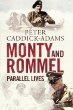
Caddick-Adams, Peter. Monty and Rommel: Parallel Lives. Overlook Press. Maps; ill.; notes; bib.; chronology; index. 640p. ISBN: 978-1-5902-0725-4. $35.00. February, 2012.
Throughout military history, there are lists of good commanders and bad commanders; those that knew their craft and those that didn’t. Among these lists is the list of World War II combat leaders and two of the best known and most studied, are Field Marshals Bernard Law Montgomery of England and Erwin Rommel of Germany.
Bringing two major personalities together in a comparative biography can have its pitfalls. Some turn out to be nothing more than a list of coincidences with very little depth or actual comparisons. That is not the case with Monty and Rommel. Carrick-Adams, himself a thirty-year veteran of the British Army, a historian and battlefield guide proves to be in complete control of the material, providing analysis and great depth of detail to his two subjects. This material is copious but so well presented as to be quite digestible.
The commonalities with these two soldiers are somewhat astonishing. Both came from the same type of family background, neither of which were military; both has similar experiences in the First World War (frontline duty and serious wounds); and both had divisional commands at the beginning of World War II. Even their personalities were similar. They shared an interest in their soldiers’ welfare and both could be extremely difficult to deal with.
It is a rare occasion when a book successfully transcends one or more genres. Here we have a comparative historical biography that also serves as a first rate military history. The author also interweaves links with modern military doctrine, making Monty and Rommel a must have book for the professional as well as the interested reader.
Throughout military history, there are lists of good commanders and bad commanders; those that knew their craft and those that didn’t. Among these lists is the list of World War II combat leaders and two of the best known and most studied, are Field Marshals Bernard Law Montgomery of England and Erwin Rommel of Germany.
Bringing two major personalities together in a comparative biography can have its pitfalls. Some turn out to be nothing more than a list of coincidences with very little depth or actual comparisons. That is not the case with Monty and Rommel. Carrick-Adams, himself a thirty-year veteran of the British Army, a historian and battlefield guide proves to be in complete control of the material, providing analysis and great depth of detail to his two subjects. This material is copious but so well presented as to be quite digestible.
The commonalities with these two soldiers are somewhat astonishing. Both came from the same type of family background, neither of which were military; both has similar experiences in the First World War (frontline duty and serious wounds); and both had divisional commands at the beginning of World War II. Even their personalities were similar. They shared an interest in their soldiers’ welfare and both could be extremely difficult to deal with.
It is a rare occasion when a book successfully transcends one or more genres. Here we have a comparative historical biography that also serves as a first rate military history. The author also interweaves links with modern military doctrine, making Monty and Rommel a must have book for the professional as well as the interested reader.
German History

Kelly, Patrick J. Tirpitz and the Imperial German Navy. Indiana University Press. Ill.; maps; appendix; notes; bib.; index. 592p. ISBN: 978-0-2533-5593-5. $45.00 April, 2011.
Anyone with an interest in German history, especially its navy during the Second Reich, could do no worse than to start here, with the first major biography in English of Grand Admiral Alfred von Tirpitz. This career naval officer was responsible for the making of the Imperial German Navy of 1914, rivaling Great Britain in the race to control the high seas – the first great arms race of the twentieth century.
Kelly begins with a short family history, then launches into Tirpitz’s professional career, describing his various postings and initial taste of combat during the Franco-Prussian War of 1870-1871. His assignment to the Torpedo Arm in the late 1870’s placed him on the fast career track. With good timing and fortune, Tirpitz came to the attention of and impressed several senior officers. Two in particular would play important parts in his rise to high rank and power; Chief of the Admiralty Count Leo von Caprivi and Albrecht von Stosch. By the 1890’s, Tirpitz was Chief of Staff of the Naval High Command and had added politics to his growing resume. He would remain at this post until 1916, when, unsuited for an active command after so many years behind a desk, he fell out of favor and resigned. He had completed his life’s work of providing Germany with a modern fleet, unfortunately, to no avail.
Although this is a scholarly biography, it is in everyway quite readable. Backed by solid research, using untapped and newly available documents and family letters, Kelly has produced a clear picture of one of the major causes of World War I.
Anyone with an interest in German history, especially its navy during the Second Reich, could do no worse than to start here, with the first major biography in English of Grand Admiral Alfred von Tirpitz. This career naval officer was responsible for the making of the Imperial German Navy of 1914, rivaling Great Britain in the race to control the high seas – the first great arms race of the twentieth century.
Kelly begins with a short family history, then launches into Tirpitz’s professional career, describing his various postings and initial taste of combat during the Franco-Prussian War of 1870-1871. His assignment to the Torpedo Arm in the late 1870’s placed him on the fast career track. With good timing and fortune, Tirpitz came to the attention of and impressed several senior officers. Two in particular would play important parts in his rise to high rank and power; Chief of the Admiralty Count Leo von Caprivi and Albrecht von Stosch. By the 1890’s, Tirpitz was Chief of Staff of the Naval High Command and had added politics to his growing resume. He would remain at this post until 1916, when, unsuited for an active command after so many years behind a desk, he fell out of favor and resigned. He had completed his life’s work of providing Germany with a modern fleet, unfortunately, to no avail.
Although this is a scholarly biography, it is in everyway quite readable. Backed by solid research, using untapped and newly available documents and family letters, Kelly has produced a clear picture of one of the major causes of World War I.
Vietnamese War
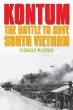
McKenna, Thomas P. Kontum: The Battle to Save South Vietnam. University Press of Kentucky. Maps; ill.; notes; bib.; index. 376p. ISBN: 978-0-8131-3398-0. $34.95 September, 2011.
After almost two decades of involvement in Vietnam, the United States had tired of the war it didn’t know how to win and was in the process of withdrawing its combat troops in early 1972, when the war drastically changed. North Vietnam decided to finally escalate the conflict from a guerrilla war to a conventional one. During the last two weeks in May of that year, three NVA Divisions invaded the Central Highlands with the objective of taking the city of Kontum and destroying the single South Vietnamese division there along with their American advisors.
One of those advisors was the author, who, as a lieutenant-colonel, took part in the Battle of Kontum. A North Vietnamese victory here would cut South Vietnam in half and result in its ultimate defeat. A victory for the South would renew the hope of an independent South Vietnam after the U.S. presence was gone for good.
There has been more than one book written on the Easter Offensive of 1972 but none have focused on the battle of Kontum. McKenna combines solid research and first-person interviews with his own experiences there to produce an informative book that should serve as a “how not to” for Iraq and Afghanistan.
Kontum was a victory for the South Vietnamese, especially the 23rd Division, who occupied Kontum and never gave it up. This was a victory against constant artillery, rocket and mortar fire as well as repeated NVA assaults supported by numerous armor assets.
A prime example of the will to win.
After almost two decades of involvement in Vietnam, the United States had tired of the war it didn’t know how to win and was in the process of withdrawing its combat troops in early 1972, when the war drastically changed. North Vietnam decided to finally escalate the conflict from a guerrilla war to a conventional one. During the last two weeks in May of that year, three NVA Divisions invaded the Central Highlands with the objective of taking the city of Kontum and destroying the single South Vietnamese division there along with their American advisors.
One of those advisors was the author, who, as a lieutenant-colonel, took part in the Battle of Kontum. A North Vietnamese victory here would cut South Vietnam in half and result in its ultimate defeat. A victory for the South would renew the hope of an independent South Vietnam after the U.S. presence was gone for good.
There has been more than one book written on the Easter Offensive of 1972 but none have focused on the battle of Kontum. McKenna combines solid research and first-person interviews with his own experiences there to produce an informative book that should serve as a “how not to” for Iraq and Afghanistan.
Kontum was a victory for the South Vietnamese, especially the 23rd Division, who occupied Kontum and never gave it up. This was a victory against constant artillery, rocket and mortar fire as well as repeated NVA assaults supported by numerous armor assets.
A prime example of the will to win.
World War II in the Pacific
Carlson, Elliot. Joe Rochefort’s War: The Odyssey of the Code Breaker Who Outwitted Yamamoto at Midway. United States Naval Institute Press. Maps; ill.; notes; glossary; appendices; bib.; index. 624p. ISBN: 978-1-6125-1060-1. $36.95 October, 2011.
Most readers of the history of the Second World War in the Pacific are quite familiar with its timeline and most of its subject areas, with the possible exception of naval intelligence and code breaking. That there was a Pacific Theater of Operations equivalent to ULTRA in the European Theater is not so well known outside of specialist circles.
Jos Rochefort’s War is the first biography of the officer responsible for making victory possible for U.S. forces at Midway in June, 1942. Commander Joe Rochefort, a maverick officer, stubborn, tactless and a “mustang” (former enlisted man) to boot, was in charge of Station Hypo, the navy’s secret cryptanalysis group at Pearl Harbor. He led a team of code breakers, as brilliant as he was (and just as crazy), who were successful in being able to read the Japanese Navy’s principle operational code (JN-25).
Carlson’s book is just as much a history of United States Navy code breaking as it is the life story of Rochefort. Born in 1900, he enlisted in the Navy in 1918; he gained his commission through examination in late 1922. Selected for training in advanced cryptanalysis, he reported for duty in Washington, D.C. in 1925 and was soon the head of the Navy’s code breaking desk. His career during the 1930’s reminds one of an adventure-filled novel and as the chief aide to the commander-in-chief of the U.S. Fleet, he was certainly able to have “fun” until his return to cryptanalysis in mid-1941.
Rochefort’s success at Midway should have seen him to the heights of his career but naval politics proved his undoing. Shown to be the idiots they were, his “superiors” has him demoted and transferred to floating dry-dock construction, which he was so successful at, that he made his way back into code breaking in 1944.
This is an excellent read and study of the class-ridden, political World War II United States Navy.
Most readers of the history of the Second World War in the Pacific are quite familiar with its timeline and most of its subject areas, with the possible exception of naval intelligence and code breaking. That there was a Pacific Theater of Operations equivalent to ULTRA in the European Theater is not so well known outside of specialist circles.
Jos Rochefort’s War is the first biography of the officer responsible for making victory possible for U.S. forces at Midway in June, 1942. Commander Joe Rochefort, a maverick officer, stubborn, tactless and a “mustang” (former enlisted man) to boot, was in charge of Station Hypo, the navy’s secret cryptanalysis group at Pearl Harbor. He led a team of code breakers, as brilliant as he was (and just as crazy), who were successful in being able to read the Japanese Navy’s principle operational code (JN-25).
Carlson’s book is just as much a history of United States Navy code breaking as it is the life story of Rochefort. Born in 1900, he enlisted in the Navy in 1918; he gained his commission through examination in late 1922. Selected for training in advanced cryptanalysis, he reported for duty in Washington, D.C. in 1925 and was soon the head of the Navy’s code breaking desk. His career during the 1930’s reminds one of an adventure-filled novel and as the chief aide to the commander-in-chief of the U.S. Fleet, he was certainly able to have “fun” until his return to cryptanalysis in mid-1941.
Rochefort’s success at Midway should have seen him to the heights of his career but naval politics proved his undoing. Shown to be the idiots they were, his “superiors” has him demoted and transferred to floating dry-dock construction, which he was so successful at, that he made his way back into code breaking in 1944.
This is an excellent read and study of the class-ridden, political World War II United States Navy.
World War II
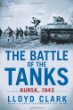
Clark, Lloyd. The Battle of the Tanks: Kursk, 1943. Atlantic Monthly Press. 496p. ISBN: 978-0-8021-1908-7. $30.00 November, 2011.
Two million men, six thousand tanks, thirty-five thousand artillery pieces and over five thousand aircraft got together in early July, 1943 in an attempt to annihilate each other. The Russian steppe would be a big enough space for these men to convene, and the battle of Kursk (the nearest Russian town) has gone down in the history books as the greatest land battle in history. Just imagine the noise.
Lloyd Clark, one of Great Britain’s leading military historians has taken on Kursk and presents an informative overview of the events leading up to the campaign, beginning with the rise to power of the two respective dictators following the Armistice in 1918, through the first years of the war in the Eats, from Barbarossa in 1941 to Kharkov in 1943 and the buildup to Kursk. After having digested all of that does one get to the battle of the tanks.
Yet the story is well told; the level of research is evident; archival sources and participant interviews are blended in with professional analysis of the campaign. The perspective of military and civilian participants and eyewitnesses make this book well worth the read.
Two million men, six thousand tanks, thirty-five thousand artillery pieces and over five thousand aircraft got together in early July, 1943 in an attempt to annihilate each other. The Russian steppe would be a big enough space for these men to convene, and the battle of Kursk (the nearest Russian town) has gone down in the history books as the greatest land battle in history. Just imagine the noise.
Lloyd Clark, one of Great Britain’s leading military historians has taken on Kursk and presents an informative overview of the events leading up to the campaign, beginning with the rise to power of the two respective dictators following the Armistice in 1918, through the first years of the war in the Eats, from Barbarossa in 1941 to Kharkov in 1943 and the buildup to Kursk. After having digested all of that does one get to the battle of the tanks.
Yet the story is well told; the level of research is evident; archival sources and participant interviews are blended in with professional analysis of the campaign. The perspective of military and civilian participants and eyewitnesses make this book well worth the read.
World War II
King, David. Death in the City of Light: The Serial Killer of Nazi-Occupied Paris. Crown. 432p. ISBN: 978-0-3014-5289-1. $26.00 September, 2011.
We don’t often hear of too many serial killers who really existed, referring in this case to the “historical” rather than “recent”, so it is surprising to come upon Dr. Marcel Petiot, a heartless killer who plied his gristly trade in World War II Paris, France. Petiot tortured, killed, dismembered and burned his victims in a building that he owned located in the middle of the city. The police were finally called (by the neighbors), after the stench of burning bodies grew too strong to ignore. What the police discovered there became front page news.
Enter Police Commissaire Georges-Victor Massu, a dedicated homicide cop (to put it in modern parlance), who would lead the investigation into the murders and the search for Dr. Petiot, who conveniently disappeared after observing the initial discoveries. It wasn’t until well after the liberation of Paris by Allied forces that he was recognized and arrested.
Petiot, born in 1897, was diagnosed with mental illness in 1914. Nevertheless, he volunteered and served in the French Army in 1916 and was gassed and wounded that year. He learned the medical profession in an accelerated course for veterans in 1921 and began a career in medicine and politics shortly thereafter. His dual careers were quite checkered (he was crazy, remember?), and his string of murders were successfully hidden amid the chaos of Nazi controlled Paris.
Petiot was charged with twenty-six murders – his total number of victims was estimated at between one hundred and one hundred and fifty. He was convicted and beheaded.
Mr. King has given us a well-researched and well-written account of a formerly unknown sociopath.
We don’t often hear of too many serial killers who really existed, referring in this case to the “historical” rather than “recent”, so it is surprising to come upon Dr. Marcel Petiot, a heartless killer who plied his gristly trade in World War II Paris, France. Petiot tortured, killed, dismembered and burned his victims in a building that he owned located in the middle of the city. The police were finally called (by the neighbors), after the stench of burning bodies grew too strong to ignore. What the police discovered there became front page news.
Enter Police Commissaire Georges-Victor Massu, a dedicated homicide cop (to put it in modern parlance), who would lead the investigation into the murders and the search for Dr. Petiot, who conveniently disappeared after observing the initial discoveries. It wasn’t until well after the liberation of Paris by Allied forces that he was recognized and arrested.
Petiot, born in 1897, was diagnosed with mental illness in 1914. Nevertheless, he volunteered and served in the French Army in 1916 and was gassed and wounded that year. He learned the medical profession in an accelerated course for veterans in 1921 and began a career in medicine and politics shortly thereafter. His dual careers were quite checkered (he was crazy, remember?), and his string of murders were successfully hidden amid the chaos of Nazi controlled Paris.
Petiot was charged with twenty-six murders – his total number of victims was estimated at between one hundred and one hundred and fifty. He was convicted and beheaded.
Mr. King has given us a well-researched and well-written account of a formerly unknown sociopath.
War of 1812
Hickey, Donald R. & Connie D. Clark The Rocket’s Red Glare: An Illustrated History of the War of 1812. Johns Hopkins University Press. Ill.; chronology; notes; bib.; index. 264p. ISBN: 978-1-4214-0155-3. $39.95 October, 2011
Profusely illustrated with portraits, maps, contemporary drawings, newspaper woodcuts and a center section in full color, The Rocket’s Red Glare gives us a chronological account of the “late war with Britain”, beginning in 1793 and ending with the Battle of New Orleans in early 1815. a final chapter on the legacies of the war places events in their proper context on a global level. It also discusses the common legacies that have come down to us such as the nickname of the USS Constitution (Old Ironsides), and the origins of The Star-Spangled Banner and its evolution into the country’s national anthem.
Each chapter is subdivided into themes and events occurring within the time frame of the chapter, making for easy reference on any given subject concerning the conflict.
Well narrated and researched, this coffee table-sized book will be a welcome addition to the celebration of the bicentennial of the War of 1812.
Profusely illustrated with portraits, maps, contemporary drawings, newspaper woodcuts and a center section in full color, The Rocket’s Red Glare gives us a chronological account of the “late war with Britain”, beginning in 1793 and ending with the Battle of New Orleans in early 1815. a final chapter on the legacies of the war places events in their proper context on a global level. It also discusses the common legacies that have come down to us such as the nickname of the USS Constitution (Old Ironsides), and the origins of The Star-Spangled Banner and its evolution into the country’s national anthem.
Each chapter is subdivided into themes and events occurring within the time frame of the chapter, making for easy reference on any given subject concerning the conflict.
Well narrated and researched, this coffee table-sized book will be a welcome addition to the celebration of the bicentennial of the War of 1812.
Theodore Roosevelt
Marschall, Rick. Bully! The Life and Times of Theodore Roosevelt: Illustrated With More Than 250 Vintage Political Cartoons. Regnery. Ill.; bib.; notes; index. 440p. ISBN: 978-1-5969-8154-6. $32.00 October, 2011.
I have read many books about Theodore Roosevelt, a man who, among many, many other things, was a caricaturist’s dream come true. The man’s image, vitality and mannerisms were vastly different from anyone else they had seen in the political arena, not to mention the Oval Office itself. They cried out for cartooning and those men who practiced the cartoonists’ trade in those days did not hesitate to start sketching. Bully! Brings together in one book vintage political cartoons, many that haven’t been seen for decades, if ever, by TR specialists and the general reader.
There are hundreds of them scattered throughout the text, plus a full-color cartoon portfolio at the end of each chapter but the first. The text itself is arranged chronologically, each chapter entitled with the beginning and ending years covered within that chapter. This makes foe easy access to a specific aspect of Roosevelt’s life and invites the reader to return to whichever section for another perusal. Issues that faced TR, such as government corruption, conservation, foreign affairs, labor and unionism, women’s rights and Wall Street greed are still relevant today. The reader will see how a real leader dealt with those same issues that we face today.
This book is not just for Roosevelt admirers but for anyone with an interest in history, art and the beginning of the American Century. It is the life story of a fantastic character, well and warmly told.
I have read many books about Theodore Roosevelt, a man who, among many, many other things, was a caricaturist’s dream come true. The man’s image, vitality and mannerisms were vastly different from anyone else they had seen in the political arena, not to mention the Oval Office itself. They cried out for cartooning and those men who practiced the cartoonists’ trade in those days did not hesitate to start sketching. Bully! Brings together in one book vintage political cartoons, many that haven’t been seen for decades, if ever, by TR specialists and the general reader.
There are hundreds of them scattered throughout the text, plus a full-color cartoon portfolio at the end of each chapter but the first. The text itself is arranged chronologically, each chapter entitled with the beginning and ending years covered within that chapter. This makes foe easy access to a specific aspect of Roosevelt’s life and invites the reader to return to whichever section for another perusal. Issues that faced TR, such as government corruption, conservation, foreign affairs, labor and unionism, women’s rights and Wall Street greed are still relevant today. The reader will see how a real leader dealt with those same issues that we face today.
This book is not just for Roosevelt admirers but for anyone with an interest in history, art and the beginning of the American Century. It is the life story of a fantastic character, well and warmly told.
Firearms History

Barrett, Paul M. Glock: The Rise of America’s Gun. Crown. 304p. ISBN: 978-0-3077-1993-5. $26.00 January, 2012.
Whether one is a gun fighter or not, one should always be on the look out for books that are relevant and informative. As the United States and, to a lesser extent other countries outside of China, has an ever-growing population of gun owners, legal or otherwise, a book about the most popular handgun in the world should be both. And Glock fills the bill as a relevant and informative book about an unknown Austrian knife and bayonet maker, Gaston Glock, whose other job was managing an automobile radiator factory just outside of Vienna.
Glock knew next to nothing about firearms and begged a chance to compete for a contract to supply the Austrian Army with a new sidearm. The Austrian defense minister agreed and Glock was off and running. Having never made a gun before, he was free from preconceptions, bias and prejudices in pistol manufacturing and came up with the Glock 17, his 17th invention. The frame of this nine millimeter handgun was made of industrial plastic, making it lighter and practically indestructible (but not invisible to x-ray machines), more than the conventional all-steel guns used by everybody else. In early November, 1982, Glock was told that his pistol had won the contract, besting other makers such as Sig Sauer, Beretta, Steyr and Heckler & Koch. Now, all that Glock had to do was sell it.
Continuing to be in the right place at the right time, Glock met Karl Walter, an Austrian expatriate who sold firearms out of his motor home while traveling in the United States. Walter just happened to be on a return visit to Austria, where he saw one of Glock’s ugly pistols in a gun shop. Meeting with Glock, Walter proposed marketing the gun in America.
Shrewd marketing, including Gold Club strippers and the Dallas Cowboy Cheerleaders, convinced law enforcement agencies across the country that this pistol would be their weapon of choice, discarding their service revolvers and catching to equal the armament of their opponents.
This book pulls the lid off of a somewhat secretive company (what arms manufacturer isn’t) to tell a very interesting story of a well known handgun and the role it plays in everyday life around the globe.
Whether one is a gun fighter or not, one should always be on the look out for books that are relevant and informative. As the United States and, to a lesser extent other countries outside of China, has an ever-growing population of gun owners, legal or otherwise, a book about the most popular handgun in the world should be both. And Glock fills the bill as a relevant and informative book about an unknown Austrian knife and bayonet maker, Gaston Glock, whose other job was managing an automobile radiator factory just outside of Vienna.
Glock knew next to nothing about firearms and begged a chance to compete for a contract to supply the Austrian Army with a new sidearm. The Austrian defense minister agreed and Glock was off and running. Having never made a gun before, he was free from preconceptions, bias and prejudices in pistol manufacturing and came up with the Glock 17, his 17th invention. The frame of this nine millimeter handgun was made of industrial plastic, making it lighter and practically indestructible (but not invisible to x-ray machines), more than the conventional all-steel guns used by everybody else. In early November, 1982, Glock was told that his pistol had won the contract, besting other makers such as Sig Sauer, Beretta, Steyr and Heckler & Koch. Now, all that Glock had to do was sell it.
Continuing to be in the right place at the right time, Glock met Karl Walter, an Austrian expatriate who sold firearms out of his motor home while traveling in the United States. Walter just happened to be on a return visit to Austria, where he saw one of Glock’s ugly pistols in a gun shop. Meeting with Glock, Walter proposed marketing the gun in America.
Shrewd marketing, including Gold Club strippers and the Dallas Cowboy Cheerleaders, convinced law enforcement agencies across the country that this pistol would be their weapon of choice, discarding their service revolvers and catching to equal the armament of their opponents.
This book pulls the lid off of a somewhat secretive company (what arms manufacturer isn’t) to tell a very interesting story of a well known handgun and the role it plays in everyday life around the globe.
War of 1812
Daughan, George C. 1812: The Navy’s War Basic Books. Ill.; maps; notes; glossary; bib.; index. 528p. ISBN: 978-0-4650-2046-1. $32.50 October, 2011.
In a compelling continuation to his award-winning If By Sea: The Forging of the American Navy – From the Revolution to the War of 1812, author Daughan takes up the story of the War of 1812, focusing on the tiny, supposedly ineffective twenty ship American Navy. He begins with the badly run chase of HMS Belvidera by Commodore John Rogers in June, 1812 and ends with the capture of HMS Penguin by USS Hornet in March, 1815. In between these dates are perhaps the best written descriptions of naval combat – ship-to-ship encounters, boarding parties and frigate maneuvers and a “whiff of grape”. Not neglected and expertly interwoven into the narrative are the land battles and inland naval engagements on the Great Lakes as well as the larger picture; 1812 saw the invasion of Russia by the French emperor Napoleon and the subsequent disastrous campaign resulting in so many deaths. Also told here are the politics and diplomacy of the war years in America, Great Britain and Europe, which places the American conflict in its proper perspective on the world stage.
Twenty ships versus one thousand – the end result was surprising with the tiny U.S. Navy pummeling the largest navy on the planet.
Well told.
In a compelling continuation to his award-winning If By Sea: The Forging of the American Navy – From the Revolution to the War of 1812, author Daughan takes up the story of the War of 1812, focusing on the tiny, supposedly ineffective twenty ship American Navy. He begins with the badly run chase of HMS Belvidera by Commodore John Rogers in June, 1812 and ends with the capture of HMS Penguin by USS Hornet in March, 1815. In between these dates are perhaps the best written descriptions of naval combat – ship-to-ship encounters, boarding parties and frigate maneuvers and a “whiff of grape”. Not neglected and expertly interwoven into the narrative are the land battles and inland naval engagements on the Great Lakes as well as the larger picture; 1812 saw the invasion of Russia by the French emperor Napoleon and the subsequent disastrous campaign resulting in so many deaths. Also told here are the politics and diplomacy of the war years in America, Great Britain and Europe, which places the American conflict in its proper perspective on the world stage.
Twenty ships versus one thousand – the end result was surprising with the tiny U.S. Navy pummeling the largest navy on the planet.
Well told.
Spanish Civil War
Smith, Richard K. and R. Cargill Hall. Five Down, No Glory: Frank G. Tinker, Mercenary Ace in the Spanish Civil War. U.S. Naval Institute Press. Ill.; appendices; notes; index. 400p. ISBN: 978-1-6125-1054-5. $36.95. October, 2011.
The Spanish Civil War, which took place between 1936 and 1939, saw a number of countries and groups supporting one side or the other for various reasons. Some fought for political reasons, some for training and testing and some fought for money. This book relates the adventure novel life of an American soldier of fortune, Frank Tinker, an ex-naval aviator who flew for the Spanish government – under contract.
Tinker’s life reads like a 1930’s adventure story. He was a boy from Arkansas; a teenage sailor in the United States Navy; gained admission to and graduated from the naval academy at Annapolis; earned his wings as a combat aviator; resigned his commission in lieu of a court martial; flew for the Spanish under the command of a Soviet pilot; had eight aerial victories, including two brand new Me109’s; hobnobbed off duty with the likes of Ernest Hemingway and company; terminated his contract after seven months to return to the U.S. to write a book and make public appearances; and, in July, 1939, died in a Little Rock hotel under very suspicious circumstances.
The authors tell the story in clear prose with detailed descriptions of the air battles – tactics and technical information on the airplanes involved, especially the Soviet I-19 fighter, described as “the world’s first modern fighter plane.”
This is a must read book, well worth reading.
World War I in the Air
Revell, Alex. Fall of Eagles: Airmen of World War I. Pen and Sword Books. Ill.; bib.; index. 208p. ISBN: 978-1-8488-4527-5. $39.95. October, 2011.
Other reviews and reviewers notwithstanding, my copy of this book arrived with the proper subtitle. So get over it and send the book back for refund.
Fall of Eagles is a compilation of last flights and fights of various airmen from both sides of the line. Divided into seventeen chapters, the famous and the not do famous are discussed here but their stories are mainly told in their own words or the words of their contemporaries. Richthofen, Immelmann, Boelcke, Voss, Rhys Davids, McCudden and Barker are here as refreshers. There are inclusions here which would be new information to all but the serious Great War aviation specialist.
For example, Richthofen’s last victory, Rhodesian Lieutenant D.G. Lewis; Ronald Adam, a member of 73 Squadron for all of six days in 1918; Larry Bowen, from Traverse City, Michigan, whose last Royal Air Force flight ended gallantly in the destruction of an ammunition train; Hungarian ace Josef Kiss; and, American ace Alan Winslow.
Told in a straightforward narrative, mixed with quotes from letters, diaries and official reports, this book is a welcome and useful addition to World War I aviation literature.
Other reviews and reviewers notwithstanding, my copy of this book arrived with the proper subtitle. So get over it and send the book back for refund.
Fall of Eagles is a compilation of last flights and fights of various airmen from both sides of the line. Divided into seventeen chapters, the famous and the not do famous are discussed here but their stories are mainly told in their own words or the words of their contemporaries. Richthofen, Immelmann, Boelcke, Voss, Rhys Davids, McCudden and Barker are here as refreshers. There are inclusions here which would be new information to all but the serious Great War aviation specialist.
For example, Richthofen’s last victory, Rhodesian Lieutenant D.G. Lewis; Ronald Adam, a member of 73 Squadron for all of six days in 1918; Larry Bowen, from Traverse City, Michigan, whose last Royal Air Force flight ended gallantly in the destruction of an ammunition train; Hungarian ace Josef Kiss; and, American ace Alan Winslow.
Told in a straightforward narrative, mixed with quotes from letters, diaries and official reports, this book is a welcome and useful addition to World War I aviation literature.
World War II
Blair, Bobby C. and John Peter DeCioccio. Victory at Peleliu: The 81st Infantry Division’s Pacific Campaign. University of Oklahoma Press. Ill.; maps; notes; bib.; index. 320p. ISBN: 978-0-8061-4154-1. $34.95. April, 2011.
We are al aware of the island-hopping campaign executed by the Allies in the Pacific Theater of Operations during World War II. We also know that this strategy was carried out by the United States Marine Corps (assisted by the U.S. Navy), until victory was obtained. What we are not so aware of the U.S. Army’s role in this theater, with the possible exception of the reconquest of the Phillippines by army troops under the command of Douglas MacArthur and company. In Victory at Peleliu, we have a detailed account of the U.S. Army’s (specifically the 81st Infantry Division), battle to destroy Japanese troops on two quite small islands in the Palaus group, Anguar and Peleliu.
In a campaign that should not have been fought at all (the landings were opposed by Admiral William Halsey and Marine General Holland Smith, and once in American hands, the islands played no important role in the war), the 1st Marine Division was to capture Peleliu in four days. After a week of heavy casualties and a stalled offensive, the “Wildcats” of the 81st were called in, at first as support, and after the marines were evacuated, the infantry secured the island. It took two months and over 1,500 marine and army casualties. In fact, without the Army assistance, the marines would not have succeeded on Peleliu.
The book explains how by this time, September, 1944, the Japanese had changed their tactics, from defending at the beaches and wasteful banzai charges, to multiple, interlocking defenses using tunnels and fortified terrain. The Army, in their assault on Anguar, adapted to it and eliminated all Japanese opposition with little casualties to themselves. The Marines on Peleliu failed to adapt. The lessons learned here were put to good use subsequently on Iwo Jima and Okinawa.
Using division records and interviews with surviving veterans, the authors successfully challenge the long held view that the 81st merely mopped up after the Marines and place the “Wildcats” efforts in their proper place.
We are al aware of the island-hopping campaign executed by the Allies in the Pacific Theater of Operations during World War II. We also know that this strategy was carried out by the United States Marine Corps (assisted by the U.S. Navy), until victory was obtained. What we are not so aware of the U.S. Army’s role in this theater, with the possible exception of the reconquest of the Phillippines by army troops under the command of Douglas MacArthur and company. In Victory at Peleliu, we have a detailed account of the U.S. Army’s (specifically the 81st Infantry Division), battle to destroy Japanese troops on two quite small islands in the Palaus group, Anguar and Peleliu.
In a campaign that should not have been fought at all (the landings were opposed by Admiral William Halsey and Marine General Holland Smith, and once in American hands, the islands played no important role in the war), the 1st Marine Division was to capture Peleliu in four days. After a week of heavy casualties and a stalled offensive, the “Wildcats” of the 81st were called in, at first as support, and after the marines were evacuated, the infantry secured the island. It took two months and over 1,500 marine and army casualties. In fact, without the Army assistance, the marines would not have succeeded on Peleliu.
The book explains how by this time, September, 1944, the Japanese had changed their tactics, from defending at the beaches and wasteful banzai charges, to multiple, interlocking defenses using tunnels and fortified terrain. The Army, in their assault on Anguar, adapted to it and eliminated all Japanese opposition with little casualties to themselves. The Marines on Peleliu failed to adapt. The lessons learned here were put to good use subsequently on Iwo Jima and Okinawa.
Using division records and interviews with surviving veterans, the authors successfully challenge the long held view that the 81st merely mopped up after the Marines and place the “Wildcats” efforts in their proper place.
Football History
Roberts, Randy. A Team for America: The Army-Navy Game That Rallied a Nation. Houghton Mifflin Harcourt. Ill.; notes; bib.; index. 288p. ISBN: 978-0-5475-1106-1. $26.00 November, 2011.
Gridiron traditions and collegiate football rivalries abound across these United States. One of the oldest that occurs late in the season is the Army-Navy game, which, admittedly, was a coast-to-coast phenomenon when these two schools fielded powerhouse teams and not so much one now. But there have been many storied clashes in the past between these two academies and Randy Roberts has brought one of the best to print with this book.
A Team for America is not just another football book but the story of a war weary country desperate for an end to the war and a return to some sort of normalcy. It was the third year of the global struggle and the home front were living with shortages, the constant worry over those who were serving overseas and rationing. Within that context, Roberts describes the 1944 college football season, played under the shadow of the war. That Army team, led by two future Heisman Trophy winners, had former teammates who were already in combat, where they themselves would soon be as well. The controversy about college sports being played at all during this time was solved in the interest in keeping morale high.
As the season wound down, Army found itself undefeated and ranked number one, facing number two Navy. As a reporter said at the time, there was never a sports event that received the attention of so many Americans in so many places around the world. Around the world, the war stopped so soldiers and sailors could listen to the broadcast of the game (provided one had a radio).
Roberts uses many interviews with surviving players, coaches and the military to make this much more than a statistical recounting of a game with the national championship (and so much more), at stake. This is an excellent read and an informative addition to the literature of football and U.S. history.
Gridiron traditions and collegiate football rivalries abound across these United States. One of the oldest that occurs late in the season is the Army-Navy game, which, admittedly, was a coast-to-coast phenomenon when these two schools fielded powerhouse teams and not so much one now. But there have been many storied clashes in the past between these two academies and Randy Roberts has brought one of the best to print with this book.
A Team for America is not just another football book but the story of a war weary country desperate for an end to the war and a return to some sort of normalcy. It was the third year of the global struggle and the home front were living with shortages, the constant worry over those who were serving overseas and rationing. Within that context, Roberts describes the 1944 college football season, played under the shadow of the war. That Army team, led by two future Heisman Trophy winners, had former teammates who were already in combat, where they themselves would soon be as well. The controversy about college sports being played at all during this time was solved in the interest in keeping morale high.
As the season wound down, Army found itself undefeated and ranked number one, facing number two Navy. As a reporter said at the time, there was never a sports event that received the attention of so many Americans in so many places around the world. Around the world, the war stopped so soldiers and sailors could listen to the broadcast of the game (provided one had a radio).
Roberts uses many interviews with surviving players, coaches and the military to make this much more than a statistical recounting of a game with the national championship (and so much more), at stake. This is an excellent read and an informative addition to the literature of football and U.S. history.
Theodore Roosevelt
Di Silvestro, Roger L. Theodore Roosevelt in the Badlands: A Young Politician’s Quest for Recovery in the American West. Walker & Co. ill.; notes; index. 368p. ISBN: 978-0-8027-1721-4. $27.00 March, 2011.
So much has been written (and probably much more to be written), about our twenty-sixth president, Theodore Roosevelt, that it seems the man’s life has been played out. Happily, such is not the case and Theodore Roosevelt in the Badlands is a prime example of a focused biography enlightening a full life.
Di Silvestro focuses on Roosevelt in his twenties, a time for him of grief and heartache, having lost both his mother and his first wife to death on then same day, Valentines, in 1884. As has been recounted in many excellent biographies, Roosevelt fled to the Dakotas, leaving behind everything – luxury, status, political seat, even his newborn daughter, Alice. This was a critical turning point in his life and, consequently, his career.
As the author’s scholarship shows, this temporary relocation gave Roosevelt an opportunity to regain his health, both physical and mental. The three years he spent working his ranch, with all of the experiences that went along with life in the Badlands gave Roosevelt the basis of many of his future beliefs and actions – for example, his grit, courage, sense of justice and definition of right and wrong, all of which can be seen in his life and career.
The book is a fine example of well-researched, well-written, focused biography. It is a necessary addition to the literature about this great American.
So much has been written (and probably much more to be written), about our twenty-sixth president, Theodore Roosevelt, that it seems the man’s life has been played out. Happily, such is not the case and Theodore Roosevelt in the Badlands is a prime example of a focused biography enlightening a full life.
Di Silvestro focuses on Roosevelt in his twenties, a time for him of grief and heartache, having lost both his mother and his first wife to death on then same day, Valentines, in 1884. As has been recounted in many excellent biographies, Roosevelt fled to the Dakotas, leaving behind everything – luxury, status, political seat, even his newborn daughter, Alice. This was a critical turning point in his life and, consequently, his career.
As the author’s scholarship shows, this temporary relocation gave Roosevelt an opportunity to regain his health, both physical and mental. The three years he spent working his ranch, with all of the experiences that went along with life in the Badlands gave Roosevelt the basis of many of his future beliefs and actions – for example, his grit, courage, sense of justice and definition of right and wrong, all of which can be seen in his life and career.
The book is a fine example of well-researched, well-written, focused biography. It is a necessary addition to the literature about this great American.
The War of 1812
Yanik, Anthony J. The Fall and Recapture of Detroit in the War of 1812. Wayne State University Press. Ill.; appendices; notes; index. 228p. ISBN: 978-0-8143-3598-7. $24.95 September, 2011.
To those in the know at the time, the conquest of Canada in 1812 would simply be “a mere matter of marching”. So it was planned to invade our northern neighbors at three places: Niagara, Montreal and Detroit, the last being a strategic launching point for such a campaign. The surrender of the place, army, arms and all, just two months after the declaration of war, came as a complete shock to those in the know and everyone else in the country. The reason was quickly found and General William Hull, the commander at Detroit, was court martialed and sentenced to death – to date the only commanding general to be so sentenced in U.S. military history. Was Hull, a Revolutionary War combat veteran and current territorial governor of Michigan, a traitor? Or was he militarily incompetent? Or was the entire Northwestern Army officered by imbeciles? Not much beyond Hull’s own actions has ever been up for discussion among historians; if the subject comes up at all.
Anthony Yanik has written a captivating account of the events leading up to the surrender of Detroit, William Henry Harrison’s subsequent campaign to recapture it and the trial for cowardice of William Hull. He begins by focusing on the political causes of the not so popular war and frontier life in Detroit prior to the war; continuing to Hull’s appointment as brigadier general and the tremendous effort expended in just getting the army through Ohio to Michigan without roads to march on. Yanik spares no comment over the personality clashes, ineptitude and the comedy of tragic errors that was the War of 1812. There is a valid argument here that Hull was wrongly tried and Yanik aptly points to a number of reasons for the disastrous campaign in and around the Great Lakes.
Anyone with an interest in the War of 1812 and Michigan will want to read this book.
To those in the know at the time, the conquest of Canada in 1812 would simply be “a mere matter of marching”. So it was planned to invade our northern neighbors at three places: Niagara, Montreal and Detroit, the last being a strategic launching point for such a campaign. The surrender of the place, army, arms and all, just two months after the declaration of war, came as a complete shock to those in the know and everyone else in the country. The reason was quickly found and General William Hull, the commander at Detroit, was court martialed and sentenced to death – to date the only commanding general to be so sentenced in U.S. military history. Was Hull, a Revolutionary War combat veteran and current territorial governor of Michigan, a traitor? Or was he militarily incompetent? Or was the entire Northwestern Army officered by imbeciles? Not much beyond Hull’s own actions has ever been up for discussion among historians; if the subject comes up at all.
Anthony Yanik has written a captivating account of the events leading up to the surrender of Detroit, William Henry Harrison’s subsequent campaign to recapture it and the trial for cowardice of William Hull. He begins by focusing on the political causes of the not so popular war and frontier life in Detroit prior to the war; continuing to Hull’s appointment as brigadier general and the tremendous effort expended in just getting the army through Ohio to Michigan without roads to march on. Yanik spares no comment over the personality clashes, ineptitude and the comedy of tragic errors that was the War of 1812. There is a valid argument here that Hull was wrongly tried and Yanik aptly points to a number of reasons for the disastrous campaign in and around the Great Lakes.
Anyone with an interest in the War of 1812 and Michigan will want to read this book.
World War II
Fisher-Alaniz, Karen. Breaking the Code: A Father’s Secret, a Daughter’s Journey, and the Question That Changed Everything. Sourcebooks. 336p. tp. ISBN: 978-1-4022-6112-1. $14.99 November, 2011.
Breaking the Code is more than a World War II memoir – much more. It is the story of the relationship between a father and daughter, a relationship that changed significantly when Murray Fisher reached out to his daughter Karen on his 81st birthday, handing her his two notebooks full of letters that he wrote home form the Pacific Theater and the U.S. Navy. It is also the story of US efforts to break the code the Japanese used in their radio traffic. It was a top-secret code and the code breaking teams were constantly monitored by the FBI and told that talking to anyone about their job would be punishable by imprisonment and/or death by firing squad, for impressionable young men far away form home for most likely the first time, this last was enough of a threat to keep them quiet forever. Finally, this is the story of a veteran coming to grips with his past and the quirky game that fate plays with all of us.
Every veteran has to go through a period of “readjustment” from military to civilian life. In peacetime, it can be a difficult process; in wartime, it is pure hell and a hell that will raise its ugly head time and time again, regardless of when, where and how old you are.
Breaking the Code reveals the story of an eighty-one year old vet who finally comes to grips with his devils. Told in a simple narrative, it shouts out that post traumatic stress disorder affects the majority of the population – who are our veterans.
Breaking the Code is more than a World War II memoir – much more. It is the story of the relationship between a father and daughter, a relationship that changed significantly when Murray Fisher reached out to his daughter Karen on his 81st birthday, handing her his two notebooks full of letters that he wrote home form the Pacific Theater and the U.S. Navy. It is also the story of US efforts to break the code the Japanese used in their radio traffic. It was a top-secret code and the code breaking teams were constantly monitored by the FBI and told that talking to anyone about their job would be punishable by imprisonment and/or death by firing squad, for impressionable young men far away form home for most likely the first time, this last was enough of a threat to keep them quiet forever. Finally, this is the story of a veteran coming to grips with his past and the quirky game that fate plays with all of us.
Every veteran has to go through a period of “readjustment” from military to civilian life. In peacetime, it can be a difficult process; in wartime, it is pure hell and a hell that will raise its ugly head time and time again, regardless of when, where and how old you are.
Breaking the Code reveals the story of an eighty-one year old vet who finally comes to grips with his devils. Told in a simple narrative, it shouts out that post traumatic stress disorder affects the majority of the population – who are our veterans.
War of 1812
Brown, Gordon S. The Captain Who Burned His Ships: Captain Thomas Tingey, USN, 1750-1829. United States Naval Institute Press. Ill.; notes; bib.; index. 214p. ISBN: 978-1-6125-1044-6. $28.95 September, 2011.
As the bicentennial of the War of 1812 is almost upon us, the new literature of that forgotten conflict will begin to crowd the bookshelves. The exploits of the United States Navy, especially, will be the subject of a number of wonderful titles.
The Captain Who Burned His Ships is one of those titles but one that takes a different course. Thomas Tingey started his naval career as an officer in the Royal Navy of Great Britain. After a short stint of service, he became a successful merchant captain, sailing out of U.S. ports to various parts of the globe, including the Far East. The Quasi-War with France found him back in naval service as a ship’s captain; at the personal request of the secretary of the Navy, he became the first commandant of the Washington Naval Yard. That was in 1801 and he remained there until his death in 1829. During that time, the United States Navy developed into a permanent, valuable addition to the country’s defenses and the Washington Navy Yard became the principle facility of the Navy.
Brown’s book is more than a biography of a naval administrator who fought his best battles ashore. It is also the story of the growth and development of the Navy Yard and of the young nation’s new capitol. Tingey raised his family there, was a part of Washington society and made important contributions to it. In 1814, he was forced to burn his creation to the ground to prevent its capture and use by the invading British. It is a testament to his skill and reputation that the Yard was rebuilt under his leadership.
This book is an important (and quite readable) addition to the literature of the Navy, the War of 1812 and the history of the District of Columbia.
As the bicentennial of the War of 1812 is almost upon us, the new literature of that forgotten conflict will begin to crowd the bookshelves. The exploits of the United States Navy, especially, will be the subject of a number of wonderful titles.
The Captain Who Burned His Ships is one of those titles but one that takes a different course. Thomas Tingey started his naval career as an officer in the Royal Navy of Great Britain. After a short stint of service, he became a successful merchant captain, sailing out of U.S. ports to various parts of the globe, including the Far East. The Quasi-War with France found him back in naval service as a ship’s captain; at the personal request of the secretary of the Navy, he became the first commandant of the Washington Naval Yard. That was in 1801 and he remained there until his death in 1829. During that time, the United States Navy developed into a permanent, valuable addition to the country’s defenses and the Washington Navy Yard became the principle facility of the Navy.
Brown’s book is more than a biography of a naval administrator who fought his best battles ashore. It is also the story of the growth and development of the Navy Yard and of the young nation’s new capitol. Tingey raised his family there, was a part of Washington society and made important contributions to it. In 1814, he was forced to burn his creation to the ground to prevent its capture and use by the invading British. It is a testament to his skill and reputation that the Yard was rebuilt under his leadership.
This book is an important (and quite readable) addition to the literature of the Navy, the War of 1812 and the history of the District of Columbia.
Theodore Roosevelt

Jenkinson, Clay S. A Free and Hardy Life: Theodore Roosevelt’s Sojourn in the American West. University of Oklahoma Press. Ill.; 176p ISBN: 978-0-9825-5978-9. $45.00 July, 2011.
Much is made (and rightly so), of Theodore Roosevelt’s experiences in the American West, beginning in 1883 and ending in 1887. It pretty much defined him as an adult and continued foremost in his psyche as he pursued the strenuous life. In A Free and Hardy Life, Clay Jenkinson offers us seventy stories of Roosevelt’s life, many of them set in the West, accompanied by over one hundred photographs, many of them never before published. All of the stories are accompanied by an appropriate Roosevelt quotation.
Arranged chronologically, the stories touch on all aspects of Roosevelt’s life, including Mount Rushmore, the Bull Moose campaign, African safari and his trip on the River of Doubt in the South American Amazon. The books’ emphasis is on his life in the West, where he remade himself and, as President, his conservation efforts, where he remade the country.
This is a delightful addition to every Roosevelt bookshelf.
Much is made (and rightly so), of Theodore Roosevelt’s experiences in the American West, beginning in 1883 and ending in 1887. It pretty much defined him as an adult and continued foremost in his psyche as he pursued the strenuous life. In A Free and Hardy Life, Clay Jenkinson offers us seventy stories of Roosevelt’s life, many of them set in the West, accompanied by over one hundred photographs, many of them never before published. All of the stories are accompanied by an appropriate Roosevelt quotation.
Arranged chronologically, the stories touch on all aspects of Roosevelt’s life, including Mount Rushmore, the Bull Moose campaign, African safari and his trip on the River of Doubt in the South American Amazon. The books’ emphasis is on his life in the West, where he remade himself and, as President, his conservation efforts, where he remade the country.
This is a delightful addition to every Roosevelt bookshelf.
Pearl Harbor
Zimm, Alan D. Attack on Pearl Harbor: Strategy, Combat, Myths, Deceptions. Casemate. Ill.; appendices; bib.; notes; index. 480p. ISBN:978-1-6120-0010-7. $32.95. May, 2011.
One of the events occurring in United States history that will continue to spark interest, debate and a steady stream of publications is certainly the Japanese attack on Pearl Harbor on December 7, 1941.
The latest entry, Attack on Pearl Harbor, is a detailed critique of the Japanese attack, complete with charts, diagrams and acronyms galore. Perhaps more suited to the serious student than the general reader, Zimm does present an interesting analysis of the strategy and tactics involved. Instead of “the most daring and brilliant naval operations of all time”, Zimm demonstrates that the Japanese carrier strike force did not plan the attack very well, nor did they train effectively for it. The success of the attack was more the result of American bungling and an initial complacency than any specific skills of Japanese pilots and aircrew. If the Americans had responded competently to several tactical and strategic warnings, both the Pacific Fleet and the Army would have been at General Quarters in plenty of time to counter the threat and, quite possibly, making the raid a complete failure. This failure to react is what is the most glaring of facts surrounding the scenario of Pearl Harbor. It still resonates today as shockingly inexcusable.
If the general reader can make his (or her) way past the jargon, acronyms and foreign language terms which abound throughout the text, there is an interesting new “look” at this opening gambit in the Pacific Theater of World War II.
French History
Blanchard, Jean-Vincent. Eminence: Cardinal Richelieu and the Rise of France. Walker & Co. ill.; map; chronology; notes; bib.; index. 320p. ISBN:978-0-8027-1704-7. $30.00 September, 2011.
For those of us who can never get enough of The Three Musketeers and must delve into the stories behind the story, then Eminence is a must read. Always depicted as the arch-villain in fiction and on the big screen, Blanchard’s book will prompt the reader to reconsider Richelieu and his role in uniting France and making it a power on the European continent.
The story begins in 1617, with a Parisian mob mutilating a corpse and roasting the victim’s heart over a nice hot bed of charcoal. Thus was the fate of the Queen Mother’s despised principle advisor, Concino Concini. His friends buried him after death but the mob dug him up and paraded the body through the streets of Paris, nibbling and snacking on him as they went. Armand-jean du Plessis, not yet entitled “de Richelieu”, was a bishop and also an advisor to Louis XIII’s mother; he had to move quickly to ensure that he wasn’t the mob’s next meal. Louis, a moody sixteen-year-old introvert, realized that he needed the soon to be cardinal and resented that fact. It was in this tricky position that Richelieu would plan to build a nation and play an important role in world history as both a war maker and diplomat. Richelieu was much more than a ruthless warrior-priest who had to deal with the dysfunctional Bourbon dynasty. He was highly organized, technologically advanced, elegant and refined. He developed a postal system, fee structure and money – transmission system; his engineering skills helped to subdue the port city of La Rochelle as well as staging elaborate festivals and plays in his own private theater.
Written in an easy flowing narrative (not easy to accomplish with so much intrigue and Bourbon double-dealing), this is an entertaining work that enables French history to live again.
WWI Marine Corps History
Mortensen, Mark. George W. Hamilton, USMC: America’s Greatest World War I Hero. McFarland. Ill.; appendices; notes; bib.; index. 314p. ISBN: 978-0-7864-6321-3. $45.00 June, 2011.
The United States Marine Corps emerged from the First World War with a reputation as a badass fighting force – it was the Germans who first called them “Devil Dogs” – and that reputation (well deserved) has grown since into one as an elite fighting force with its own unique code of honor and group of outstanding heroes. One of the best of these and one that most of us have never heard of is the subject of this book
George W. Hamilton was the son of a successful newspaper correspondent (a member of the Congressional Press Gallery in Washington, D.C. and a founding member of the National Capitol Press Club), who grew up and went to school in the nation’s capitol, seeing the leaders and heroes of the day practically on a daily basis. Successfully testing for a USMC officer’s commission, he was appointed a second lieutenant on August 30, 1913. Becoming quite proficient with the rifle, Hamilton was selected to participate on the revered Marine Corps Rifle Team, which shot in competition almost worldwide.
When the United States entered World War I in April, 1917, Hamilton was one of many Marine officers determined to get into the fight in Europe. He found a billet as a company commander in the Fifth Regiment, an outfit that would hit the ground running when it arrived overseas. Hamilton would lead Marines into their first fight and be the last Marine in action when the war ended. He survived it all, amazingly, and was highly decorated – although recommended twice, he never received the Congressional Medal of Honor – which was probably due to AEF Headquarters politics. Returning to the States, Major Hamilton turned to Marine aviation and in 1922 was tragically killed in an air accident.
This heroes’ story is told, rather objectively, in an easy to follow chronology of his life. The battle scenes are especially well written and, all told, is an excellent biography. It is a must for every WWI and USMC history bookshelf.
The United States Marine Corps emerged from the First World War with a reputation as a badass fighting force – it was the Germans who first called them “Devil Dogs” – and that reputation (well deserved) has grown since into one as an elite fighting force with its own unique code of honor and group of outstanding heroes. One of the best of these and one that most of us have never heard of is the subject of this book
George W. Hamilton was the son of a successful newspaper correspondent (a member of the Congressional Press Gallery in Washington, D.C. and a founding member of the National Capitol Press Club), who grew up and went to school in the nation’s capitol, seeing the leaders and heroes of the day practically on a daily basis. Successfully testing for a USMC officer’s commission, he was appointed a second lieutenant on August 30, 1913. Becoming quite proficient with the rifle, Hamilton was selected to participate on the revered Marine Corps Rifle Team, which shot in competition almost worldwide.
When the United States entered World War I in April, 1917, Hamilton was one of many Marine officers determined to get into the fight in Europe. He found a billet as a company commander in the Fifth Regiment, an outfit that would hit the ground running when it arrived overseas. Hamilton would lead Marines into their first fight and be the last Marine in action when the war ended. He survived it all, amazingly, and was highly decorated – although recommended twice, he never received the Congressional Medal of Honor – which was probably due to AEF Headquarters politics. Returning to the States, Major Hamilton turned to Marine aviation and in 1922 was tragically killed in an air accident.
This heroes’ story is told, rather objectively, in an easy to follow chronology of his life. The battle scenes are especially well written and, all told, is an excellent biography. It is a must for every WWI and USMC history bookshelf.
Football History
Miller, John J. The Big Scrum: How Teddy Roosevelt Saved Football. Harper. Ill.; appendix; notes; index. 272p. ISBN: 978-0-0617-4450-1. $25.99 April, 2011
Imagine a world without football. As difficult as that concept is to wrap one’s head around today, it was almost a sure thing during the early years of the twentieth century. Some states considered banning the sport altogether – including, of all places, Georgia, and many colleges were in support of football’s demise. Some football coaches, a lot of college alumni and President Theodore Roosevelt supported the game. But changes would have to be made.
The Big Scrum tells the story of this crisis point in the history of football – here we are referring to the collegiate version. By the turn of the century, the game had evolved into a brutal, extremely violent and dangerous game that more resembled rugby than football. There was no common agreement on the basic rules, hardly any equipment and young men were being terribly injured and killed with alarming frequency (concussions were a more than common occurrence – sound familiar?). With the rise of the Progressives, this heathen sport would have to be banned. In 1905, Roosevelt called a meeting with the coaches from Harvard, Yale and Princeton and strongly suggested they take action to perfect the game that he was a long time fan of. The result, which occurred over the next several years, was the creation of what would soon after be the National Collegiate Athletic Association and equipment and rule changes that would lead to the game fans know today.
Miller gives us an interesting look into a little known event and the major players in it: Charles Eliot, president of Harvard, Coaches Walter Camp and Bill Reid and, of course, the man whose caliber of leadership has been sorely lacking for so long, Theodore Roosevelt.
Imagine a world without football. As difficult as that concept is to wrap one’s head around today, it was almost a sure thing during the early years of the twentieth century. Some states considered banning the sport altogether – including, of all places, Georgia, and many colleges were in support of football’s demise. Some football coaches, a lot of college alumni and President Theodore Roosevelt supported the game. But changes would have to be made.
The Big Scrum tells the story of this crisis point in the history of football – here we are referring to the collegiate version. By the turn of the century, the game had evolved into a brutal, extremely violent and dangerous game that more resembled rugby than football. There was no common agreement on the basic rules, hardly any equipment and young men were being terribly injured and killed with alarming frequency (concussions were a more than common occurrence – sound familiar?). With the rise of the Progressives, this heathen sport would have to be banned. In 1905, Roosevelt called a meeting with the coaches from Harvard, Yale and Princeton and strongly suggested they take action to perfect the game that he was a long time fan of. The result, which occurred over the next several years, was the creation of what would soon after be the National Collegiate Athletic Association and equipment and rule changes that would lead to the game fans know today.
Miller gives us an interesting look into a little known event and the major players in it: Charles Eliot, president of Harvard, Coaches Walter Camp and Bill Reid and, of course, the man whose caliber of leadership has been sorely lacking for so long, Theodore Roosevelt.
United States History
Doenecke, Justus D. Nothing Less Than War: A New history of America’s Entry into World War I. University Press of Kentucky. Ill.; notes; bib.; index. 432p. ISBN: 978-0-8131-3002-6 April, 2011
Woodrow Wilson was elected to a second term as president in 1916 with a lot of “he kept us out of war” slogans, yet a little over one year later, the U.S. Congress declared war against the Central Powers (Germany, Austria and Turkey). What caused this turnaround? As students, we were given the bare facts surrounding America’s efforts during World War I; the Zimmerman Telegram, the Lusitania sinking and “Over There” we go.
In Nothing Less Than War, we are given a detailed picture of America prior to 1917 that seems to be somewhat of a foreign place to the general reader. America was a country whose people debated everything, especially going to war (or not), which was not as easily done than it seems to be now, and getting involved in the European conflict in 1914, or even 1917, was not a sure thing. The country was isolationist for the most part; the 1914 German invasion of Belgium horrified most people but no one saw “that” happening “here”. President Wilson and most Americans favored the Allies but wanted to remain neutral. As the war progressed, it became increasingly clear that its effects would cross the Atlantic Ocean and threaten everything Americans cherished. The country would voluntarily become involved but the decision to do that would not come easily.
As he has done for America’s entry into the Second World War, Professor Doenecke has produced what should become the standard on the United States’ entry into World War I, transforming her from a great continental power into a greater world power. This is a highly readable account filled with fascinating portraits of the luminaries of the day.
Woodrow Wilson was elected to a second term as president in 1916 with a lot of “he kept us out of war” slogans, yet a little over one year later, the U.S. Congress declared war against the Central Powers (Germany, Austria and Turkey). What caused this turnaround? As students, we were given the bare facts surrounding America’s efforts during World War I; the Zimmerman Telegram, the Lusitania sinking and “Over There” we go.
In Nothing Less Than War, we are given a detailed picture of America prior to 1917 that seems to be somewhat of a foreign place to the general reader. America was a country whose people debated everything, especially going to war (or not), which was not as easily done than it seems to be now, and getting involved in the European conflict in 1914, or even 1917, was not a sure thing. The country was isolationist for the most part; the 1914 German invasion of Belgium horrified most people but no one saw “that” happening “here”. President Wilson and most Americans favored the Allies but wanted to remain neutral. As the war progressed, it became increasingly clear that its effects would cross the Atlantic Ocean and threaten everything Americans cherished. The country would voluntarily become involved but the decision to do that would not come easily.
As he has done for America’s entry into the Second World War, Professor Doenecke has produced what should become the standard on the United States’ entry into World War I, transforming her from a great continental power into a greater world power. This is a highly readable account filled with fascinating portraits of the luminaries of the day.
Baseball History

Nemec, David. Major League Baseball Profiles, 1871-1900. 2 volumes. University of Nebraska Press. Ill.; bib.; index. 1264p. ISBN: 978-0-8032-3024-8 (vol1). ISBN: 978-0-8032-3532-8 (vol.2). $39.95 each tp September, 2011.
This is not just a tremendous compilation of statistics, season standings or player lists but a wonderful collection of biographical sketches of the men who played the game. Volume 1, entitled The Ballplayers Who Built the Game is divided into seven chapters by position (pitchers, catchers, first, second, third basemen, shortstops and outfielders), and profiles key position players, giving detailed and colorful information on that player’s role in the game, including achievements, the start and finish of his career, good seasons and bad and, most importantly, personal information not found anywhere else.
Volume 2, entitled The Hall of Famers and Memorable Personalities Who Shaped the Game does the same for those enshrined at Cooperstown, along with two dozen (or so) who should be there with them. This volume also chronicles the crooks, nuts and victims who also made the national game so colorful (at least from this distance), along with managers, umpires and team owners who helped structure and define the game.
This massive two volume set is a must have for not only students and researchers of the game but all those with an interest in the history of nineteenth century baseball and America.
This is not just a tremendous compilation of statistics, season standings or player lists but a wonderful collection of biographical sketches of the men who played the game. Volume 1, entitled The Ballplayers Who Built the Game is divided into seven chapters by position (pitchers, catchers, first, second, third basemen, shortstops and outfielders), and profiles key position players, giving detailed and colorful information on that player’s role in the game, including achievements, the start and finish of his career, good seasons and bad and, most importantly, personal information not found anywhere else.
Volume 2, entitled The Hall of Famers and Memorable Personalities Who Shaped the Game does the same for those enshrined at Cooperstown, along with two dozen (or so) who should be there with them. This volume also chronicles the crooks, nuts and victims who also made the national game so colorful (at least from this distance), along with managers, umpires and team owners who helped structure and define the game.
This massive two volume set is a must have for not only students and researchers of the game but all those with an interest in the history of nineteenth century baseball and America.
Napoleonic History
Moon, Joshua. Wellington’s Two-Front War: The Peninsular Campaigns, at Home and Abroad, 1808-1814. University of Oklahoma Press. Ill.; map; appendices; notes; bib.; index. 300p. ISBN:978-0-8061-4157-2. $34.95 April, 2011.
Great Britain’s seven year campaign against the French in Spain and Portugal (the Peninsula), has gotten considerable attention from both scholars, soldiers and scribblers of historical fiction for the past two hundred years. Yet no one (excluding the latter class of writers), until now, has focused on the battles that Lord Wellington fought with his own superiors, the Whig Party and even his own brother, Richard, who harbored his own political ambitions. In addition to these roadblocks were the economic problems facing England. By 1811, the cost of prosecuting the war had jumped to over £10 million; at the same time, revolts in South America were creating a world wide shortage of precious metals, specifically gold and silver. To hamper further Britain’s access to precious metals, France had, in early 1810, occupied and controlled Spanish silver mines in the southern portion of the peninsula. More demands on Britain’s gold reserves occurred in 1812, with the onset of war with the United States and Napoleon’s invasion of Russia.
This second front would prove to be almost as difficult to win as the one against the French. Wellington, from a Northern Irish landowning family, was an easy target for certain newspapers and his victorious campaigns in India were viewed by the British high command as a minor achievement.
This is a very interesting and informative look at the effects on strategy of home policies, bureaucracy and press scrutiny; war in a faraway place always under a microscope, especially today.
Great Britain’s seven year campaign against the French in Spain and Portugal (the Peninsula), has gotten considerable attention from both scholars, soldiers and scribblers of historical fiction for the past two hundred years. Yet no one (excluding the latter class of writers), until now, has focused on the battles that Lord Wellington fought with his own superiors, the Whig Party and even his own brother, Richard, who harbored his own political ambitions. In addition to these roadblocks were the economic problems facing England. By 1811, the cost of prosecuting the war had jumped to over £10 million; at the same time, revolts in South America were creating a world wide shortage of precious metals, specifically gold and silver. To hamper further Britain’s access to precious metals, France had, in early 1810, occupied and controlled Spanish silver mines in the southern portion of the peninsula. More demands on Britain’s gold reserves occurred in 1812, with the onset of war with the United States and Napoleon’s invasion of Russia.
This second front would prove to be almost as difficult to win as the one against the French. Wellington, from a Northern Irish landowning family, was an easy target for certain newspapers and his victorious campaigns in India were viewed by the British high command as a minor achievement.
This is a very interesting and informative look at the effects on strategy of home policies, bureaucracy and press scrutiny; war in a faraway place always under a microscope, especially today.
Baseball History
Stout, Glenn. Fenway 1912: The Birth of a Ballpark, a Championship Season, and Fenway’s Remarkable First Year. Houghton Mifflin Harcourt. Ill.; notes; bib.; index. 416p. ISBN: 978-0-5471-9562-9. $26.00 October, 2011
With Tiger Stadium now a cherished memory, Fenway Park remains as the oldest baseball stadium in the Major Leagues (Wrigley Field being two years younger), and next year will celebrate its centennial. Fenway 1912 is the incredible story of the birth of this iconic ballpark without all of the pomp and circumstance.
Incredible research enable Stout to give us the details surrounding Fenway Park, from the biography of the architect, James E. McLaughlin and the builder Charles Logue, to the colorful characters that made up the Boston Red Sox and the city of Boston itself. Stout gives us a detailed construction history, complete with the schedule of the construction, the methods used and the impact it all had on the 1912 season and, by extension, the park that fans sit in today.
Fenway 1912 is also the story of that inaugural baseball season there which saw the Boston Red Sox team, divided by the prejudices of the day, fight their way to the American League pennant and victory over the New York Giants in the World Series.
This book is the biography of a ballpark combined with the stories of a colorful cast of thousands. It stands alone as the new standard of stadium histories.
With Tiger Stadium now a cherished memory, Fenway Park remains as the oldest baseball stadium in the Major Leagues (Wrigley Field being two years younger), and next year will celebrate its centennial. Fenway 1912 is the incredible story of the birth of this iconic ballpark without all of the pomp and circumstance.
Incredible research enable Stout to give us the details surrounding Fenway Park, from the biography of the architect, James E. McLaughlin and the builder Charles Logue, to the colorful characters that made up the Boston Red Sox and the city of Boston itself. Stout gives us a detailed construction history, complete with the schedule of the construction, the methods used and the impact it all had on the 1912 season and, by extension, the park that fans sit in today.
Fenway 1912 is also the story of that inaugural baseball season there which saw the Boston Red Sox team, divided by the prejudices of the day, fight their way to the American League pennant and victory over the New York Giants in the World Series.
This book is the biography of a ballpark combined with the stories of a colorful cast of thousands. It stands alone as the new standard of stadium histories.
World War II
Ulbrich, David J. Preparing for Victory: Thomas Holcomb and the Making of the Modern Marine Corps, 1936-1943. U.S. Naval Institute Press. Ill.; maps; charts; notes; bib.; index. 304p. ISBN: 978-1-59114-903-3. $35.95 April, 2011.
We are all familiar with the United States Marine Corps successful role in the Pacific Theater of Operations during World War II. What is not so well-known is the story of how the sea soldiers progressed form a shrunken group of naval police during the Great Depression, into a full-fledged fighting force of nearly a half a million men and women on VJ-Day.
Preparing for Victory is the only full length biography of General Thomas Holcomb, seventeenth commandant of the Marine Corps, whose skills as a leader, manager, planner and publicist enabled him to guide the Corps through the lean pre-war period and the demanding, bloody war years to 1943. A career Marine, Holcomb was commissioned a second lieutenant in 1900 and briefly saw sea duty before being assigned to the Legation in China, where he spent the bulk of his time prior to World War I. Shipping to France as part of the Sixth Regiment in January, 1918, Holcomb’s initiation into combat came at Belleau Wood, where his leadership skills saw him become one of the most highly decorated Marines in the conflict. His hard work in training his Marines saw them as a tough, well-organized, esprit-filled team.
After demobilization in mid-1919, Holcomb remained as one of only 962 Marine officers in 1920. His war record enabled him to serve in key staff and command posts and in 1928, he was promoted to colonel. As international tensions escalated across the globe, the Marine Corps found themselves completely undermanned with just over 17,000 men in uniform, serving a country unable and unwilling to fight another world war. At this low point, Holcomb became commandant in December, 1936. He would prove to be the right man in the right place.
Holcomb’s accomplishments rank right up there with other, more well-known American commanders, such as Admiral Chester Nimitz and General George C. Marshall. But, as history is oftentimes fickle, his role has become obscure. Perhaps his greatest achievement is the Marine Corps that we have today.
Thanks to author Ulbrich, Thomas Holcomb has been restored to his place in the pantheon of American Heroes.
We are all familiar with the United States Marine Corps successful role in the Pacific Theater of Operations during World War II. What is not so well-known is the story of how the sea soldiers progressed form a shrunken group of naval police during the Great Depression, into a full-fledged fighting force of nearly a half a million men and women on VJ-Day.
Preparing for Victory is the only full length biography of General Thomas Holcomb, seventeenth commandant of the Marine Corps, whose skills as a leader, manager, planner and publicist enabled him to guide the Corps through the lean pre-war period and the demanding, bloody war years to 1943. A career Marine, Holcomb was commissioned a second lieutenant in 1900 and briefly saw sea duty before being assigned to the Legation in China, where he spent the bulk of his time prior to World War I. Shipping to France as part of the Sixth Regiment in January, 1918, Holcomb’s initiation into combat came at Belleau Wood, where his leadership skills saw him become one of the most highly decorated Marines in the conflict. His hard work in training his Marines saw them as a tough, well-organized, esprit-filled team.
After demobilization in mid-1919, Holcomb remained as one of only 962 Marine officers in 1920. His war record enabled him to serve in key staff and command posts and in 1928, he was promoted to colonel. As international tensions escalated across the globe, the Marine Corps found themselves completely undermanned with just over 17,000 men in uniform, serving a country unable and unwilling to fight another world war. At this low point, Holcomb became commandant in December, 1936. He would prove to be the right man in the right place.
Holcomb’s accomplishments rank right up there with other, more well-known American commanders, such as Admiral Chester Nimitz and General George C. Marshall. But, as history is oftentimes fickle, his role has become obscure. Perhaps his greatest achievement is the Marine Corps that we have today.
Thanks to author Ulbrich, Thomas Holcomb has been restored to his place in the pantheon of American Heroes.
World War I
Shay, Michael E. Revered Commander, Maligned General: The Life of Clarence Ransom Edwards, 1859-1931. University of Missouri Press. Ill.; notes; maps; bib.; index. 296p. ISBN:978-0-8262-1922-0. $45.00 April, 2011.
One of the most overlooked wars of the twentieth century is the First World War, as it is, at least for Americans, sandwiched between the Civil War and the Second World War. Granted, United States’ participation in the Great War amounted to some seventeen months, from June, 1917 to November, 1918. it was, however, an event-filled year and a half, whereby the United States armed forces transitioned from guarding their own frontiers to participation on the world stage. The professional officers behind this transition are largely unknown to all but the serious student or specialist.
Major General Clarence Edwards was one of these career officers who took an active role in this transition; in Edwards’ case, it was the culmination of a very active career, beginning with his graduation from West Point in 1883. After sixteen years on and off the US frontier, he missed the war in Cuba but saw very active combat duty in the Philippines as Adjutant-General under General Henry Lawton, an active commander who was killed in action in the islands. Edwards’ next post, in 1900, was to the Bureau of Insular Affairs, where he would serve as chief for the next twelve years. This bureau oversaw United States possessions such as Guam, Puerto Rico, Hawaii and the Philippines Islands. As a bureau chief, Edwards was in an almost independent command, hobnobbing with presidents, politicians and general officers, all in the course of a business day. This duty conditioned him to be less than the ideal subordinate, especially in France in 1917-1918, where he would serve under the mercurial General John J. Pershing, an officer he had previously served with and did not get along with. Hence his maligned reputation during World War I.
Author Shay puts the record straight in this first full length biography of the Commanding Officer of the 26th Yankee Division, known affectionately as “Daddy” to the troops under his command.
One of the most overlooked wars of the twentieth century is the First World War, as it is, at least for Americans, sandwiched between the Civil War and the Second World War. Granted, United States’ participation in the Great War amounted to some seventeen months, from June, 1917 to November, 1918. it was, however, an event-filled year and a half, whereby the United States armed forces transitioned from guarding their own frontiers to participation on the world stage. The professional officers behind this transition are largely unknown to all but the serious student or specialist.
Major General Clarence Edwards was one of these career officers who took an active role in this transition; in Edwards’ case, it was the culmination of a very active career, beginning with his graduation from West Point in 1883. After sixteen years on and off the US frontier, he missed the war in Cuba but saw very active combat duty in the Philippines as Adjutant-General under General Henry Lawton, an active commander who was killed in action in the islands. Edwards’ next post, in 1900, was to the Bureau of Insular Affairs, where he would serve as chief for the next twelve years. This bureau oversaw United States possessions such as Guam, Puerto Rico, Hawaii and the Philippines Islands. As a bureau chief, Edwards was in an almost independent command, hobnobbing with presidents, politicians and general officers, all in the course of a business day. This duty conditioned him to be less than the ideal subordinate, especially in France in 1917-1918, where he would serve under the mercurial General John J. Pershing, an officer he had previously served with and did not get along with. Hence his maligned reputation during World War I.
Author Shay puts the record straight in this first full length biography of the Commanding Officer of the 26th Yankee Division, known affectionately as “Daddy” to the troops under his command.
World War II
Dorr, Robert F. Mission to Berlin: The American Airmen Who Struck the Heart of Hitler’s Reich. Zenith Press. Ill.; notes; appendices; bib.; index. 336p. ISBN:978-0-7603-3898-8. $28.00 May, 2011.
This is the story of one mission in the massive air campaign fought by the United States against Nazi Germany. This particular engagement took place on February 3, 1945 and consisted of over one thousand aircraft and fifteen thousand airmen on a daylight raid to Berlin, the heart of Nazi Germany.
As the basis for his story, Dorr uses a minute-by-minute account of the raid from the pre-dawn wake up calls to the early evening return to airfields in England. Using a mix of minute detail and the veterans own words, the reader gets to know the men involved, along with how each performed his duties, enabling each individual piece to make up the whole machine that was the U.S. Army air Corps. Added to this is Dorr’s telling of how Allied and enemy weapons were developed and how they performed over the course of the war.
Those of us who grew up on stories of the last “Greatest Generation” in their fight against the Axis forces in World War II will find Mission to Berlin an essential addition to their collections.
This is the story of one mission in the massive air campaign fought by the United States against Nazi Germany. This particular engagement took place on February 3, 1945 and consisted of over one thousand aircraft and fifteen thousand airmen on a daylight raid to Berlin, the heart of Nazi Germany.
As the basis for his story, Dorr uses a minute-by-minute account of the raid from the pre-dawn wake up calls to the early evening return to airfields in England. Using a mix of minute detail and the veterans own words, the reader gets to know the men involved, along with how each performed his duties, enabling each individual piece to make up the whole machine that was the U.S. Army air Corps. Added to this is Dorr’s telling of how Allied and enemy weapons were developed and how they performed over the course of the war.
Those of us who grew up on stories of the last “Greatest Generation” in their fight against the Axis forces in World War II will find Mission to Berlin an essential addition to their collections.
American History
Berger, Molly W. Hotel Dreams: Luxury, Technology and Urban Ambition in America, 1829-1929. Johns Hopkins University Press. Ill.; notes; bib.; index. 328p. ISBN: 978-0-8018-9987-4. $60.00 March, 2011.
Most people, at one point in their lives, have spent the night in rented lodgings, be it hotel, motel or cabin. Those who have been fortunate to have spent time in the larger, older hotels (almost always found in larger cities), will remember the size, style, glamour and opulence of the place.
Molly Berger takes us back to the beginnings of the hotel in American history and its impact on life and society. Beginning in the 1820’s, she focuses on four hotels: the Tremont House, Boston, 1829; the Continental Hotel, Philadelphia, 1860; the Palace Hotel, San Francisco, 1875; and, the Stevens Hotel, Chicago, 1927. Each gets a chapter devoted to their design, construction, marketing and how these buildings became cultural symbols that shaped each of their respective cityscapes. Interspersed are chapters defining the development of the commercial luxury hotel; their emergence as distinctly American; their proliferation from the 1830’s to the Civil War; their resurgence as an American palace; and, finally, the new modern hotel (up to 1929).
This book is not just the story of buildings but also the story of life unfolding within those buildings and how they shaped ideas about class, gender and race. Very much a part of this story is the public debate each generated concerning urban development, economic power and the ideals of a democratic society. As the “luxury hotel” is still with us, much of these ideas and debates are relevant today.
A very informative and entertaining read.
Most people, at one point in their lives, have spent the night in rented lodgings, be it hotel, motel or cabin. Those who have been fortunate to have spent time in the larger, older hotels (almost always found in larger cities), will remember the size, style, glamour and opulence of the place.
Molly Berger takes us back to the beginnings of the hotel in American history and its impact on life and society. Beginning in the 1820’s, she focuses on four hotels: the Tremont House, Boston, 1829; the Continental Hotel, Philadelphia, 1860; the Palace Hotel, San Francisco, 1875; and, the Stevens Hotel, Chicago, 1927. Each gets a chapter devoted to their design, construction, marketing and how these buildings became cultural symbols that shaped each of their respective cityscapes. Interspersed are chapters defining the development of the commercial luxury hotel; their emergence as distinctly American; their proliferation from the 1830’s to the Civil War; their resurgence as an American palace; and, finally, the new modern hotel (up to 1929).
This book is not just the story of buildings but also the story of life unfolding within those buildings and how they shaped ideas about class, gender and race. Very much a part of this story is the public debate each generated concerning urban development, economic power and the ideals of a democratic society. As the “luxury hotel” is still with us, much of these ideas and debates are relevant today.
A very informative and entertaining read.
Vietnam
Sorley, Lewis. Westmoreland: The General Who Lost Vietnam. Houghton Mifflin Harcourt. Ill.; maps; notes; glossary; bib.; index. 416p. ISBN: 978-0-5475-1826-8. $30 October, 2011.
When those of us of certain generations think about the war in Vietnam, the name Westmoreland inevitably comes to mind. As commander-in-chief in Vietnam, his name has become synonymous with the debacle that was Vietnam. Therefore, in order to understand the latter, one must attempt to understand the former. Looking past the smoke and mirrors that surround the subject can be daunting; even though almost forty years have past since the fall of Saigon in 1975.
Lewis Sorley has written an eye-opening biography of the man primarily responsible for pursuing the faulty strategy of attritional warfare for far too long a period of time, prolonging the war, to the utter destruction of the South Vietnamese, not for one moment ignoring the price paid by the soldiers, sailors and marines of this country.
Westmoreland, a man awed by his own magnificence, looked and acted as the “beau ideal” of the professional army officer; eagle scout; graduate of West Point; veteran of World War II and Korea; much admired by his superiors but not so much by his subordinates. In reality, he may have been little more than in the right place at the right time with the ability to blow his own horn with subtlety. He was President John Kennedy’s choice to command in Vietnam; after his assassination, President Lyndon Johnson chose to honor the appointment. If the former had lived, Westmoreland’s command might not have lasted as long; the tragic incompetence of the latter left him there far too long, clearly at a level far beyond his limited abilities and flawed psyche.
Sorley, West Point graduate and Vietnam veteran, has written what should become the definitive biography of Westmoreland and a sobering account of the high command of the Vietnam War.
When those of us of certain generations think about the war in Vietnam, the name Westmoreland inevitably comes to mind. As commander-in-chief in Vietnam, his name has become synonymous with the debacle that was Vietnam. Therefore, in order to understand the latter, one must attempt to understand the former. Looking past the smoke and mirrors that surround the subject can be daunting; even though almost forty years have past since the fall of Saigon in 1975.
Lewis Sorley has written an eye-opening biography of the man primarily responsible for pursuing the faulty strategy of attritional warfare for far too long a period of time, prolonging the war, to the utter destruction of the South Vietnamese, not for one moment ignoring the price paid by the soldiers, sailors and marines of this country.
Westmoreland, a man awed by his own magnificence, looked and acted as the “beau ideal” of the professional army officer; eagle scout; graduate of West Point; veteran of World War II and Korea; much admired by his superiors but not so much by his subordinates. In reality, he may have been little more than in the right place at the right time with the ability to blow his own horn with subtlety. He was President John Kennedy’s choice to command in Vietnam; after his assassination, President Lyndon Johnson chose to honor the appointment. If the former had lived, Westmoreland’s command might not have lasted as long; the tragic incompetence of the latter left him there far too long, clearly at a level far beyond his limited abilities and flawed psyche.
Sorley, West Point graduate and Vietnam veteran, has written what should become the definitive biography of Westmoreland and a sobering account of the high command of the Vietnam War.
Aviation History
Bak, Richard. The Big Jump: Lindbergh and the Great Atlantic Air Race. Wiley. Ill.; notes; bib.; index. 352p. ISBN: 978-0-471- 47752- 5 $27.95 August, 2011.
The year was 1919. The war to end all wars had extracted its terrible price in blood and treasure. One part of that conflict to be romanticized was the new war in the air, the aces and their exploits the subject of magazines and dime novels everywhere. Interest in aviation did not stop with the Armistice and the next decades saw what would become the Golden Age of Aviation.
This “golden age” is perhaps best exemplified in the great race to be the first to fly across the Atlantic Ocean, either New York to Paris or vice versa, preferably non-stop. The trans-Atlantic air race of 1927 is the subject of Richard Bak’s latest offering, The Big Jump and it brings to life the era and the characters that made it so colorful and adventurous – and deadly. This story is not just about Charles Lindbergh, the unknown aviator who rightly claimed the $25,000 Orteig Prize in 1927 for his non-stop, solo flight but about the other aviators more well-known at the time than him. Charles Nungesser, Rene Fonck, Igor Sikorsky and Richard Byrd are a few among those that attempted to conquer the Atlantic and in so doing, time and space as well. Some paid with their lives, all won their share of glory.
This is a well-written, you are there narrative of the air ace that captured the world’s attention and was the epitome of the Roaring Twenties.
The year was 1919. The war to end all wars had extracted its terrible price in blood and treasure. One part of that conflict to be romanticized was the new war in the air, the aces and their exploits the subject of magazines and dime novels everywhere. Interest in aviation did not stop with the Armistice and the next decades saw what would become the Golden Age of Aviation.
This “golden age” is perhaps best exemplified in the great race to be the first to fly across the Atlantic Ocean, either New York to Paris or vice versa, preferably non-stop. The trans-Atlantic air race of 1927 is the subject of Richard Bak’s latest offering, The Big Jump and it brings to life the era and the characters that made it so colorful and adventurous – and deadly. This story is not just about Charles Lindbergh, the unknown aviator who rightly claimed the $25,000 Orteig Prize in 1927 for his non-stop, solo flight but about the other aviators more well-known at the time than him. Charles Nungesser, Rene Fonck, Igor Sikorsky and Richard Byrd are a few among those that attempted to conquer the Atlantic and in so doing, time and space as well. Some paid with their lives, all won their share of glory.
This is a well-written, you are there narrative of the air ace that captured the world’s attention and was the epitome of the Roaring Twenties.
American Revolution
Schaeper, Thomas J. Edward Bancroft: Scientist, Author, Spy. Yale University Press. Ill.; notes; bib.; index. 352p. ISBN: 978-0-300-11842-1. $35.00 March, 2011.
For those who are conversant with the American Revolution and its participants, the name Edward Bancroft will be familiar; for those who are not as well read in the time period, the above mentioned luminary and his secret activities will come as somewhat of a surprise, if not a shock, as most know Benedict Arnold as the most famous, if not the only American spy caught during the conflict.
Bancroft was born in Massachusetts in 1745 and moved to England in the late 1760's to pursue a career as a scientist, researcher and man of letters. In recognition of his work in natural history, he was unanimously elected to the Royal Society in 1773. As a rising star, Bancroft associated with to others of like stature and became close to Benjamin Franklin, Silas Deane and John Adams, to name just three.
As the crisis with Great Britain grew, Bancroft was determined to fight for the preservation of the British Empire while at the same time defending American rights. When push came to shove, he sided with the mother country and while still believing in those principles, began his career as a secret agent. His success as an agent can be attested to by the fact that he was known at the time as a staunch American patriot; it wasn't until the late nineteenth century, when the British diplomatic archives were opened, that his secret life as a British agent was revealed. It is perhaps fortunate for America and French interests that his information could not or would not be aced upon throughout the course of the war.
Thomas Schaeper has crafted an excellent spy story analyzing both Bancroft's correspondence and diplomatic records, leaving it to the reader to decide if Edward Bancroft was a British patriot or an American traitor
For those who are conversant with the American Revolution and its participants, the name Edward Bancroft will be familiar; for those who are not as well read in the time period, the above mentioned luminary and his secret activities will come as somewhat of a surprise, if not a shock, as most know Benedict Arnold as the most famous, if not the only American spy caught during the conflict.
Bancroft was born in Massachusetts in 1745 and moved to England in the late 1760's to pursue a career as a scientist, researcher and man of letters. In recognition of his work in natural history, he was unanimously elected to the Royal Society in 1773. As a rising star, Bancroft associated with to others of like stature and became close to Benjamin Franklin, Silas Deane and John Adams, to name just three.
As the crisis with Great Britain grew, Bancroft was determined to fight for the preservation of the British Empire while at the same time defending American rights. When push came to shove, he sided with the mother country and while still believing in those principles, began his career as a secret agent. His success as an agent can be attested to by the fact that he was known at the time as a staunch American patriot; it wasn't until the late nineteenth century, when the British diplomatic archives were opened, that his secret life as a British agent was revealed. It is perhaps fortunate for America and French interests that his information could not or would not be aced upon throughout the course of the war.
Thomas Schaeper has crafted an excellent spy story analyzing both Bancroft's correspondence and diplomatic records, leaving it to the reader to decide if Edward Bancroft was a British patriot or an American traitor
Presidential History
Algeo, Matthew. The President is a Sick Man: Wherein the Supposedly Virtuous Grover Cleveland Survives a Secret Surgery at Sea and Vilifies the Courageous Newspaperman Who Dared Expose the Truth. Chicago Review Press. Ill.; bib.; index. 272p. ISBN: 978-1-5697-6350-6. $24.95 May, 2011.
Here is the story of the “Honest Presidents'” not so honest side (surprise) and the plan to cover up his major cancer surgery, which occurred on a yacht in the middle of Long Island Sound during his second term as president.
On July 1, 1893, President Grover Cleveland disappeared and was not heard from for five days. Aboard a friend's yacht, he underwent major surgery on his mouth to remove a cancerous tumor. Of course, some of the country's leading surgeons performed the surgery and a leading dentist who was a practiced practitioner of the use of anesthetics was also on hand. The fact that the operation was successfully performed “at sea” lends an incredible air to the scheme, not to mention the fact that the patient survived and recovered extremely quickly. As the country was in the middle of a major financial crisis at the time, secrecy was paramount. Any indication that the president was unable to lead the country would most likely have caused an even greater panic. So, it was covered up.
Enter one of the country's leading journalists of the day, E.J. Edwards. He exposed the secret operation, Cleveland denied it ever happened and the public believed the man who ran for office with the slogan “Tell the Truth”. Edwards was discredited, called “a disgrace to journalism” by a colleague and suffered his smeared reputation for a number of years until the lead doctor, W.W. Keen, wrote the definitive medical story himself. Edwards was vindicated. But even after this disclosure, nobody really believed the event actually happened.
Matthew Algeo has written a remarkable book detailing this one of a kind happening and little known part of presidential history. He does digress, yet even his digressions are informative and easily digested.
This is a real page turner, full of political intrigue and investigative journalism during the Gilded Age.
Here is the story of the “Honest Presidents'” not so honest side (surprise) and the plan to cover up his major cancer surgery, which occurred on a yacht in the middle of Long Island Sound during his second term as president.
On July 1, 1893, President Grover Cleveland disappeared and was not heard from for five days. Aboard a friend's yacht, he underwent major surgery on his mouth to remove a cancerous tumor. Of course, some of the country's leading surgeons performed the surgery and a leading dentist who was a practiced practitioner of the use of anesthetics was also on hand. The fact that the operation was successfully performed “at sea” lends an incredible air to the scheme, not to mention the fact that the patient survived and recovered extremely quickly. As the country was in the middle of a major financial crisis at the time, secrecy was paramount. Any indication that the president was unable to lead the country would most likely have caused an even greater panic. So, it was covered up.
Enter one of the country's leading journalists of the day, E.J. Edwards. He exposed the secret operation, Cleveland denied it ever happened and the public believed the man who ran for office with the slogan “Tell the Truth”. Edwards was discredited, called “a disgrace to journalism” by a colleague and suffered his smeared reputation for a number of years until the lead doctor, W.W. Keen, wrote the definitive medical story himself. Edwards was vindicated. But even after this disclosure, nobody really believed the event actually happened.
Matthew Algeo has written a remarkable book detailing this one of a kind happening and little known part of presidential history. He does digress, yet even his digressions are informative and easily digested.
This is a real page turner, full of political intrigue and investigative journalism during the Gilded Age.
Michigan's Civil War
Dempsey, Jack. Michigan and the Civil War: A Great and Bloody Sacrifice. The History Press. Ill.; notes; bib.; index. 192p. ISBN: 978-1-60949-173-4. tp. $21.99 February, 2011.
Trying to stuff the State of Michigan's contribution to the Union victory in the American Civil War into less than two hundred pages is certainly a daunting, almost impossible task. The author is bound to, of necessity, leave something out, not go into enough depth somewhere else and the end product will not please everybody (when does it?). Mr. Dempsey has made a fair attempt at recounting the Wolverine State's participation in the War Between the States. There are fourteen chapters that follow a thematic scheme: Women of War, War on Water, Special Forces and The Fighting 102nd to name a few, that focus on specifics – women who served with the men as men; the States' six hundred men who served in the United States Navy; and, elite units such as the sharpshooters and colored troops.
Michigan's contributions started at Fort Sumter and ended a year or so after Appomattox Court House and the capture of Confederate President Jefferson Davis. This is a good starting point and should encourage readers to look deeper into the subject.
Trying to stuff the State of Michigan's contribution to the Union victory in the American Civil War into less than two hundred pages is certainly a daunting, almost impossible task. The author is bound to, of necessity, leave something out, not go into enough depth somewhere else and the end product will not please everybody (when does it?). Mr. Dempsey has made a fair attempt at recounting the Wolverine State's participation in the War Between the States. There are fourteen chapters that follow a thematic scheme: Women of War, War on Water, Special Forces and The Fighting 102nd to name a few, that focus on specifics – women who served with the men as men; the States' six hundred men who served in the United States Navy; and, elite units such as the sharpshooters and colored troops.
Michigan's contributions started at Fort Sumter and ended a year or so after Appomattox Court House and the capture of Confederate President Jefferson Davis. This is a good starting point and should encourage readers to look deeper into the subject.
Organized Crime
Balsamo, William and John Balsamo. Young Al Capone: The Untold Story of Scarface in New York, 1879-1925. Skyhorse Publishing. Ill.; index. 290p. ISBN: 978-1-61608-085-3. $24.95 March, 2011
Everybody knows the story of Al Capone, the gangster king of Chicago, through the old television series or the newer movie of the same title The Untouchables, which means they know he ruled underworld Chicago, orchestrated the St. Valentine's Day Massacre, fought Eliot Ness and went to jail for income tax evasion. But Capone didn't suddenly appear one day in the Windy City as the boss. He served an apprenticeship, learned his craft, so to speak, in New York City and, until now, that story has not been told in any detail.
Young Al Capone details his early life in Brooklyn, being mentored by John Torrio and Frankie Yale, how he got the famous facial scars and the reason he left New York for Chicago. These are just a few of the revelations in this book but what makes it a fascinating read is the dialect used by the authors. Asserting that it is not necessarily what was said, it most assuredly places the reader in the Navy Yard section of Brooklyn during the time period. These authors just may be the preeminent Capone historians, or experts. This is definitely the indside story.
Everybody knows the story of Al Capone, the gangster king of Chicago, through the old television series or the newer movie of the same title The Untouchables, which means they know he ruled underworld Chicago, orchestrated the St. Valentine's Day Massacre, fought Eliot Ness and went to jail for income tax evasion. But Capone didn't suddenly appear one day in the Windy City as the boss. He served an apprenticeship, learned his craft, so to speak, in New York City and, until now, that story has not been told in any detail.
Young Al Capone details his early life in Brooklyn, being mentored by John Torrio and Frankie Yale, how he got the famous facial scars and the reason he left New York for Chicago. These are just a few of the revelations in this book but what makes it a fascinating read is the dialect used by the authors. Asserting that it is not necessarily what was said, it most assuredly places the reader in the Navy Yard section of Brooklyn during the time period. These authors just may be the preeminent Capone historians, or experts. This is definitely the indside story.
Mountain Men
Barbour, Barton H. Jedediah Smith: No Ordinary Mountain Man. University of Oklahoma Press. Ill.; maps; notes; bib.; index. 304p. ISBN: 978-0-8061-4196-1. tp. $ 19.95 April, 2011.
The mere mention of the name “mountain man” conjures up images of a motley collection of hardy individuals who gave up the complacent mores of society for a life alone as a fur trader/trapper/explorer in the wilds of the Pacific Northwest. Names like Jim Bridger and John Colter are familiar to generations of Walt Disney fans (as well as Western buffs). To a somewhat lesser extent is the life and career of Jedediah Smith, the subject of this book.
Smith was born in 1799 in New York. In 1819, the family moved to Pennsylvania and then to Ohio seven years later. Well educated for the time period, Smith was given a copy of Lewis and Clark's journal and this was said to have inspired the wanderlust in Smith.
The details of his early life, the history of the fur trade is discussed here as well as Smith's contributions to the exploration of the West. He traveled extensively in unknown territory, more than any other mountain man, traversing the central Rockies, down to Arizona, across the Mojave Desert and, finally, into California. He also came back from California across the Great Basin.
Barbour delves deep into Smith's journals (which Smith intended to publish before his tragic death), in order to bring out the man without the myth. But Smith is a complex man and such is added to the difficulty of doing so.
All in all, a well-written book for those with a taste for adventure during the Early National Period of our history, Western history and the fur trade.
The mere mention of the name “mountain man” conjures up images of a motley collection of hardy individuals who gave up the complacent mores of society for a life alone as a fur trader/trapper/explorer in the wilds of the Pacific Northwest. Names like Jim Bridger and John Colter are familiar to generations of Walt Disney fans (as well as Western buffs). To a somewhat lesser extent is the life and career of Jedediah Smith, the subject of this book.
Smith was born in 1799 in New York. In 1819, the family moved to Pennsylvania and then to Ohio seven years later. Well educated for the time period, Smith was given a copy of Lewis and Clark's journal and this was said to have inspired the wanderlust in Smith.
The details of his early life, the history of the fur trade is discussed here as well as Smith's contributions to the exploration of the West. He traveled extensively in unknown territory, more than any other mountain man, traversing the central Rockies, down to Arizona, across the Mojave Desert and, finally, into California. He also came back from California across the Great Basin.
Barbour delves deep into Smith's journals (which Smith intended to publish before his tragic death), in order to bring out the man without the myth. But Smith is a complex man and such is added to the difficulty of doing so.
All in all, a well-written book for those with a taste for adventure during the Early National Period of our history, Western history and the fur trade.
Early National Period
Owens, Robert M. Mr. Jefferson's Hammer: William Henry Harrison and the Origins of American Indian Policy. University of Oklahoma Press. Ill.; maps; notes; bib.; index. 311p. ISBN: 978-0-8061-4198-0. tp. $19.95 January, 2011.
When people talk at all about our historical presidents, it is inevitable that the name William Henry Harrison comes up, followed immediately thereafter by the length of his presidency and untimely death. (Never go out in the rain without an overcoat). Although there is next to nothing in his presidency, there is everything in his governorship of the Indiana Territory, which is the focus of this well-written, deeply researched book.
Author Owens explores Harrison's life between the years 1800 and 1815, when Harrison “retired” to his Ohio farm after the close of the War of 1812. He places the man in the context of his Virginia birth and upbringing, his enlistment in the United States Army and his rapid rise as territorial governor of the Indiana Territory (modern-day Indiana, Michigan, Illinois, Wisconsin and part of Minnesota) and the world of early American Indian affairs and the national politics of the time period.
This is a well-balanced, colorful story told with a clarity seldom seen in this subject area that will appeal to students of the time period and general readers alike.
When people talk at all about our historical presidents, it is inevitable that the name William Henry Harrison comes up, followed immediately thereafter by the length of his presidency and untimely death. (Never go out in the rain without an overcoat). Although there is next to nothing in his presidency, there is everything in his governorship of the Indiana Territory, which is the focus of this well-written, deeply researched book.
Author Owens explores Harrison's life between the years 1800 and 1815, when Harrison “retired” to his Ohio farm after the close of the War of 1812. He places the man in the context of his Virginia birth and upbringing, his enlistment in the United States Army and his rapid rise as territorial governor of the Indiana Territory (modern-day Indiana, Michigan, Illinois, Wisconsin and part of Minnesota) and the world of early American Indian affairs and the national politics of the time period.
This is a well-balanced, colorful story told with a clarity seldom seen in this subject area that will appeal to students of the time period and general readers alike.
Indian Wars in the West
Victor, Frances Fuller. Our Centennial Indian War and the Life of General Custer. University of Oklahoma Press. Ill.; maps; index. 208p. ISBN: 978-0-8061-4173-2. $29.95 March, 2011.
Initially published in the spring of 1877, this is the first book ever published on the Battle of the Little Big Horn. Reprinted here in a handy little hardcover, it is once again available to students of the battle, General George Armstrong Custer and the history of the Indian Wars in the American West.
Frances Fuller Victor (1826-1902), born in New York and raised in Ohio and Pennsylvania, was a historical novelist, first published in 1848. she moved to Oregon with her second husband, Henry C. Victor in 1864 and her writing shifted from fiction to regional histories. Known for her scrupulous research, she was successful in both genres. After her husband died, she accepted a ten year contract offered by noted historian Hubert H. Bancroft. She was required to turn over her extensive collections and research and unfortunately, her contributions to the monumental The History of the West were not credited to her.
Our Centennial Indian War should be read as a contemporaneous account of the campaign and is important in that respect as there was no time for much conjecture, opinion and second guessing in a work published less than a year after the disastrous Big Horn battle. It is much to her credit that she obtained and used Indian perspectives on the battle. Victor also made use of other first-person accounts and government documents.
This is a must for all Custer students.
Initially published in the spring of 1877, this is the first book ever published on the Battle of the Little Big Horn. Reprinted here in a handy little hardcover, it is once again available to students of the battle, General George Armstrong Custer and the history of the Indian Wars in the American West.
Frances Fuller Victor (1826-1902), born in New York and raised in Ohio and Pennsylvania, was a historical novelist, first published in 1848. she moved to Oregon with her second husband, Henry C. Victor in 1864 and her writing shifted from fiction to regional histories. Known for her scrupulous research, she was successful in both genres. After her husband died, she accepted a ten year contract offered by noted historian Hubert H. Bancroft. She was required to turn over her extensive collections and research and unfortunately, her contributions to the monumental The History of the West were not credited to her.
Our Centennial Indian War should be read as a contemporaneous account of the campaign and is important in that respect as there was no time for much conjecture, opinion and second guessing in a work published less than a year after the disastrous Big Horn battle. It is much to her credit that she obtained and used Indian perspectives on the battle. Victor also made use of other first-person accounts and government documents.
This is a must for all Custer students.
South American History
Harvey, Robert. Bolivar: The Liberator of Latin America. Skyhorse Publishing. Ill.; bib.; maps; index. 432p. ISBN: 978-1-61608-316-8. $26.95 June, 2011.
Simon Bolivar, the “Great Liberator”, someone whose name you might recognize or remember from history class but not quite remember what exactly it was he did for or to South America. That blank spot has been admirably filled in by Robert Harvey in this biography suitable reader.
Bolivar would be on a par with our own George Washington as a military leader for independence or liberation. He was responsible for liberating Venezuela, Colombia, Peru, Ecuador, Bolivia and Panama from the clutches of Spanish imperialism, beginning in 1812 and ending in 1825, largely without any or little foreign help. It is after liberation that Bolivar and Washington part company, so ot speak. Washington, offered what amounted to a dictatorship, politely declined and retired to private life. Bolivar, by 1828, declared himself a dictator; assassination attempts soon followed and he was finally hounded from office and died waiting to go into exile in December, 1830, at the age of 47.
Although there are no footnotes, which is unusual for a book of this type, there is an extensi9ve bibliography of sources used. Mr. Harvey is certainly no stranger to the area or time period, having published previously on the Napoleonic era.
Simon Bolivar, the “Great Liberator”, someone whose name you might recognize or remember from history class but not quite remember what exactly it was he did for or to South America. That blank spot has been admirably filled in by Robert Harvey in this biography suitable reader.
Bolivar would be on a par with our own George Washington as a military leader for independence or liberation. He was responsible for liberating Venezuela, Colombia, Peru, Ecuador, Bolivia and Panama from the clutches of Spanish imperialism, beginning in 1812 and ending in 1825, largely without any or little foreign help. It is after liberation that Bolivar and Washington part company, so ot speak. Washington, offered what amounted to a dictatorship, politely declined and retired to private life. Bolivar, by 1828, declared himself a dictator; assassination attempts soon followed and he was finally hounded from office and died waiting to go into exile in December, 1830, at the age of 47.
Although there are no footnotes, which is unusual for a book of this type, there is an extensi9ve bibliography of sources used. Mr. Harvey is certainly no stranger to the area or time period, having published previously on the Napoleonic era.
World War II
Lunde, Henrik O. Finland's War of Choice: The Troubled German-Finnish Coalition in World War II. Casemate. Ill.; notes; maps; appendices; bib.; index. 432p. ISBN: 978-1-935149-48-4. $32.95 February, 2011.
It is said that politics makes strange bedfellows and none were more so than the alliance between Finland and Nazi Germany against the Soviet Union from 1941 to 1944. An alliance between a democracy and a dictatorship is definitely odd but after Finland's drubbing by the Russians in the Winter War of 1939-1940, Germany may have been the only country willing to help. Why the Nazis committed good troops to this frozen theater remains to be seen as well.
This book is the first in English to tackle this part of World War II in Europe and does so with a fair amount of success given the difficulty of the Finnish language (for those who don't speak it) and the isolation of the theater from the rest of the conflict.
The book begins with a run-up of Finnish history from 1917, when it was separated from the Soviet Union until 1940, after it was soundly beaten by the Russians in the Winter War. It then examines motives for the coalition, which would primarily be the common enemy – Russia. From Finland's point of view, it looked as though Germany would win the war (in 1941) and would help regain territory lost to the Russians. Germany was willing to help provided the Finns helped capture the northern port of Murmansk and assist in the attack on Leningrad. Both sides were dreaming the impossible dream.
As the Germans lost in Russia, the Finns could do nothing to thwart the Soviet counteroffensive in 1944 and lost all that they had won. They settled on a separate armistice and the fact that they had inflicted 830,000 casualties on the Soviets.
Henrik Lunde, a Vietnam veteran and Special Operations colonel after that, had written a moving campaign history that recounts all sides of this most northern part of the Eastern Front.
It is said that politics makes strange bedfellows and none were more so than the alliance between Finland and Nazi Germany against the Soviet Union from 1941 to 1944. An alliance between a democracy and a dictatorship is definitely odd but after Finland's drubbing by the Russians in the Winter War of 1939-1940, Germany may have been the only country willing to help. Why the Nazis committed good troops to this frozen theater remains to be seen as well.
This book is the first in English to tackle this part of World War II in Europe and does so with a fair amount of success given the difficulty of the Finnish language (for those who don't speak it) and the isolation of the theater from the rest of the conflict.
The book begins with a run-up of Finnish history from 1917, when it was separated from the Soviet Union until 1940, after it was soundly beaten by the Russians in the Winter War. It then examines motives for the coalition, which would primarily be the common enemy – Russia. From Finland's point of view, it looked as though Germany would win the war (in 1941) and would help regain territory lost to the Russians. Germany was willing to help provided the Finns helped capture the northern port of Murmansk and assist in the attack on Leningrad. Both sides were dreaming the impossible dream.
As the Germans lost in Russia, the Finns could do nothing to thwart the Soviet counteroffensive in 1944 and lost all that they had won. They settled on a separate armistice and the fact that they had inflicted 830,000 casualties on the Soviets.
Henrik Lunde, a Vietnam veteran and Special Operations colonel after that, had written a moving campaign history that recounts all sides of this most northern part of the Eastern Front.
World War I
Hochschild, Adam. To End All Wars: A Story of Loyalty and Rebellion, 1914-1918. Houghton Mifflin Harcourt. Ill.; notes; bib.; index. 408p. ISBN: 978-0-6187-5828-9. $28.00 May, 2011.
This is a new history of the First World War written by an American and focused on the British involvement in the conflict. It begins with the Diamond Jubilee, the 60th anniversary, of Queen Victoria's reign and proceeds to the second Boer War of 1899 in South Africa, discussing its heroes, pacifists and those opposing the war and its atrocities. Here we are introduced to some of the characters who will figure in the later story, especially Sir John French and his sister, who are on opposite sides of the imperialism issue. We also meet army general Douglas Haig, Rudyard Kipling, diplomat Sir Alfred Milner and Bertrand Russell, among others who will all figure prominently in the larger story of the Great War.
Hochschild presents a fascinating picture of World War I as an insane bloodbath by no means supported by all of the people from every country on the globe. Alternating scenes from both sides presents the futility of those opposing the war and the futility of trying to survive combat as a soldier, coupled with the criminal stupidity of politicians and generals, it is a picture of humanity both sad and patriotic.
The author has the rare gift of being able to present history as though it is historical fiction. Certainly the research is here; the prose is compelling enough to keep the pages turning; and, the characters, whose lives Hochschild so eloquently brings to life.
If you have to read a book about World War I, make it this one.
This is a new history of the First World War written by an American and focused on the British involvement in the conflict. It begins with the Diamond Jubilee, the 60th anniversary, of Queen Victoria's reign and proceeds to the second Boer War of 1899 in South Africa, discussing its heroes, pacifists and those opposing the war and its atrocities. Here we are introduced to some of the characters who will figure in the later story, especially Sir John French and his sister, who are on opposite sides of the imperialism issue. We also meet army general Douglas Haig, Rudyard Kipling, diplomat Sir Alfred Milner and Bertrand Russell, among others who will all figure prominently in the larger story of the Great War.
Hochschild presents a fascinating picture of World War I as an insane bloodbath by no means supported by all of the people from every country on the globe. Alternating scenes from both sides presents the futility of those opposing the war and the futility of trying to survive combat as a soldier, coupled with the criminal stupidity of politicians and generals, it is a picture of humanity both sad and patriotic.
The author has the rare gift of being able to present history as though it is historical fiction. Certainly the research is here; the prose is compelling enough to keep the pages turning; and, the characters, whose lives Hochschild so eloquently brings to life.
If you have to read a book about World War I, make it this one.
World War II
Schiffrin, Andre. Dr. Seuss & Co. Go To War: The World War II Editorial Cartoons of America's Leading Comic Artists. The New Press. Ill.; notes; bib.; chronology. 288p. tp. ISBN: 978-1-59558-545-5. $21.95 January, 2011.
Dr. Seuss & Co. Go To War represents democracy in action during World War II, featuring the comic art not only of Theodore Geisel (Dr. Seuss), but of some well-known associates such as Saul Steinberg, Al Hirschfeld, Arthur Szyk, Carl Rose and Mischa Richter, to name a few. Theses artists, and others, fought the fight against fascism from the home front and no one was exempt from being a target, especially American isolationists, pacifists and those who ran big business.
The book begins with events leading up to the war with the first cartoons from April of 1941, proceeds to the home front, the beginning of the war and so forth to the Allied victory in 1945.
there are over 300 cartoons in this compilation, all of them politically correct for the time period, interspersed with enough narrative to set the background. Information about the artists is included in the introduction and there is a chronological list of the editorial cartoons at the end of the book.
All of them appeared in the publication PM. This is a useful reference illustrating the propaganda effect on the home front.
Dr. Seuss & Co. Go To War represents democracy in action during World War II, featuring the comic art not only of Theodore Geisel (Dr. Seuss), but of some well-known associates such as Saul Steinberg, Al Hirschfeld, Arthur Szyk, Carl Rose and Mischa Richter, to name a few. Theses artists, and others, fought the fight against fascism from the home front and no one was exempt from being a target, especially American isolationists, pacifists and those who ran big business.
The book begins with events leading up to the war with the first cartoons from April of 1941, proceeds to the home front, the beginning of the war and so forth to the Allied victory in 1945.
there are over 300 cartoons in this compilation, all of them politically correct for the time period, interspersed with enough narrative to set the background. Information about the artists is included in the introduction and there is a chronological list of the editorial cartoons at the end of the book.
All of them appeared in the publication PM. This is a useful reference illustrating the propaganda effect on the home front.
Polish History and Custom

Zeranski, Laura and Peter. Classic Polish Recipes. Pelican Publishing. Ill.; index. 96p. ISBN: 978-1-5898-0961-1. $16.95 May, 2011
Of the many memories that make up a childhood “growing up ethnic”, are those of the holidays when the whole family got together to celebrate; the cooking that went on for what seemed like days, filling the house with the enticing aromas of foods made especially for the moment and the tables literally groaning with food enough to feed an army.
This book brought back those memories and a desire to make the dishes so long untasted. Easy to follow recipes and colorful photographs of each dish are accompanied by interesting narrative on Polish holiday customs, folklore and history. Organized from appetizers to desserts, this book will make you hungry and desiring to try the dishes for yourself.
There is much to experience in only 96 pages – enough to keep you warm and happy throughout the year. Smaczne!!
Of the many memories that make up a childhood “growing up ethnic”, are those of the holidays when the whole family got together to celebrate; the cooking that went on for what seemed like days, filling the house with the enticing aromas of foods made especially for the moment and the tables literally groaning with food enough to feed an army.
This book brought back those memories and a desire to make the dishes so long untasted. Easy to follow recipes and colorful photographs of each dish are accompanied by interesting narrative on Polish holiday customs, folklore and history. Organized from appetizers to desserts, this book will make you hungry and desiring to try the dishes for yourself.
There is much to experience in only 96 pages – enough to keep you warm and happy throughout the year. Smaczne!!
Photographic History

Cook, J. Don Shooting From the Hip: Photographs and Essays. Foreword by James Garner. University of Oklahoma Press. Ill. 144p. ISBN:978-0-8061-4180-0. $29.95 May, 2011.
It is said that a picture is worth a thousand words. In the hands of an artist, a picture can also evoke a thousand emotions. J. Don Cook is just such an artist. A native Oklahoman, brought up as hardscrabble as the subjects in his photographs, Cook is naturally drawn to the poor and the poverty that is their daily existence. These photographs reveal a side of the American Dream that most of us fail to believe exists – that not all dreams come true. For the most part, they are not pretty; their stark reality will definitely move you and haunt you in your dreams. A reality check for each of us.
It is said that a picture is worth a thousand words. In the hands of an artist, a picture can also evoke a thousand emotions. J. Don Cook is just such an artist. A native Oklahoman, brought up as hardscrabble as the subjects in his photographs, Cook is naturally drawn to the poor and the poverty that is their daily existence. These photographs reveal a side of the American Dream that most of us fail to believe exists – that not all dreams come true. For the most part, they are not pretty; their stark reality will definitely move you and haunt you in your dreams. A reality check for each of us.
Literary History
Brown, Ellen F. and John Wiley, Jr. Margaret Mitchell's Gone With the Wind: A Bestsellers' Odyssey from Atlanta to Hollywood. Taylor Trade Publishing. Ill.; notes; bib.; index. 438p. ISBN: 978-1-58979-567-9. $26.95 February, 2011
Gone With the Wind – an iconic book and film; an item that crosses every reading and viewing list at least once; there are those who have read the book and seen the movie and there are many more of those who have seen the movie only and repeatedly; and who among us can't spout at least one line of dialog upon request? Truly, this is a novel written for the ages.
Coinciding with the 75th anniversary of the publication of this marvelous book comes a volume that is a biography of the novel; in itself somewhat interesting but of this particular book definitely something to dive into. You will not be disappointed.
Readers generally do not concern themselves with a book's story. That is, the trials and tribulations of a book from rough draft to published form. And in most cases, it is not so much an issue, unless you are somehow close to or related to the author. A novel of this caliber is a horse of a different color (as they say). There is an engaging story behind the scenes, so to speak, of an unknown writer who during the Great Depression, pens one of the greatest novels of all time. How she did it, dealt with the sudden fame and fortune and managed the book as a literary property makes for entertaining and informative reading.
This book is well researched and well written by two people who definitely love the craft as well as Gone With the Wind itself. It provides a fascinating glimpse into Margaret Mitchell who died, tragically early and whose immediate family protected the book from all comers.
This is not just a book for Gone With the Wind aficionados but anyone interested in writing and publishing books.
Gone With the Wind – an iconic book and film; an item that crosses every reading and viewing list at least once; there are those who have read the book and seen the movie and there are many more of those who have seen the movie only and repeatedly; and who among us can't spout at least one line of dialog upon request? Truly, this is a novel written for the ages.
Coinciding with the 75th anniversary of the publication of this marvelous book comes a volume that is a biography of the novel; in itself somewhat interesting but of this particular book definitely something to dive into. You will not be disappointed.
Readers generally do not concern themselves with a book's story. That is, the trials and tribulations of a book from rough draft to published form. And in most cases, it is not so much an issue, unless you are somehow close to or related to the author. A novel of this caliber is a horse of a different color (as they say). There is an engaging story behind the scenes, so to speak, of an unknown writer who during the Great Depression, pens one of the greatest novels of all time. How she did it, dealt with the sudden fame and fortune and managed the book as a literary property makes for entertaining and informative reading.
This book is well researched and well written by two people who definitely love the craft as well as Gone With the Wind itself. It provides a fascinating glimpse into Margaret Mitchell who died, tragically early and whose immediate family protected the book from all comers.
This is not just a book for Gone With the Wind aficionados but anyone interested in writing and publishing books.
American History
Sharfstein, Daniel J. The Invisible Line: Three American Families and the Secret Journey from Black to White. The Penguin Press. Ill.; notes; index. 416p. ISBN: 978-1-59420-282-7. $27.95 February, 2011.
Perhaps the most enduring issue in this country is the issue of race. “Race” is never very far from anyone's eyes, ears and lips; and everyone is secure in their own specific idea and definition of it. One of our enduring myths is the fact that black and white are separate and meaningful racial categories, although from time to time there will be a story concerning the mixing of the races, usually among the more prominent families. One takes comfort from the fact that it can't happen in my family.
If that is your rationale, then this book will definitely set you back and make you think. It is the story of three families who move across the color line from black to white and back again. It covers two hundred years of U.S. history, from the Revolutionary War to the Civil Rights movement.
Three families: the Gibsons, Spencers and the Walls struggle to be accepted as equals in their respective communities, their skin tone and ancestral birthplace being of lesser importance. That is one of the glaring facts in this book; the farther back one looks, the more balanced the reaction of communities to families from different “races.”
The Gibsons were wealthy landowners in the South Carolina backcountry who became white in the 1760's and rose to prominence in the Southern elite, ultimately to the U.S. Senate. The Spencers were farmers from eastern Kentucky and joined an isolated Appalachian community in the 1840's, where they straddled the line between black and white for nearly one hundred years. Finally, the Walls were a part of the rising black middle class in 1870's Washington, D.C., only to give it all up to become white as the century turned.
Superbly researched and narrated, this book will continue to turn heads as we struggle to define ourselves.
Perhaps the most enduring issue in this country is the issue of race. “Race” is never very far from anyone's eyes, ears and lips; and everyone is secure in their own specific idea and definition of it. One of our enduring myths is the fact that black and white are separate and meaningful racial categories, although from time to time there will be a story concerning the mixing of the races, usually among the more prominent families. One takes comfort from the fact that it can't happen in my family.
If that is your rationale, then this book will definitely set you back and make you think. It is the story of three families who move across the color line from black to white and back again. It covers two hundred years of U.S. history, from the Revolutionary War to the Civil Rights movement.
Three families: the Gibsons, Spencers and the Walls struggle to be accepted as equals in their respective communities, their skin tone and ancestral birthplace being of lesser importance. That is one of the glaring facts in this book; the farther back one looks, the more balanced the reaction of communities to families from different “races.”
The Gibsons were wealthy landowners in the South Carolina backcountry who became white in the 1760's and rose to prominence in the Southern elite, ultimately to the U.S. Senate. The Spencers were farmers from eastern Kentucky and joined an isolated Appalachian community in the 1840's, where they straddled the line between black and white for nearly one hundred years. Finally, the Walls were a part of the rising black middle class in 1870's Washington, D.C., only to give it all up to become white as the century turned.
Superbly researched and narrated, this book will continue to turn heads as we struggle to define ourselves.
Mexican War
Reilly, Tom. War With Mexico! America's Reporters Cover the Battlefront. Edited by Manley Witten. University Press of Kansas. Ill.; notes; bib.; index. 336p. ISBN: 978-0-7006-1740-1. $39.95 November, 2010.
Journalists embedded with U.S. troops attacking on foreign soil; uncensored news from the front reaches citizens before official Washington; news reports with a political or social slant, glorifying events to a red, white and blue hue. Sound familiar? Is it Vietnam, Iran, Iraq or Afghanistan? Nope. It is Mexico in 1846.
This book chronicles the story of the Mexican War through the eyes of America's war correspondents. There were at least thirteen full time reporters covering the campaign from the first battles in northern Mexico under General Zachary Taylor to the surrender of Mexico City under General Winfield Scott. Of these, one was a woman, Jane McManus Storms of the New York Sun, who covered the siege of Veracruz in 1847 from the Mexican perspective. Eleven of the men reported for one of the New Orleans newspapers and six of these worked for the New Orleans Picayune alone, New Orleans being closest to the theater of operations. What is particularly amazing is how quickly news reports made their way from the field to press and then to the rest of the country. How it got out at all, much less faster than through official channels sometimes boggles the mind.
The book not only details the story of war reporting but also discusses the rise of commercial journalism, the penny press, and that relationship with the battlefield reporters. One of the results of this relationship is the fact that the press begins to have a definite impact on national politics and opinions. The story told here really hits home as the authors give ample space to the reporters themselves and the reader thence has his own boots on the ground.
Journalists embedded with U.S. troops attacking on foreign soil; uncensored news from the front reaches citizens before official Washington; news reports with a political or social slant, glorifying events to a red, white and blue hue. Sound familiar? Is it Vietnam, Iran, Iraq or Afghanistan? Nope. It is Mexico in 1846.
This book chronicles the story of the Mexican War through the eyes of America's war correspondents. There were at least thirteen full time reporters covering the campaign from the first battles in northern Mexico under General Zachary Taylor to the surrender of Mexico City under General Winfield Scott. Of these, one was a woman, Jane McManus Storms of the New York Sun, who covered the siege of Veracruz in 1847 from the Mexican perspective. Eleven of the men reported for one of the New Orleans newspapers and six of these worked for the New Orleans Picayune alone, New Orleans being closest to the theater of operations. What is particularly amazing is how quickly news reports made their way from the field to press and then to the rest of the country. How it got out at all, much less faster than through official channels sometimes boggles the mind.
The book not only details the story of war reporting but also discusses the rise of commercial journalism, the penny press, and that relationship with the battlefield reporters. One of the results of this relationship is the fact that the press begins to have a definite impact on national politics and opinions. The story told here really hits home as the authors give ample space to the reporters themselves and the reader thence has his own boots on the ground.
Wild West
Lewis, Frank W. The Gold Rush, 1847-1849. Book 7. Western Tales Publishing. 494p. ISBN: 978-1-4363-1141-0. tp. $23.95 April, 2010.
The continuing saga of Caleb Landers and company takes place in old California during the early days of the Gold Rush. The story begins with Landers sailing a ship load of goods around the Horn to Alto California for resale to needy settlers. At this time, California belonged to Mexico. The war between the United States and Mexico began in 1846 and the territory really wasn't governed by either side with any semblance of organization which, of course, left it wide open to those with an eye towards making a fortune through land speculation and outright ownership. Caleb purchases a large plot of land and becomes the law in the land. By 1849, with the war over, word gets out of the gold to be found practically picked right off the ground, and the greatest gold rush in history is on. Over 100,000 people from all over the world will get to California one way or another, to get in on the action. Let the fun begin.
This book is peopled with characters of all stripe – hucksters, shucksters, con men (and women), gamblers, pistoleers of both genders prostitutes and settlers of varying degrees of naivete. For those who like their westerns steamy and full of action of all sorts, this book is for you.
The continuing saga of Caleb Landers and company takes place in old California during the early days of the Gold Rush. The story begins with Landers sailing a ship load of goods around the Horn to Alto California for resale to needy settlers. At this time, California belonged to Mexico. The war between the United States and Mexico began in 1846 and the territory really wasn't governed by either side with any semblance of organization which, of course, left it wide open to those with an eye towards making a fortune through land speculation and outright ownership. Caleb purchases a large plot of land and becomes the law in the land. By 1849, with the war over, word gets out of the gold to be found practically picked right off the ground, and the greatest gold rush in history is on. Over 100,000 people from all over the world will get to California one way or another, to get in on the action. Let the fun begin.
This book is peopled with characters of all stripe – hucksters, shucksters, con men (and women), gamblers, pistoleers of both genders prostitutes and settlers of varying degrees of naivete. For those who like their westerns steamy and full of action of all sorts, this book is for you.
Mexican War
Dishman, Christopher D. A Perfect Gibraltar: The Battle for Monterrey, Mexico, 1846. University of Oklahoma Press. Ill.; notes; bib.; index. 344p. ISBN: 978-0-8061-4140-4. $34.95 October, 2010
The Mexican-American War of 1846-1848 saw a number of firsts for the army of the United States. To name just two, other than the fact that this was our first war fought on foreign soil, the first use of mobile or “flying” artillery and the first amphibious landing of troops in an assault. There are others and this book, in taking the Battle of Monterrey as its subject, ultimately discusses the first instance of urban warfare.
The early stages of the war saw General Zachary Taylor and his army operating in northern Mexico and, in just his third major engagement, he assaulted the heavily fortified city of Monterrey. It was the next logical step in his campaign plan and it differed from his first two battles, Palo Alto and Resaca; they were out in the open, minor engagements in which the Americans were bloodied and victorious within hours of the opening maneuvers. Monterrey would last three bloody, exhausting days, the first of which would begin to claim lives – 14% of the American force by the third day. Quite a few of the men of later, greater prominence first “saw the elephant” at Monterrey, including Ulysses Grant, George Thomas and Jefferson Davis.
Author Dishman utilizes both Mexican and American sources in presenting this finely detailed, highly readable account of a forgotten battle which occurred during a largely forgotten war.
For those looking for the evolution of house to house fighting, this is the beginning. You will see much of Fallujah here at Monterrey.
The Mexican-American War of 1846-1848 saw a number of firsts for the army of the United States. To name just two, other than the fact that this was our first war fought on foreign soil, the first use of mobile or “flying” artillery and the first amphibious landing of troops in an assault. There are others and this book, in taking the Battle of Monterrey as its subject, ultimately discusses the first instance of urban warfare.
The early stages of the war saw General Zachary Taylor and his army operating in northern Mexico and, in just his third major engagement, he assaulted the heavily fortified city of Monterrey. It was the next logical step in his campaign plan and it differed from his first two battles, Palo Alto and Resaca; they were out in the open, minor engagements in which the Americans were bloodied and victorious within hours of the opening maneuvers. Monterrey would last three bloody, exhausting days, the first of which would begin to claim lives – 14% of the American force by the third day. Quite a few of the men of later, greater prominence first “saw the elephant” at Monterrey, including Ulysses Grant, George Thomas and Jefferson Davis.
Author Dishman utilizes both Mexican and American sources in presenting this finely detailed, highly readable account of a forgotten battle which occurred during a largely forgotten war.
For those looking for the evolution of house to house fighting, this is the beginning. You will see much of Fallujah here at Monterrey.
World War I
Summerall, Charles Pelot. The Way of Duty, Honor, Country: The Memoir of General Charles Pelot Summerall. Edited and Annotated by Timothy K. Nenninger. University of Kentucky Press. Ill.; notes; bib.; index. 313p. ISBN: 978-0-8131-2618-0. $35.00 October, 2010.
This memoir, which has resided in an archives since the 1950's, now gratefully sees the light of day and enhances the literature concerning both United States and world history from the 1890's to the early 1950's. Charles Summerall was a witness to most of the major events that took place during that time period. A graduate of West Point, he entered the army before the last battles with the Plains Indians, fought Filipino insurgents in 1899 and the Boxers in China in 1900. His World War I service consisted of brigade, division and corp commands, where he was highly successful and just as highly decorated.
In 1926, he was appointed as chief of staff of the army, where he fought his battles over the army budget. As Congress cut back in peace time, the army was nearly broke and troop strength dropped to all time lows. It was a losing battle. Summerall realized this and relinquished his duties as chief of staff and accepted a new role as president of the Citadel. A small southern school then, by the time of his retirement in 1953, it had become a national institution.
This is a fascinating account of a life that saw the U.S. Army's transition from a frontier constabulary to a powerful armed force on the world stage. Ably edited and annotated by Timothy Nenninger, it is the story of a poor farm boy who rose to the greatest heights of his profession.
This memoir, which has resided in an archives since the 1950's, now gratefully sees the light of day and enhances the literature concerning both United States and world history from the 1890's to the early 1950's. Charles Summerall was a witness to most of the major events that took place during that time period. A graduate of West Point, he entered the army before the last battles with the Plains Indians, fought Filipino insurgents in 1899 and the Boxers in China in 1900. His World War I service consisted of brigade, division and corp commands, where he was highly successful and just as highly decorated.
In 1926, he was appointed as chief of staff of the army, where he fought his battles over the army budget. As Congress cut back in peace time, the army was nearly broke and troop strength dropped to all time lows. It was a losing battle. Summerall realized this and relinquished his duties as chief of staff and accepted a new role as president of the Citadel. A small southern school then, by the time of his retirement in 1953, it had become a national institution.
This is a fascinating account of a life that saw the U.S. Army's transition from a frontier constabulary to a powerful armed force on the world stage. Ably edited and annotated by Timothy Nenninger, it is the story of a poor farm boy who rose to the greatest heights of his profession.
Baseball
Weintraub, Robert. The House That Ruth Built:A New Stadium, the First Yankees Championship and the Redemption of 1923. Little, Brown and Company. Ill.; notes; bib.; index. 432p. ISBN: 978-0-316-08607-3. $26.99 April, 2011.
Growing up in Detroit does not foster a great love of the New York Yankees. However, when great writing meets a great story, one just puts aside ones' prejudices and enjoys the ride. Such is the case with this book, the story of not only the 1923 baseball season but the engaging story of the rise of the Yankees and the battle of Broadway between the Yanks and the New York Giants, led by the colorful John Joseph McGraw. Up until their first championship, the Yankees were just that other team in New York. When it came to baseball, the only team worth talking about was the Giants. Babe Ruth and company would soon change all that.
Thankfully, this is much more than a game by game account of a season. It recounts the deeper story of all the characters and personalities that inhabited Gotham and baseball during the Roaring Twenties. Not to mention the story of the building of the first Yankee Stadium by the two feuding owners, Ruppert and Cap Huston.
Even if you are not a Yankees fan, this book is great period history and belongs on every bookshelf.
Growing up in Detroit does not foster a great love of the New York Yankees. However, when great writing meets a great story, one just puts aside ones' prejudices and enjoys the ride. Such is the case with this book, the story of not only the 1923 baseball season but the engaging story of the rise of the Yankees and the battle of Broadway between the Yanks and the New York Giants, led by the colorful John Joseph McGraw. Up until their first championship, the Yankees were just that other team in New York. When it came to baseball, the only team worth talking about was the Giants. Babe Ruth and company would soon change all that.
Thankfully, this is much more than a game by game account of a season. It recounts the deeper story of all the characters and personalities that inhabited Gotham and baseball during the Roaring Twenties. Not to mention the story of the building of the first Yankee Stadium by the two feuding owners, Ruppert and Cap Huston.
Even if you are not a Yankees fan, this book is great period history and belongs on every bookshelf.
Baseball

Kaplan, Jim. The Greatest Game Ever Pitched: Juan Marichal, Warren Spahn and the Pitching Duel of the Century. Triumph Books. Ill.; appendix; notes; bib.; index. 256p. ISBN: 978-1-60078-341-8. $24.95 February, 2011.
Has there been a sport whose history is wider, deeper and richer than major league baseball? Probably not. For those who love the history of the game and for those fans who long for a simpler game to watch, this book is fir you. Rest assured this is not just a book about a ball game, although the game is the story within the story. It is a dual biography of an aging veteran pitcher and a pitching neophyte in only his third full season, one the dominant hurler of the 1950's, the other to be the dominant pitcher of the 1960's. It is the game played on July 2, 1963 that links the two Hall of Famers together forever. A sixteen-inning gem that started on the evening of July 2nd and finished just after midnight on July 3rd with a one-out walk-off home run by Willie Mays. The account of the game is “sprinkled” into the main narrative which makes for an enjoyable, expectant read. We learn a lot about both players; Spahn, among thew most decorated ballplayers of World War II and Marichal who survived near death experiences to become the first Hall of Famer from the Dominican Republic.
A wonderful read for every bookshelf.
Has there been a sport whose history is wider, deeper and richer than major league baseball? Probably not. For those who love the history of the game and for those fans who long for a simpler game to watch, this book is fir you. Rest assured this is not just a book about a ball game, although the game is the story within the story. It is a dual biography of an aging veteran pitcher and a pitching neophyte in only his third full season, one the dominant hurler of the 1950's, the other to be the dominant pitcher of the 1960's. It is the game played on July 2, 1963 that links the two Hall of Famers together forever. A sixteen-inning gem that started on the evening of July 2nd and finished just after midnight on July 3rd with a one-out walk-off home run by Willie Mays. The account of the game is “sprinkled” into the main narrative which makes for an enjoyable, expectant read. We learn a lot about both players; Spahn, among thew most decorated ballplayers of World War II and Marichal who survived near death experiences to become the first Hall of Famer from the Dominican Republic.
A wonderful read for every bookshelf.
Napoleonic Wars
Sked, Alan. Radetzky: Imperial Victor and Military Genius. I.B. Tauris. Ill.; notes; bib.; maps; index. 287p. ISBN: 978-1-84885-677-6. $40.00 January, 2011.
Field Marshal Count Josef Radetzky von Radetz would be totally forgotten today if not for Johann Strauss the Elders' tribute composed in his honor, the lively Radetzky March. If you don't listen to any of the Strauss', then Radetzky would be totally forgotten. Until now.
Alan Sked ably puts into play the first full-scale biography in English of the Austrian soldier who helped destroy Napoleon and preserve the Habsburg Empire. A career soldier who served actively for an incredible seventy-two years, he invented the strategy that defeated the Corsican in 1813-1814 and led to his first exile. Sked claims that Radetzky was the best soldier the Habsburgs ever produced and, with the exception of Napoleon, the foremost military commander of that century. The fact that he is less recognized than his contemporaries Napoleon and Wellington is probably due to the fact that he is Austrian and belonged to an empire that breathed its last in 1918.
After saving Europe and Austria in 1813, he disappeared from public view during the following years of peace. Resuming his duties as army chief of staff, he fought against general war weariness and ennui to put across his ideas for reforming the army until he was promoted to general of cavalry and effectively shelved as governor of a fortress by 1830.
In 1836 he became a field marshal. Still intent on creating the best army on the continent, Radetzky was continuously frustrated by the opposition, which made his next contribution to the security of country and continent all the more apparent. When the revolutions of 1848 erupted in northern Italy, Radetzky was able to defeat numerously superior insurgent armies with inventive strategy. Triumphant at the Battle of Novara on March 23, 1849, he also reconquered Venice after a year-long siege. All this when in his eighties.
A scholarly biography, very readable and greatly informative.
Field Marshal Count Josef Radetzky von Radetz would be totally forgotten today if not for Johann Strauss the Elders' tribute composed in his honor, the lively Radetzky March. If you don't listen to any of the Strauss', then Radetzky would be totally forgotten. Until now.
Alan Sked ably puts into play the first full-scale biography in English of the Austrian soldier who helped destroy Napoleon and preserve the Habsburg Empire. A career soldier who served actively for an incredible seventy-two years, he invented the strategy that defeated the Corsican in 1813-1814 and led to his first exile. Sked claims that Radetzky was the best soldier the Habsburgs ever produced and, with the exception of Napoleon, the foremost military commander of that century. The fact that he is less recognized than his contemporaries Napoleon and Wellington is probably due to the fact that he is Austrian and belonged to an empire that breathed its last in 1918.
After saving Europe and Austria in 1813, he disappeared from public view during the following years of peace. Resuming his duties as army chief of staff, he fought against general war weariness and ennui to put across his ideas for reforming the army until he was promoted to general of cavalry and effectively shelved as governor of a fortress by 1830.
In 1836 he became a field marshal. Still intent on creating the best army on the continent, Radetzky was continuously frustrated by the opposition, which made his next contribution to the security of country and continent all the more apparent. When the revolutions of 1848 erupted in northern Italy, Radetzky was able to defeat numerously superior insurgent armies with inventive strategy. Triumphant at the Battle of Novara on March 23, 1849, he also reconquered Venice after a year-long siege. All this when in his eighties.
A scholarly biography, very readable and greatly informative.
Sports Card Collecting
Laroche, Stephen and Jon Waldman. Got 'Em, Got 'Em, Need 'Em: A Fan's Guide to Collecting the Top 100 Sports Cards of All Time. ECW Press. Ill. 292p. ISBN: 978-1-55022-980-6. $16.95 April, 2011
It is amazing how as kids we always knew which cards we had and which we needed; through a prospective trade stack we went, quickly and efficiently flipping, chanting the mantra: got 'em, got 'em, need 'em – separating every need 'em from the stack as trade potential.
This book presents a quick look at the history of card collecting illustrated with the cards that make the hobby a hobby. Like all top “any number” lists, there is room for debate but this is just not another top card list book. The authors are Canadian and we therefore get a look at some Canadian issues such as O-Pee-Chee and some of my favorites, the early hockey issues from the years prior to 1920. These are rarely, if ever, seen anymore.
This book is, to say the least, colorful, with issues accurately reproduced; there are no values given (which is refreshing if just for the absence of pricing); there is a great mix of old and new cards and a good assortment from the different sports; and, there are sections on hobby innovations, sport card company blunders and discussions on inserts, special cards, etc.
Just to tease you with the list: number one is the 1952 TOPPS Mickey Mantle and number one hundred is the 1992 Classic Hockey Draft Picks Manon Rheaume. The “God Card” (as the authors call it), is on a list by itself – that is the T206 Honus Wagner.
All in all, this book should suit both the beginner and the expert collector.
It is amazing how as kids we always knew which cards we had and which we needed; through a prospective trade stack we went, quickly and efficiently flipping, chanting the mantra: got 'em, got 'em, need 'em – separating every need 'em from the stack as trade potential.
This book presents a quick look at the history of card collecting illustrated with the cards that make the hobby a hobby. Like all top “any number” lists, there is room for debate but this is just not another top card list book. The authors are Canadian and we therefore get a look at some Canadian issues such as O-Pee-Chee and some of my favorites, the early hockey issues from the years prior to 1920. These are rarely, if ever, seen anymore.
This book is, to say the least, colorful, with issues accurately reproduced; there are no values given (which is refreshing if just for the absence of pricing); there is a great mix of old and new cards and a good assortment from the different sports; and, there are sections on hobby innovations, sport card company blunders and discussions on inserts, special cards, etc.
Just to tease you with the list: number one is the 1952 TOPPS Mickey Mantle and number one hundred is the 1992 Classic Hockey Draft Picks Manon Rheaume. The “God Card” (as the authors call it), is on a list by itself – that is the T206 Honus Wagner.
All in all, this book should suit both the beginner and the expert collector.
Birth of Europe
Price, Simon and Peter Thonemann. The Birth of Classical Europe: A History From Troy to Augustine. Viking. Ill.; bib.; date chart; maps; index. 416p. ISBN: 978-0-670-02247-2. $35.00 February, 2011.
One tends to shy away from histories of ancient civilizations written by academic experts in the field as they tend to be too technical and a bit on the dry side; and to attempt to relate over two thousand years of history in just over three hundred pages is just not what we're used to. But Price and Thonemann, both having taught at Oxford University, have created a readable, somewhat controversial, reinterpretation of Western history rich in detail yet free from jargon.
The book begins with the myth of Europa, proceeds to the Aegean world discussing the Minoan, Mycenaeans and Trojans; Alexander the Great and Hellenism; and on to the Romans from the early Latin kingdom, the republic and the building of the empire. The book ends with the Later Roman Empire in Ad 425.
There are three themes emphasized in this book: memory, especially the Greeks' and Romans' memory of their own past; communal identity, as defined by the ancients; and the changing definitions of what is “Classical.” the authors frequently use sidebars to enliven the text with extremely interesting anecdotal information. There is a wealth of maps and charts that clarify the text and the illustrations include well chosen color plates that enhance the book. The bibliography defines selected titles in English and includes some historical fiction.
Although I approached this book with some trepidation, it turned out to be an informative and entertaining read.
One tends to shy away from histories of ancient civilizations written by academic experts in the field as they tend to be too technical and a bit on the dry side; and to attempt to relate over two thousand years of history in just over three hundred pages is just not what we're used to. But Price and Thonemann, both having taught at Oxford University, have created a readable, somewhat controversial, reinterpretation of Western history rich in detail yet free from jargon.
The book begins with the myth of Europa, proceeds to the Aegean world discussing the Minoan, Mycenaeans and Trojans; Alexander the Great and Hellenism; and on to the Romans from the early Latin kingdom, the republic and the building of the empire. The book ends with the Later Roman Empire in Ad 425.
There are three themes emphasized in this book: memory, especially the Greeks' and Romans' memory of their own past; communal identity, as defined by the ancients; and the changing definitions of what is “Classical.” the authors frequently use sidebars to enliven the text with extremely interesting anecdotal information. There is a wealth of maps and charts that clarify the text and the illustrations include well chosen color plates that enhance the book. The bibliography defines selected titles in English and includes some historical fiction.
Although I approached this book with some trepidation, it turned out to be an informative and entertaining read.
U.S. Presidents
Craughwell, Thomas J. and Edwin Kiester, Jr. The Buck Stops Here: The 28 Toughest Presidential Decisions and How They Changed History. Fair Winds Press. Ill.; bib.; index. 288p. ISBN: 978-1-59233-427-08. $19.99 May, 2010.
Here are accounts of twenty-eight presidential decisions, from George Washington through Richard Nixon, that definitely changed the course of the country at the time and reverberates down to the present day. Some of these decisions are well known, others less so and some would be so taken for granted that the importance of them escapes notice.
Among the selections are: the Louisiana Purchase, the Emancipation Proclamation, Social Security, Civil Rights and the Monroe Doctrine, which should be well known. Some of the others include: the Panama Canal, the Atlantic Charter, the Interstate Highway System and the space race. Of the twenty-eight, four each belong to each Roosevelt, three to Truman, three to Kennedy and two to Lyndon Johnson.
With each decision a separate chapter, there is easy access to any of them, making The Buck Stops Here a useful ready reference tool as well as an interesting romp through U.S. history.
Here are accounts of twenty-eight presidential decisions, from George Washington through Richard Nixon, that definitely changed the course of the country at the time and reverberates down to the present day. Some of these decisions are well known, others less so and some would be so taken for granted that the importance of them escapes notice.
Among the selections are: the Louisiana Purchase, the Emancipation Proclamation, Social Security, Civil Rights and the Monroe Doctrine, which should be well known. Some of the others include: the Panama Canal, the Atlantic Charter, the Interstate Highway System and the space race. Of the twenty-eight, four each belong to each Roosevelt, three to Truman, three to Kennedy and two to Lyndon Johnson.
With each decision a separate chapter, there is easy access to any of them, making The Buck Stops Here a useful ready reference tool as well as an interesting romp through U.S. history.
Lincoln
Hearn, Chester G. Lincoln, the Cabinet and the Generals. LSU Press. Notes; bib.; index. 357p. ISBN: 978-0-80713637-9. $39.95 April, 2010.
President Abraham Lincoln's problems with his generals are quite well known; his difficulties with his cabinet are a little less well known. Both issues have been addressed separately but never together.
This book represents the first attempt to illuminate Lincoln's very complex relationship with both groups. Lincoln the politician performed better than Lincoln the commander in chief, at least at the beginning of the conflict, until the commander in chief gained experience and caught up with the politician. This fact reveals Lincoln's strengths and weaknesses. His cabinet, made up of former Whigs and Democrats, never realized a spirit of cooperation and Lincoln always had trouble maintaining any kind of balance while trying to outmaneuver those he disagreed with.
Lincoln's generals were hardly any easier to deal with. Most of his top military commanders had definite political agendas of their own, while others were friends with various cabinet members who may or may not be in agreement with the president on nay given day. It all makes one wonder how anything got done at all, much less successfully.
Author Hearn tells his story in a straightforward manner, with narrative that puts the reader behind the scenes of Civil War Washington. This book should be on every Civil War bookshelf.
President Abraham Lincoln's problems with his generals are quite well known; his difficulties with his cabinet are a little less well known. Both issues have been addressed separately but never together.
This book represents the first attempt to illuminate Lincoln's very complex relationship with both groups. Lincoln the politician performed better than Lincoln the commander in chief, at least at the beginning of the conflict, until the commander in chief gained experience and caught up with the politician. This fact reveals Lincoln's strengths and weaknesses. His cabinet, made up of former Whigs and Democrats, never realized a spirit of cooperation and Lincoln always had trouble maintaining any kind of balance while trying to outmaneuver those he disagreed with.
Lincoln's generals were hardly any easier to deal with. Most of his top military commanders had definite political agendas of their own, while others were friends with various cabinet members who may or may not be in agreement with the president on nay given day. It all makes one wonder how anything got done at all, much less successfully.
Author Hearn tells his story in a straightforward manner, with narrative that puts the reader behind the scenes of Civil War Washington. This book should be on every Civil War bookshelf.
Vietnam
Livingston, James E., Colin D. Heaton and Anne-Marie Lewis. Noble Warrior: The Story of Maj. Gen. James E. Livingston, USMC(Ret), Medal of Honor. Zenith Press. Ill.; appendices; bib.; notes; 272p. ISBN: 978-0-7603-3807-0. $28.00 August, 2010.
This is the autobiography of a gung-ho Marine who enlisted in the Corps in 1962 after receiving his draft notice. In his words, he “wanted to be with a very aggressive outfit.” He certainly got his wish. After completing the platoon leaders courses at Quantico, Virginia and graduation from Auburn University, he received his commission as second lieutenant in the Marine Corps Reserve; he did not intend to stay in past his first hitch. After a couple of cruises afloat he threatened to resign if not given a command. Volunteering for Vietnam, Livingston arrived in-country on October 31, 1967 and took up his duties as the commanding officer of Echo Company, 2nd Battalion, 4th Regiment stationed up near the Demilitarized Zone (DMZ).
Echo Company had suffered 60% casualties just weeks prior to Livingston's command tenure and he instituted a rigorous training schedule including PT runs and equipment inspections, something unheard of in a combat zone. Leading by example, he earned the trust and respect of the men under his command, something they would all need in the months to come. Active operations followed, as the NVA began the Tet Offensive, culminating in the Battle of Dai Do, where Livingston earned his Medal of Honor on May 2, 1968. In the three-day battle, the Marines decimated the NVA 320 Infantry Division, a 7,000 man strong unit of experienced regulars. This unit remained unusable for combat for five years after that. Many Marines lost their lives, Livingston being thrice wounded himself.
But the story doesn't end there. He finished his tour on Okinawa and eventually was one of the last Marines out during the evacuation of Saigon in 1975. After further service in the Philippines, California and New Orleans, he retired in 1995.
This is a no holds barred book about Vietnam from the battle line; the author also expresses a very clear opinion on future threats and operations. His attitude definitely reflects the present-day, get-it-done Marine Corps. OO-RAH!!
This is the autobiography of a gung-ho Marine who enlisted in the Corps in 1962 after receiving his draft notice. In his words, he “wanted to be with a very aggressive outfit.” He certainly got his wish. After completing the platoon leaders courses at Quantico, Virginia and graduation from Auburn University, he received his commission as second lieutenant in the Marine Corps Reserve; he did not intend to stay in past his first hitch. After a couple of cruises afloat he threatened to resign if not given a command. Volunteering for Vietnam, Livingston arrived in-country on October 31, 1967 and took up his duties as the commanding officer of Echo Company, 2nd Battalion, 4th Regiment stationed up near the Demilitarized Zone (DMZ).
Echo Company had suffered 60% casualties just weeks prior to Livingston's command tenure and he instituted a rigorous training schedule including PT runs and equipment inspections, something unheard of in a combat zone. Leading by example, he earned the trust and respect of the men under his command, something they would all need in the months to come. Active operations followed, as the NVA began the Tet Offensive, culminating in the Battle of Dai Do, where Livingston earned his Medal of Honor on May 2, 1968. In the three-day battle, the Marines decimated the NVA 320 Infantry Division, a 7,000 man strong unit of experienced regulars. This unit remained unusable for combat for five years after that. Many Marines lost their lives, Livingston being thrice wounded himself.
But the story doesn't end there. He finished his tour on Okinawa and eventually was one of the last Marines out during the evacuation of Saigon in 1975. After further service in the Philippines, California and New Orleans, he retired in 1995.
This is a no holds barred book about Vietnam from the battle line; the author also expresses a very clear opinion on future threats and operations. His attitude definitely reflects the present-day, get-it-done Marine Corps. OO-RAH!!
Pre-Civil War
Hoffer, Williamjames Hull. The Caning of Charles Sumner: Honor, Idealism and the Origins of the Civil War. Johns Hopkins University Press. Ill.; notes; bib.; index. 160p. ISBVN: 978-0-8018-9469-5. tp. $19.95 May, 2010
This country has not yet gotten to the point where its politicians are at risk of physical harm from each other at their actual place of business in Washington, D.C. Yet at one point in our nation's history this was not the case. Political and sectional differences just prior to the Civil War quite often led to personal violence and injury. This is the story of one such event which occurred on the floor of the U.S. Senate on May 22, 1856.
Massachusetts Senator Charles Sumner, noted abolitionist and gifted speaker, recently gave a speech entitled, “A Crime Against Kentucky”, in which he denounced the Kansas-Nebraska Act and ridiculed Senator Andrew Butler, the state of South Carolina and the entire slaveholding South. That day, as he sat at his desk signing copies of his speech, Butler's cousin, Democratic Representative Preston Brooks approached. Brooks claimed insult and before Sumner could get up, started beating him with his walking cane. Continuing the assault, Brooks broke the cane and was finally subdued by others before he killed Sumner. As it was, Sumner was unable to resume his duties for three years but went on to have a distinguished career until his death in 1873. Brooks was fined three hundred dollars and died within a year of a throat infection.
This book points out the role that the Brooks-Sumner affair played in the events leading up to the secession of the southern states from the Union. Hoffer denies that it was the cause of the war (and rightly so), but it represented everything that was wrong in the United States in microcosm.
This is an important book that should be read by anyone with an interest or care in United States history. The parallels with today's problems is revealing.
This country has not yet gotten to the point where its politicians are at risk of physical harm from each other at their actual place of business in Washington, D.C. Yet at one point in our nation's history this was not the case. Political and sectional differences just prior to the Civil War quite often led to personal violence and injury. This is the story of one such event which occurred on the floor of the U.S. Senate on May 22, 1856.
Massachusetts Senator Charles Sumner, noted abolitionist and gifted speaker, recently gave a speech entitled, “A Crime Against Kentucky”, in which he denounced the Kansas-Nebraska Act and ridiculed Senator Andrew Butler, the state of South Carolina and the entire slaveholding South. That day, as he sat at his desk signing copies of his speech, Butler's cousin, Democratic Representative Preston Brooks approached. Brooks claimed insult and before Sumner could get up, started beating him with his walking cane. Continuing the assault, Brooks broke the cane and was finally subdued by others before he killed Sumner. As it was, Sumner was unable to resume his duties for three years but went on to have a distinguished career until his death in 1873. Brooks was fined three hundred dollars and died within a year of a throat infection.
This book points out the role that the Brooks-Sumner affair played in the events leading up to the secession of the southern states from the Union. Hoffer denies that it was the cause of the war (and rightly so), but it represented everything that was wrong in the United States in microcosm.
This is an important book that should be read by anyone with an interest or care in United States history. The parallels with today's problems is revealing.
World War II
Crosswell, D.K.R. Beetle: The Life of General Walter Bedell Smith. U of Kentucky Press. Ill.; notes; bib.; appendices; index. 1088p. ISBN: 978-0-81321-649-4. $39.95 October, 2010
This massive tome recounts the life of the man primarily responsible for the successful conclusion of the European segment of World War II. General Walter Bedell Smith served as General Dwight D. Eisenhower's chief of staff from 1942 to 1945, managing the headquarters, taking part in strategic and operational planning and trying to maintain some sort of status quo in military and political diplomacy. He personally negotiated the surrender of Italy in 1943 and Germany in 1945. Not bad for a sixteen year old who joined the Indiana National Guard in 1911. After the war, Smith served as U.S. ambassador to the Soviet Union, the fourth director of the Central Intelligence Agency and, finally, Under Secretary of State and chief diplomat to the Geneva Convention in 1953. This is an overlooked player not only in World War II but also in the immediate post war era.
Crosswell begins this book by tracing Smith's post war career as ambassador, CIA director and Under Secretary of State. Here we see an interesting portrait of a tired and bedraggled officer recently returned from Europe (left behind by Eisenhower), whose real desire was to be Army Chief of Staff (as was his idol George C. Marshall). Eisenhower would not give the position to him of recommend him for it, so, out of a profound sense of duty, Smith dove into the treacherous waters of the early Cold War and, the quagmire that was Southeast Asia. This overwork, more than likely led to his early death by heart attack at the relatively young age of 66.
Crosswell proceeds to Smith's beginnings and continues through Beetle's service in World War I, his rise to become Marshall's right hand man in Washington and culminates with his collaboration with Eisenhower through World War II.
The interplay of personalities around Allied headquarters provides the most entertainment, as one is led to wonder how we managed to win...
This well-researched biography moves along well and belongs on every World War II bookshelf.
This massive tome recounts the life of the man primarily responsible for the successful conclusion of the European segment of World War II. General Walter Bedell Smith served as General Dwight D. Eisenhower's chief of staff from 1942 to 1945, managing the headquarters, taking part in strategic and operational planning and trying to maintain some sort of status quo in military and political diplomacy. He personally negotiated the surrender of Italy in 1943 and Germany in 1945. Not bad for a sixteen year old who joined the Indiana National Guard in 1911. After the war, Smith served as U.S. ambassador to the Soviet Union, the fourth director of the Central Intelligence Agency and, finally, Under Secretary of State and chief diplomat to the Geneva Convention in 1953. This is an overlooked player not only in World War II but also in the immediate post war era.
Crosswell begins this book by tracing Smith's post war career as ambassador, CIA director and Under Secretary of State. Here we see an interesting portrait of a tired and bedraggled officer recently returned from Europe (left behind by Eisenhower), whose real desire was to be Army Chief of Staff (as was his idol George C. Marshall). Eisenhower would not give the position to him of recommend him for it, so, out of a profound sense of duty, Smith dove into the treacherous waters of the early Cold War and, the quagmire that was Southeast Asia. This overwork, more than likely led to his early death by heart attack at the relatively young age of 66.
Crosswell proceeds to Smith's beginnings and continues through Beetle's service in World War I, his rise to become Marshall's right hand man in Washington and culminates with his collaboration with Eisenhower through World War II.
The interplay of personalities around Allied headquarters provides the most entertainment, as one is led to wonder how we managed to win...
This well-researched biography moves along well and belongs on every World War II bookshelf.
American History
Wooster, Robert. The American Military Frontiers; The United States Army in the West, 1783-1900. University of New Mexico Press. Ill.; notes; maps; bib.; index. 379p. ISBN: 9789-0-8263-3843-3. $39.95 October, 2010.
Shortly after settling their differences with Great Britain, the fledgling United States began to look westward to conquer the continent and national growth. The major tool to accomplish the first task was the United States Army (once the first task was completed, the second would follow), whose sole existence was to advance and defend the national interest. In doing so, it clashed with Spain, Britain, France, Mexico, the Confederacy and the Indians. It also built roads, made river improvements and facilitated the construction of the railroad as it reached the West Coast.
Robert Wooster examines these events and identifies the fundamental importance of military affairs to the social, economic and political life throughout the lands west of the Appalachians. Beginning with St. Clair's defeat at the Wabash in 1791 and ending with the tragedy at Wounded Knee in 1890, he covers everything in between (including Florida and Mexico) with an engaging narrative that broadens our knowledge of the Army's role in domestic development.
Shortly after settling their differences with Great Britain, the fledgling United States began to look westward to conquer the continent and national growth. The major tool to accomplish the first task was the United States Army (once the first task was completed, the second would follow), whose sole existence was to advance and defend the national interest. In doing so, it clashed with Spain, Britain, France, Mexico, the Confederacy and the Indians. It also built roads, made river improvements and facilitated the construction of the railroad as it reached the West Coast.
Robert Wooster examines these events and identifies the fundamental importance of military affairs to the social, economic and political life throughout the lands west of the Appalachians. Beginning with St. Clair's defeat at the Wabash in 1791 and ending with the tragedy at Wounded Knee in 1890, he covers everything in between (including Florida and Mexico) with an engaging narrative that broadens our knowledge of the Army's role in domestic development.

